
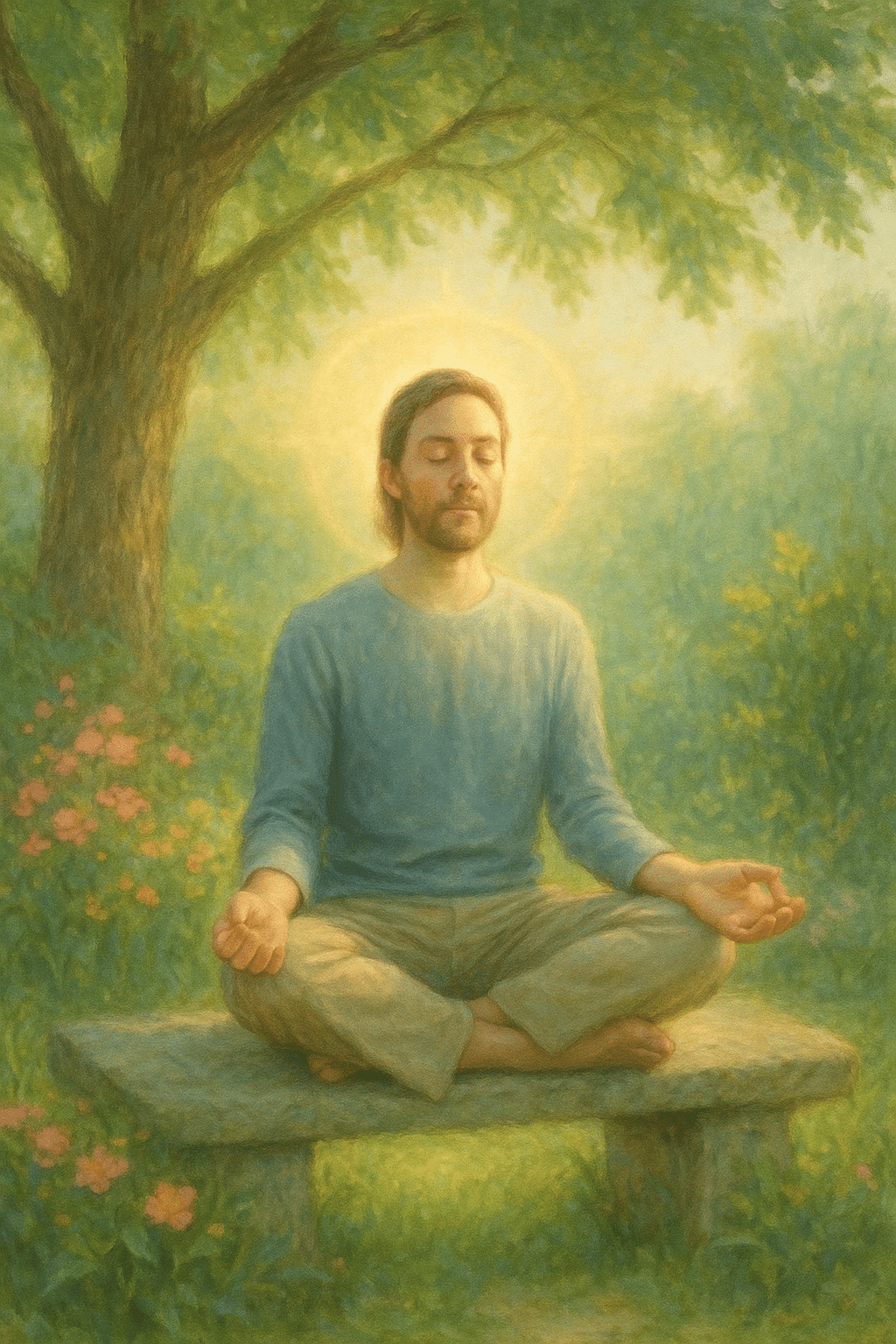
Meditation for Anxiety: Christian Guide to Calm Your Mind
Estimated reading time: 10 minutes
Finding Calm: Why Meditation for Anxiety Matters
Anxiety can feel like a constant hum that steals attention from family, work, and worship. Although many believers pray for relief, they may not realize that structured meditation for anxiety offers a biblical and scientifically proven path to peace. By pairing Scripture with measured breathing, Christians can retrain both mind and nervous system.
Because anxiety affects body and soul, we must tackle it on both fronts. Recent clinical trials confirm that eight weeks of guided mindfulness reduce worry as effectively as leading medications, while Psalms remind us that God’s consolation brings joy. Therefore, Christian meditation for anxiety stands at the intersection of faith and evidence.
Throughout this article you will learn why anxiety arises, how meditation balances your stress response, and which faith‑friendly techniques fit easily into busy schedules. You will also discover recommended books, apps, and simple tools that turn theory into practice. Ultimately, our goal is to help you breathe deeply, focus on Christ, and live with resilient calm.
Moreover, cultivating stillness does not demand silent monasteries. Even a five‑minute pause between meetings can lower blood pressure, sharpen focus, and restore gratitude. The Holy Spirit already dwells within every believer, so each breath becomes an invitation to experience that presence. With that promise in mind, let us explore anxiety’s roots.
Understanding Anxiety and the Mind‑Body Connection
Clinical psychologists describe anxiety as the body’s learned alarm system. When the amygdala senses danger, it floods the bloodstream with adrenaline. Because the brain cannot always distinguish between a looming deadline and an actual bear, many modern believers stay locked in fight‑or‑flight all day. Heart rate climbs, digestion slows, and thoughts spiral toward worst‑case scenarios.
However, God designed an antidote within the parasympathetic nervous system. When you slow inhalation, extend exhalation, and focus on hopeful truth, the vagus nerve signals safety. Blood pressure drops, muscles soften, and frontal brain regions regain control. Philippians 4:6‑7 captures this process spiritually: by presenting requests with thanksgiving, we shift attention from threat to trust and receive a peace that guards heart and mind.
Importantly, neuroscientists using functional MRI have shown that meditation for anxiety increases activity in the prefrontal cortex and decreases reactivity in the amygdala. Because those changes appear after only a few weeks, early victories come quickly. For the believer, these neural shifts reflect Romans 12:2: renewing the mind is more than metaphor; it is measurable neuroplasticity engineered by the Creator.
In addition, long‑term exposure to low‑level stress—such as inbox overload—keeps cortisol elevated and weakens immunity. Over several months this hormonal imbalance can cause fatigue, digestion problems, and even memory lapses, which reinforce anxious loops. Recognizing these hidden triggers prepares you to address them proactively.
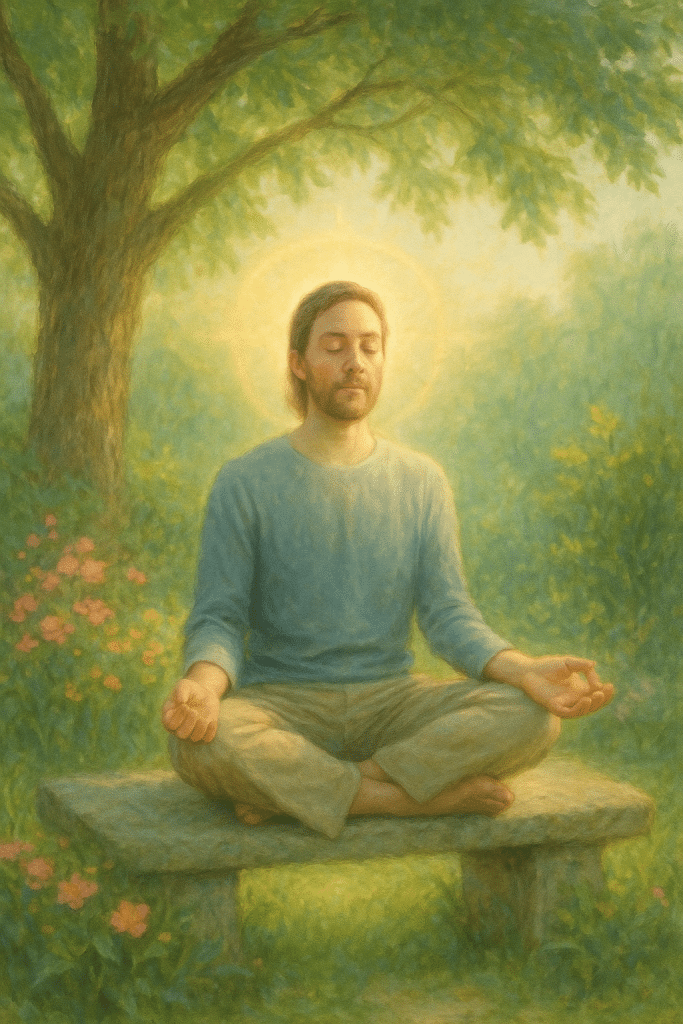
Why “Meditation for Anxiety” Works
Meditation, in its simplest form, trains attention. Just as resistance bands strengthen muscles, focused breathing strengthens neural pathways that support calm. Secular programs such as Mindfulness‑Based Stress Reduction demonstrate up to a 30 percent drop in anxiety severity, yet spiritual meditation often outperforms them. Studies comparing sacred phrases with neutral phrases found greater mood improvement when participants reflected on God’s love.
Furthermore, repeated practice builds an even rhythm between inhale and exhale, which lengthens heart‑rate variability—a marker of resilience. Because higher variability predicts faster recovery after stress, clinicians now recommend slow‑breath training alongside standard therapy. Therefore, incorporating Scripture or the name of Jesus within each breath amplifies both the physiological and spiritual benefits.
Transitioning from theory to habit requires small, consistent sessions. Begin with five minutes, three times daily. Set a phone reminder labeled “be still” to prompt practice. Over several weeks you will notice fewer intrusive thoughts, improved concentration during devotions, and quicker recovery after tense meetings. Those outward gains confirm inner transformation.
Moreover, meditation cultivates meta‑awareness. By observing thoughts without judgment, you begin to notice early warning signs of anxious spirals. This observational stance interrupts automatic rumination and gives space to replace fear with prayer, reducing the likelihood that worry will dominate the rest of the day.
Biblical Foundation for Christian Meditation
The Old Testament repeatedly invites reflection: Joshua 1:8 commands Israel to meditate day and night, promising prosperity and wisdom. Likewise, Psalm 1 depicts the meditating believer as a well‑watered tree, stable amid storms. These images assure Christians that reflection is not foreign but foundational to faith.
Jesus Himself modeled contemplative withdrawal, often rising early to pray in solitary places. Because He embodied perfect humanity, His rhythms reveal a template for ours. Moreover, early church fathers such as Augustine advocated “ruminating” on Scripture until its sweetness became tangible. Therefore, engaging the breath while rehearsing a verse aligns modern technique with ancient practice.
While some believers fear that meditation equals emptying the mind, Christian meditation fills the mind with truth. Instead of attempting blank awareness, we choose to focus on God’s character, replacing anxious narratives with promises of provision. Consequently, doctrinal integrity remains intact, and peace expands.
Notably, the Hebrew word “hagah,” often translated “meditate,” evokes the gentle murmuring of a dove, suggesting continual, rhythmic reflection rather than brief intellectual study. This insight reminds us that biblical meditation is an embodied, vocal act designed to embed truth in both heart and nervous system.
Consequently, choosing a short verse and repeating it aloud can transform theology into tangible calm within sixty seconds.
Step‑by‑Step Christian Meditation Practice
Before implementing any discipline, it helps to clarify desired outcomes. For anxiety relief our aims include lower resting heart rate, slower breathing, and a mind anchored in Scripture. The following routine combines clinically validated breath pacing with biblical contemplation so that body and spirit cooperate.
Choose a passage such as 1 Peter 5:7. Set a timer for five minutes. Sit upright, shoulders relaxed, feet grounded. Inhale through the nose for a silent count of four while mentally saying, “He cares for me.” Hold for two counts. Exhale for six while thinking, “I cast my anxiety on Him.”
Repeat the cycle, letting distractions pass like clouds. Whenever your mind wanders, gently return to the verse without criticism. After five minutes, close with a short prayer of gratitude. Log how you feel; many practitioners record immediate tension release and clearer thinking.
Practice twice daily for one week, then extend to ten minutes. Because consistency builds neural change, schedule sessions around fixed cues such as waking, lunch, or bedtime. Over time the verse becomes a reflex, surfacing automatically when stress appears.
If intrusive thoughts feel overwhelming, try writing them in a notebook before each session. Externalizing worries frees mental bandwidth, allowing deeper focus on Christ. Over time the notebook also reveals patterns, guiding targeted prayer and counseling conversations.
Preparing Your Environment
Firstly, designate a quiet christian meditation corner free from interruptions. Although headphones can block noise, a natural setting—such as a porch with birdsong—signals safety to the nervous system. Place a chair or cushion that supports proper posture; slouching restricts diaphragm movement.
Next, lower ambient light or gaze softly at a single candle. This visual anchor limits sensory overload. Keep a printed Bible or journal nearby to avoid phone distractions. If you prefer music, choose instrumental worship at 60‑70 beats per minute, which mirrors relaxed heart rhythms.
Importantly, inform family members of your practice schedule. Setting expectations prevents accidental disruptions and models healthy coping for children. Over time the space acquires psychological association with calm, helping you transition into meditation more quickly.
Finally, track room temperature; research indicates that slightly cool environments enhance alert relaxation. A small fan or open window can improve comfort and increase fresh‑air intake, reinforcing the sensation of renewal each session.
Because scent affects emotion, consider diffusing calming essential oils such as lavender or frankincense. Studies show these aromas can lower heart rate in minutes, and when paired with Scripture, they create multisensory associations that quickly usher your mind toward peace.
Even a small corner desk can become sacred territory when consistently paired with slow breathing and expectant prayer.
Guided Breath and Scripture Meditation
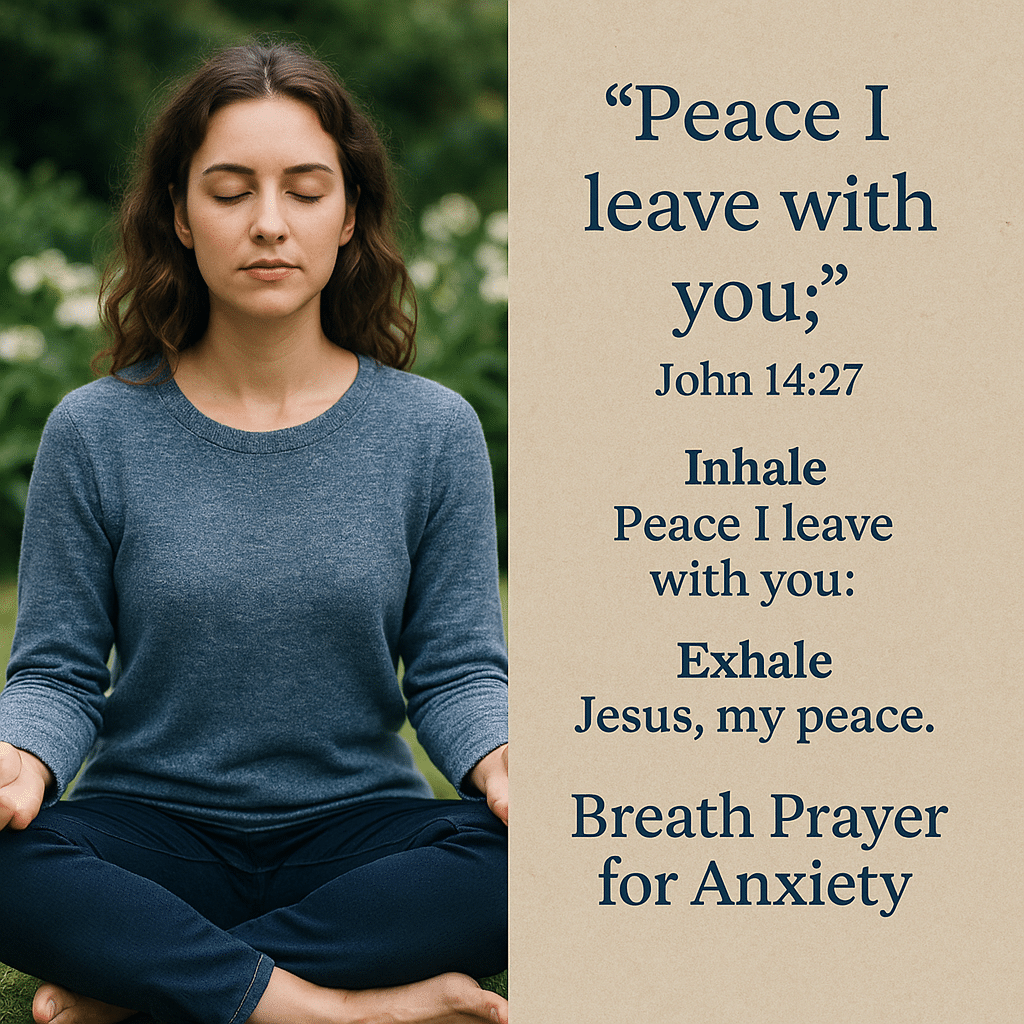
Start the timer. Breathe diaphragmatically, letting the abdomen rise. Count silently: inhale four, pause two, exhale six. While breathing, repeat a chosen phrase. Examples include, “Peace I leave with you” (John 14:27) or simply “Jesus, my peace.”
After two minutes, shift focus to bodily sensations. Notice shoulders relaxing, heartbeat slowing. Acknowledge these changes as God’s gift rather than coincidence. This acknowledgment reinforces the connection between faith and physiology.
Halfway through, visualize placing each worry into Christ’s hands. Many believers find that giving worries a physical image accelerates emotional release. Because the brain processes imagery efficiently, visualization complements verbal prayer.
Conclude by scanning from head to toe, thanking God for restored calm. Open your eyes and read the verse aloud to anchor it in short‑term memory. Over weeks, this scriptural anchor migrates into long‑term memory, becoming an automatic shield against anxious thoughts.
Should distractions persist, gently shift attention to ambient sounds—perhaps rustling leaves or a ticking clock—then return to your breath. This sensory reset prevents frustration, maintains forward momentum, and teaches the brain that calm attention is always attainable, even amid minor disturbances.
Remember, mastery grows through repetition; therefore, celebrate incremental progress rather than flawless focus during each session.
Helpful Resources and Product Recommendations
To support daily practice you may appreciate reliable tools. The free Abide app offers audio sessions that blend Scripture with guided breathing. Meanwhile, the printed workbook “Christian Meditation for Anxiety” provides 30‑day journaling prompts that many users credit for sustained progress.
For physical comfort consider the buckwheat meditation cushion which encourages hip alignment and deeper diaphragmatic breathing. If you prefer chair practice, the DeskCycle under‑desk pedal offers gentle movement that pairs well with breath prayer, easing restlessness common among anxious individuals.
As additional reading, explore Mayo Clinic’s meditation overview, which outlines scientific benefits. For theological depth, the Bible Project video on “Meditate” shows how biblical meditation differs from emptying the mind.
Additionally, the short podcast “Encounter” releases weekly five‑minute guided prayers perfect for commuting. Subscribing ensures fresh prompts arrive automatically, sustaining momentum after the initial excitement fades.
Internally, you can deepen understanding through cornerstone content like our article on Anxiety Relief Basics and the foundational guide Meditation Fundamentals. Both pieces expand on topics discussed here and interlink practices for holistic growth.
When curated wisely, tangible aids prevent decision fatigue, allowing you to invest creative energy in communion rather than setup.
Conclusion: Embrace Peace Through Meditation and Faith
Because anxiety touches thoughts, hormones, and spirit, Christians benefit from multilayered intervention. Meditation for anxiety aligns with Scripture, honors God’s design, and meets modern clinical standards. When you breathe slowly and recite His promises, your body signals safety, your mind rewires, and your soul rests.
No method eliminates adversity, yet believers equipped with meditative skills recover faster. Moreover, consistent practice fosters gratitude, sharpens discernment, and deepens intimacy with Christ. Therefore, commit to a brief daily routine, integrate resources mentioned above, and watch peace surpass understanding.
Finally, consider tracking progress by noting pulse rate, worry frequency, and Scripture memory each week. Reflect on growth, celebrate small wins, and share testimonies within your church. As Hebrews 10:24‑25 reminds us, encouraging one another sustains momentum.
Your journey toward calm can start today. Even as you close this article, pause, inhale deeply, and whisper, “Lord, I receive Your peace.” Let that moment mark the first step in a transformed thought life.