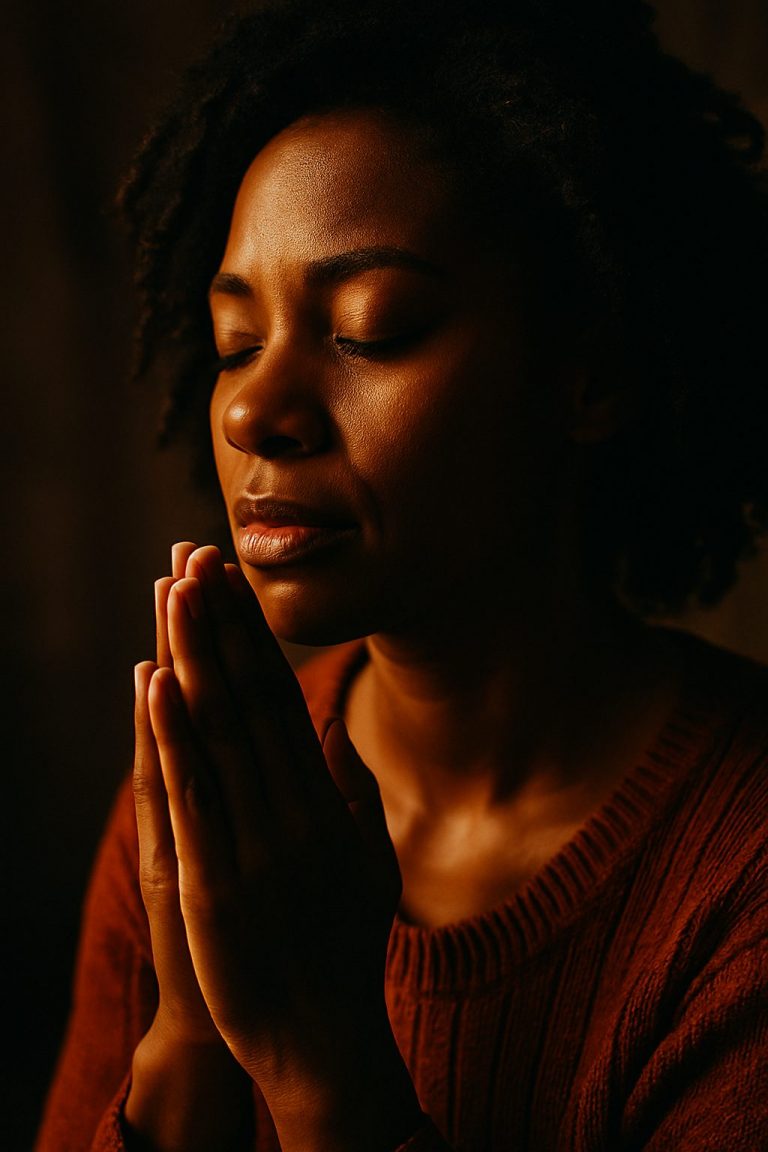
Prayer for Calmness: Ease Your Anxious Heart Today
Estimated reading time: 12 minutes
When Your Anxious Heart Needs a Lifeline
When your heart races and thoughts spiral, the world can feel like a dangerously uncertain place. In these overwhelming moments, a simple prayer for calmness can serve as a vital lifeline, a direct connection to the peace that surpasses all understanding. This experience is far from uncommon; in fact, anxiety disorders are a significant mental health concern affecting millions, as detailed by nimh.nih.gov. Consequently, this struggle is not just emotional and physical but also deeply spiritual, inviting a response that soothes the body while nurturing the soul through faith.
Feeling anxious is not a sign of failing faith; rather, it is part of the human condition in a world grappling with uncertainty. However, Christian theology offers profound resources for navigating these internal storms and finding spiritual calmness. Even secular sources acknowledge that faith provides powerful tools for achieving inner peace, a perspective shared by Harvard Health Publishing. This aligns with the timeless biblical principle that while life presents many troubles, a prayerful posture is essential for overcoming anxiety, a lesson illustrated in the story of Mary and Martha and supported by theological analysis on PMC NCBI Articles.
Throughout this article, we will explore practical, faith-based strategies designed to quiet your mind and spirit. We will move beyond simply asking for peace and delve into how calming scripture, like Philippians 4:6-7 and Psalm 23, can actively reframe anxious thoughts. Ultimately, the goal is to integrate an anxiety prayer into a holistic approach for well-being, a concept supported by professionals who view prayer as foundational to managing stress, as noted by nymentalhealthcenter.com. This journey is about discovering how a consistent conversation with God can help regulate your nervous system and build a resilient faith that sustains you through any storm.
Understanding Anxiety: a Christian and Scientific Perspective
Seeking a prayer for inner peace is a common human experience, especially when facing the grip of anxiety. From a Christian perspective, anxiety is an understandable reaction to the trials of a fallen world, yet faith provides a powerful antidote through connection with God. Scientifically, anxiety is the body’s natural alarm system—the fight-or-flight response—triggering the nervous system and releasing stress hormones. However, when this system becomes chronically overactive, it can lead to significant challenges. In fact, according to NIMH Statistics on Anxiety Disorders, anxiety disorders affect millions of adults, highlighting the widespread nature of this struggle.
Christian theology has always acknowledged this mind-body connection, recognizing that spiritual distress often manifests physically. For instance, the biblical narrative of Mary and Martha illustrates how a prayerful posture is essential for overcoming life’s anxieties, a point reinforced by PMC NCBI NLM Articles. This perspective aligns with modern science, which shows how practices rooted in faith can offer tangible relief. As noted by Harvard Health Publishing, faith provides powerful resources for finding true peace. Consequently, spiritual disciplines are not just abstract concepts; they are practical tools that can help regulate the nervous system.

In moments of overwhelming anxiety, turning to a prayer for calmness can be the lifeline your heart needs to find peace and stability.
Ultimately, a holistic approach that integrates faith and science offers the most comprehensive path toward biblical stress relief. A foundational anxiety prayer can be powerfully supported by evidence-based strategies from psychology and medicine. Christian counseling, for instance, often combines the truth of Scripture, like Philippians 4:6-7, with proven therapeutic techniques. This balanced view, supported by resources like NY Mental Health Center, sees prayer not as a replacement for other forms of care but as the essential foundation upon which they are built. In other words, we can trust in God’s sovereignty while also wisely using the tools He has provided through human knowledge and discovery.
A Simple, Powerful Prayer for Calmness You Can Use Anywhere
When anxiety strikes, a simple yet profound prayer for inner peace can ground your spirit and calm your body. Instead of searching for complex words, you can anchor yourself with a breath prayer. As you inhale, silently pray, “Lord Jesus Christ, Son of God,” and as you exhale, “have mercy on me.” This ancient practice does more than just focus the mind; in fact, it engages the body’s natural relaxation response. The physical act of prayer, which often includes focused attention and slower breathing, can induce a state of calm similar to diaphragmatic breathing, as noted by research on PubMed.
Prayer for Calmness: Renew Your Mind
This simple prayer acts as a direct line to the peace promised in Scripture, such as in Philippians 4:6-7. By repeatedly turning your focus to Jesus, you are actively renewing your mind, a concept that aligns with principles in both Christian discipleship and Cognitive Behavioral Therapy (CBT). For instance, experts at Christians and Mental Health Medication explain how we can replace an anxious belief like ‘I must be in control’ with the spiritual truth, ‘God is in control, and I am safe in His hands.’ Consequently, this practice is not about ignoring your feelings but rather entrusting them to God, moment by moment, fostering true spiritual calmness.
The true power of this prayer for calmness lies in its accessibility. You can use it in the middle of a stressful meeting, while waiting in traffic, or when you wake up with a racing heart, as it requires no special place or posture. This act of inviting God into your immediate circumstance is a foundational step toward holistic well-being. Ultimately, as Exercising to Relax suggests, faith provides powerful resources for finding true inner peace by connecting our spiritual practices with our daily mental and physical health. This simple prayer becomes a constant, portable lifeline to the presence of God.
Anchoring Your Anxiety Prayer in Calming Scripture
To transform a general plea for help into a powerful anxiety prayer, we must anchor it in the unchanging truth of calming scripture. While a simple cry to God is always heard, basing your prayer on His promises provides a firm foundation for your faith. In other words, when you pray God’s own words back to Him, you are aligning your heart with His will and reminding yourself of His character. This practice is essential for overcoming life’s anxieties, as many faith traditions recognize that spiritual resources offer a path to true peace. In fact, the biblical narrative itself illustrates that a prayerful posture is key to finding rest, a concept supported by research from sources like PMC NCBI Articles.
Scripture for Calming Prayer

For instance, specific verses can become the backbone of your prayer for calmness. Consider Philippians 4:6-7, which directly instructs, “Do not be anxious about anything, but in every situation, by prayer and petition, with thanksgiving, present your requests to God. And the peace of God, which transcends all understanding, will guard your hearts and your minds in Christ Jesus.” Similarly, Psalms 23 NIV offers profound comfort by portraying God as a protective shepherd who restores our souls. You can also turn to the personal invitation from Jesus in Matthew 11:28-30: “Come to me, all you who are weary and burdened, and I will give you rest.” These scriptures are not merely suggestions; consequently, they are divine promises waiting to be claimed.
Integrating these scriptures involves more than just reading them; it means letting them saturate your prayer. Begin by slowly reading a passage aloud, focusing on each word. This physical act of speaking and deep breathing can have a powerful calming effect, a phenomenon explained by the physiological aspects of prayer detailed on PubMed. Afterwards, personalize the verse by inserting your name or specific situation. For example, “The Lord is my shepherd, I have all that I need; He guides [Your Name] beside still waters.” This meditative practice not only centers your mind but can also foster new neural pathways, reinforcing faith over fear, a concept that experts like Prayer and Brain Rewiring suggest is possible.
The Science of Faith: How a Prayer for Inner Peace Calms Your Body
Engaging in a prayer for inner peace does more than soothe the soul; it actively calms the body’s stress responses. While faith provides profound spiritual comfort, science is beginning to understand the tangible, physiological benefits of spiritual practices. In fact, many mental health professionals now recognize the integration of prayer and meditation as a holistic approach to well-being, as noted by sources like NY Mental Health Center. This bridge between Christian theology and science reveals that when we turn to God in moments of distress, our physical bodies listen and respond in remarkable ways, shifting from a state of alarm to one of tranquility.
The physical act of prayer often triggers the body’s relaxation response. For instance, the quiet focus and slow, rhythmic speech of prayer naturally encourage diaphragmatic breathing. This specific type of deep breathing is a key component in calming the nervous system, as detailed in research from PubMed. Consequently, this practice helps lower the production of cortisol, the primary stress hormone. Chronic elevation of cortisol is linked to numerous health problems, a fact underscored by data from NIMH Statistics. Therefore, by engaging in a prayer for calmness, you are not only entrusting your worries to God but also actively participating in a process that dials down your body’s physiological stress and promotes physical healing. This illustrates a beautiful harmony between our faith in Jesus Christ and the intricate design of our nervous system.
When Faith for Anxiety Needs Professional Support
While a consistent prayer for inner peace is a vital foundation for Christian wellness, there are times when faith for anxiety must be paired with professional support. Acknowledging the need for a therapist or medical doctor is not a sign of spiritual failure; on the contrary, it is an act of wisdom and stewardship over the mind and body God has given you. Viewing professional care as a tool God can use allows for a holistic approach to managing anxiety, integrating spiritual practices with evidence-based strategies. As noted by mental health experts, prayer can be a powerful part of a comprehensive wellness plan, but it is not always the only part needed, as explained by Benefits of Prayer and Meditation.
When Professional Help Becomes Necessary

When anxiety strikes, a simple prayer for calmness can ground your spirit. This powerful practice can be used anywhere to restore a sense of inner peace.
Chronic anxiety is not merely a spiritual struggle; it has profound physiological roots that affect the nervous system. Persistent stress can lead to elevated levels of hormones like cortisol, which can cause significant physical health problems over time. In fact, according to data from NIMH Statistics, millions of adults experience the tangible effects of anxiety disorders. Therefore, addressing these biological components through therapy or medicine can be a crucial step toward healing. This approach honors the complex way God created us as integrated beings of mind, body, and spirit, where caring for one area directly impacts the others. This holistic view is supported by institutions like Exercising to Relax, which recognize the value of combining psychological tools with faith resources.
Integrating professional therapy with Christian theology can create powerful and lasting change. For instance, a core tenet of Cognitive Behavioral Therapy (CBT) is identifying and challenging harmful core beliefs, a practice that aligns beautifully with renewing our minds in Christ. A Christian counselor can help you replace a belief like, “I must be in control to be safe,” with the spiritual truth, “God is in control, and I am safe in His hands,” a method supported by resources like Christians and Mental Health Medication. In other words, therapy can provide the structure and tools to apply biblical truth directly to the roots of anxiety, helping you build a resilient and faith-filled mindset.
Beyond a Single Prayer: Building a Lifestyle of Spiritual Calmness
While a single, heartfelt prayer for inner peace offers a powerful starting point, achieving lasting tranquility involves building a lifestyle of spiritual calmness. This is not a call to rigid legalism, but rather an invitation to create consistent, life-giving rhythms that orient your heart toward God. In other words, it means integrating faith into the fabric of your day. This holistic approach, as suggested by resources like Benefits of Prayer and Meditation, views a prayer for calmness as the foundation of a broader strategy for well-being that nurtures your spirit, soul, and body in unison. Ultimately, this transforms prayer from an emergency response into a continuous conversation.
Daily Devotion for Calming Prayer
Developing this lifestyle involves intentionally setting aside time for spiritual disciplines that quiet the soul. For instance, you might begin your day with five minutes of reading a calming scripture, like Psalms 23, before checking your phone. This mirrors the biblical wisdom from the story of Mary and Martha, which, as noted by PMC National Institutes of Health, illustrates how prioritizing time with Jesus is essential for overcoming anxiety. Consequently, these small, consistent acts of devotion build a spiritual reservoir of peace that you can draw from when stress inevitably arises, making your faith for anxiety a proactive and sustaining force.
Furthermore, these practices offer tangible physiological benefits that reinforce your spiritual efforts. The very act of focused prayer often involves quiet sitting and slow, rhythmic breathing, which naturally engages what is known as diaphragmatic breathing. According to PubMed, this process can induce a state of calm and relaxation, directly countering the body’s stress response. By consistently engaging in these practices, you help mitigate the long-term physical damage that chronic stress hormones can cause, a significant concern highlighted by NIMH Statistics: Any Anxiety Disorder. Therefore, building a lifestyle of prayer is an act of stewardship for both your spiritual and physical health.
Your Journey to a Calmer Heart Starts Today
Embarking on the path to a peaceful mind is not about finding a one-time fix; rather, it is about cultivating a continuous, restorative relationship with God. Your first prayer for inner peace is a powerful first step on a lifelong journey of faith. This journey integrates spiritual devotion with psychological wisdom, recognizing that true well-being is holistic. Indeed, as sources like Exercising to Relax suggest, faith provides powerful resources for finding true peace. Therefore, you are not just managing symptoms but transforming your entire inner world through a deeper connection with Jesus Christ.
Prayer for Calmness: Integrating Faith & Science
Ultimately, every prayer for calmness is an invitation for God to enter your anxious spaces and rewire your heart and mind. The very act of praying—often involving quiet focus and slower, deeper breathing—can have profound physiological benefits, as noted by research on prayer’s effects on the body detailed by PubMed. This practice is a foundational piece of Christian wellness, yet it works best as part of a holistic approach. In addition, seeking professional support from a therapist who respects your faith is not a sign of weakness; instead, it is a courageous step towards integrated healing, a perspective supported by centers like Mental Health Benefits of Prayer and Meditation.
Your journey starts now, with a single, humble step. Embrace the invitation offered in Matthew 11:28-30: “Come to me, all you who are weary and burdened, and I will give you rest.” This is not a distant promise but a present reality available to you today. By consistently turning to God, grounding yourself in Scripture, and seeking support when needed, you actively build a lifestyle of spiritual calmness. You can begin to replace anxious core beliefs with the unshakable truth that, as Christians and Mental Health Medication illustrates, even if you don’t feel in control, you are always safe in His hands.