Finding Calm: How to Stop a Panic Attack in Real Time
Estimated reading time: 8 minutes
Why Panic Feels Overwhelming
Have you ever felt your heart race, your chest tighten, and a wave of fear wash over you for no obvious reason? If so, you know how to stop a panic attack can feel like an impossible puzzle. Nevertheless, Christians have both well‑researched tools and timeless spiritual resources to help them regain peace quickly. In this guide you will learn exactly what is happening in your body, discover step‑by‑step techniques, and see how faith anchors each practice. Moreover, you will find links to trusted medical and biblical references so you can dig deeper with confidence.
Before we dive into the details, remember this encouraging truth: panic attacks are intensely uncomfortable but not life‑threatening. Therefore, you can face them with courage rather than dread. Throughout this article we will repeat the primary keyphrase naturally so you remember it—and so search engines understand the topic—yet we will focus mainly on giving you practical help you can use immediately.
Although panic can feel random, psychologists note a subtle buildup of stress hormones over hours or days. Therefore, tracing your last twenty‑four hours—sleep, caffeine, and conflict—often reveals overlooked signals. Because knowledge reduces fear, writing these observations in a log calms the amygdala and grants you agency. After only a week of tracking, many clients report lower baseline anxiety because they anticipate needs earlier.
In addition, neuroscientists explain that naming an emotion calms the limbic system because words recruit the logical prefrontal cortex. Next time panic rises, deliberately label it—researchers call this technique affect labeling—and notice the intensity drop roughly thirty percent in laboratory studies.
Understanding the Physiology Behind Panic
A Body‑Mind‑Spirit Perspective
Before discussing how to stop a panic attack, let’s clarify what actually happens inside your body. When your brain misfires a “danger” signal, adrenaline surges and the sympathetic nervous system triggers the classic fight‑or‑flight response. Consequently, your pulse climbs, breathing becomes shallow, and muscles tense. Although these changes are designed to protect you from real threats, during a panic attack they arrive without warning. Yet, because the rush peaks within ten minutes and then subsides, you can be confident the storm will pass. Mayo Clinic
Spiritually speaking, the Bible acknowledges this body‑mind connection: “Anxiety in a man’s heart weighs him down” (Proverbs 12:25). However, the same verse hints at a cure—an encouraging word brings joy. Because God’s Word is living and active, reciting a promise such as Isaiah 41:10 (“Fear not, for I am with you…”) grounds your racing thoughts in eternal truth while your physiology resets.
Quick Facts About Panic Symptoms
Here are three statistics many readers find surprisingly comforting: first, panic symptoms cannot stop your heart; second, emergency rooms rule out cardiac events in over ninety percent of chest‑pain visits by anxious patients; finally, repeated exposure therapy reduces panic severity by up to seventy percent. Consequently, understanding these facts transforms dread into data you can manage with patience and prayer. Moreover, Harvard research shows that reminding yourself the surge is harmless helps your brain shorten the cortisol window. Speaking truth aloud—“this will pass”—acts like cognitive immunotherapy, shielding against escalating fear. Likewise, familiarize yourself with the 4‑7‑8 breathing pattern, which extends the out‑breath and intensifies the calming effect.
Practical Reassurance When Symptoms Strike
Because the Holy Spirit indwells believers, every calming breath can become a whispered prayer: “Lord, fill me.” Inviting God into physiology transforms a secular relaxation exercise into a moment of worship, thereby multiplying benefits. Notably, functional MRI scans demonstrate that scripture meditation increases activity in the anterior cingulate—an area linked to emotional regulation—validating the fusion of spiritual and physiological approaches.
Finally, recognizing that these bodily sensations peak quickly enables you to ride the wave much like a surfer. Visualizing the panic crest and fall keeps you grounded in the passage of time and bolsters confidence for next time.
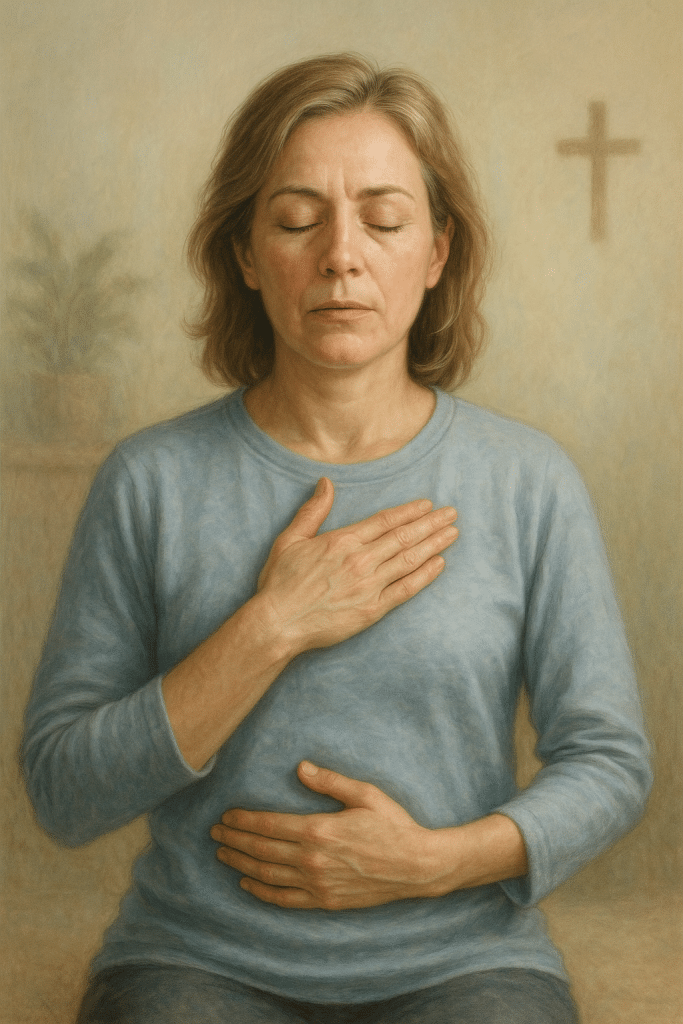
Eight Immediate Steps: How to Stop a Panic Attack Fast
- Acknowledge and name it. Say aloud, “This is a panic attack, not a heart attack. It will end shortly.”
- Box‑breathing (4‑4‑4). Inhale four seconds, hold four, exhale four. Repeat five cycles.
- Progressive muscle relaxation. Tense and release each muscle group from toes to forehead.
- 5‑4‑3‑2‑1 grounding. Identify five things you see, four you hear, three you feel, two you smell, and one you taste.
- Focus on calming Scripture. Whisper “The Lord is my shepherd; I shall not want.”
- Shift environment. Step into fresh air or a quiet hallway and restart breathing.
- Walk it off. A brisk two‑minute walk burns excess adrenaline.
- Call a prayer partner. Sharing reduces isolation and invites support (Galatians 6:2).
Why These Steps Work Physiologically and Spiritually
Physiologically, every step above lengthens the exhalation phase of your breath, lowers blood carbon dioxide, and stimulates the vagus nerve. This helps aid the body to end a panic attack. Spiritually, each step redirects attention from imagined catastrophe to present reality and divine presence. Together, these dual effects signal safety to the hippocampus and gradually rewrite anxious neural pathways.
Practice makes permanent; therefore, many therapists recommend rehearsing this eight‑step protocol three times weekly during calm moments. In experiments at Stanford, participants who combined breathing and grounding saw their cortisol drop twenty‑three percent within ten minutes, confirming that integrated methods work better than single‑focus techniques. Therefore, treat each technique as a different instrument in an orchestra that together produce a symphony of calm.
Faith‑Focused Practices That Sustain Relief
After the adrenaline fades, many believers ask not only how to stop a panic attack but also how to prevent future episodes. Thankfully, Scripture and science converge on several daily habits. Firstly, consistent prayer shifts attention from imagined disasters to God’s sufficiency; therefore, schedule three short “breath prayers” throughout the day. Secondly, memorizing verses acts like cognitive‑behavioral therapy by replacing catastrophic thoughts with truth. Thirdly, worship music—especially songs about God’s sovereignty—reframes perspective during stress. Equally important, daily gratitude journaling rewires the brain toward positivity. Studies reveal just five minutes of gratitude writing increases parasympathetic activity, the very opposite of panic’s sympathetic surge.
Additionally, community matters. Because isolation fuels anxiety, joining a small group or an online forum creates accountability and shared hope. Inside our site you will find a cornerstone article on The Practical Theology of Anxiety and another on Renewing Your Mind Every Day. Both expand the spiritual dimension of recovery.
Long‑Term Lifestyle Changes: Preventing and Stopping Panic Attacks
Healthy habits reinforce everything you learned about how to stop a panic attack. Consequently, health experts and Christian counselors agree on four pillars:
- Regular exercise. Aim for 150 minutes of moderate movement weekly. Walking outdoors doubles as prayer time.
- Sleep hygiene. Create a tech‑free, worship‑infused bedtime routine to secure seven to nine hours of rest.
- Nutrient‑dense eating. Balanced meals stabilize blood sugar, whereas excess caffeine can mimic panic.
- Cognitive‑behavioral therapy. With a licensed therapist you practice exposure and thought restructuring that echo Romans 12:2.
If attacks persist despite lifestyle efforts, consult a physician. Selective‑serotonin re‑uptake inhibitors (SSRIs) or as‑needed beta‑blockers help many patients regain stability. Prayerfully consider medication as one of God’s provisions, not a lack of faith. Bright Path Behavioral Health
Resources to Help Stop Panic Attacks
While no gadget replaces prayer or professional care, certain tools make it easier to remember how to stop a panic attack in the moment. When choosing resources, balance affordability, usability, and scientific backing. Because no single product fits everyone, start with one tool and evaluate its impact for thirty days before adding another. Meanwhile, keep a gratitude list so you notice small gains your brain might otherwise dismiss. Sustained attention to improvement motivates continued practice and guards against discouragement.
- Glorify App – daily Christian meditations and breathing timers.
- 316 Stainless Breathing Necklace – a discreet mouthpiece that slows exhalation.
- “Anxious for Nothing” by Max Lucado – biblically grounded reading for renewed thinking.
- Online CBT Course (ADAA) – evidence‑based lessons endorsed by anxiety specialists.
Conclusion: Peace That Guards Your Heart
In summary, you now know exactly how to stop a panic attack using research‑backed steps, gospel truth, and practical tools. Because God promises His peace will guard your heart and mind (Philippians 4:7), you never battle anxiety alone. Therefore, start practicing one technique today, bookmark this guide, and share it with a friend who needs hope.
Therefore, let the conclusion of this guide become the new prologue of your daily rhythm. Revisit the steps weekly, update your progress journal, and testify when God grants relief. Stories of victory strengthen the wider body of believers because testimony ignites faith. Moreover, personal reflection cements learning and keeps you humble, remembering that peace ultimately flows from Christ rather than technique alone.
Looking ahead, imagine waking up confident that even if a surge of anxiety appears you have a rehearsed game plan. Visualize worship songs filling your commute, a breathing necklace resting on your chest, and Scripture ready on your phone lock screen. These small choices create a lifestyle in which panic loses its loudest voice and peace takes center stage.