Deep Breathing Exercises For Panic Attacks At Night
Estimated reading time: 12 minutes
Introduction: deep breathing exercises for panic attacks at night
Night anxiety can feel overwhelming, yet you are not powerless. Additionally, with the right skills and a plan, you can settle your body and quiet your mind. This guide explains deep breathing in clear steps and shows how faith can support the process. You will learn why your nervous system surges after dark and how to respond. Most importantly, you will practice deep breathing exercises for panic attacks at night that restore a sense of safety so you can drift back to sleep. Because panic is a body alarm, not a moral failure, we act with compassion and skill.
We also include trusted research and gentle prayer prompts. Accordingly, you can review NHS breathing guidance, the Harvard Health tutorial on diaphragmatic breathing, and the NIMH overview of panic disorder to see how science supports these practices. For deeper help, see our cornerstone guides on panic attack relief, prayer for anxiety, and Bible verses for anxiety. Before you try the methods, set a small card by the bed with the counts and a favorite verse so you can follow a simple plan when your thoughts race.
Why panic wakes you at night (faith & physiology)
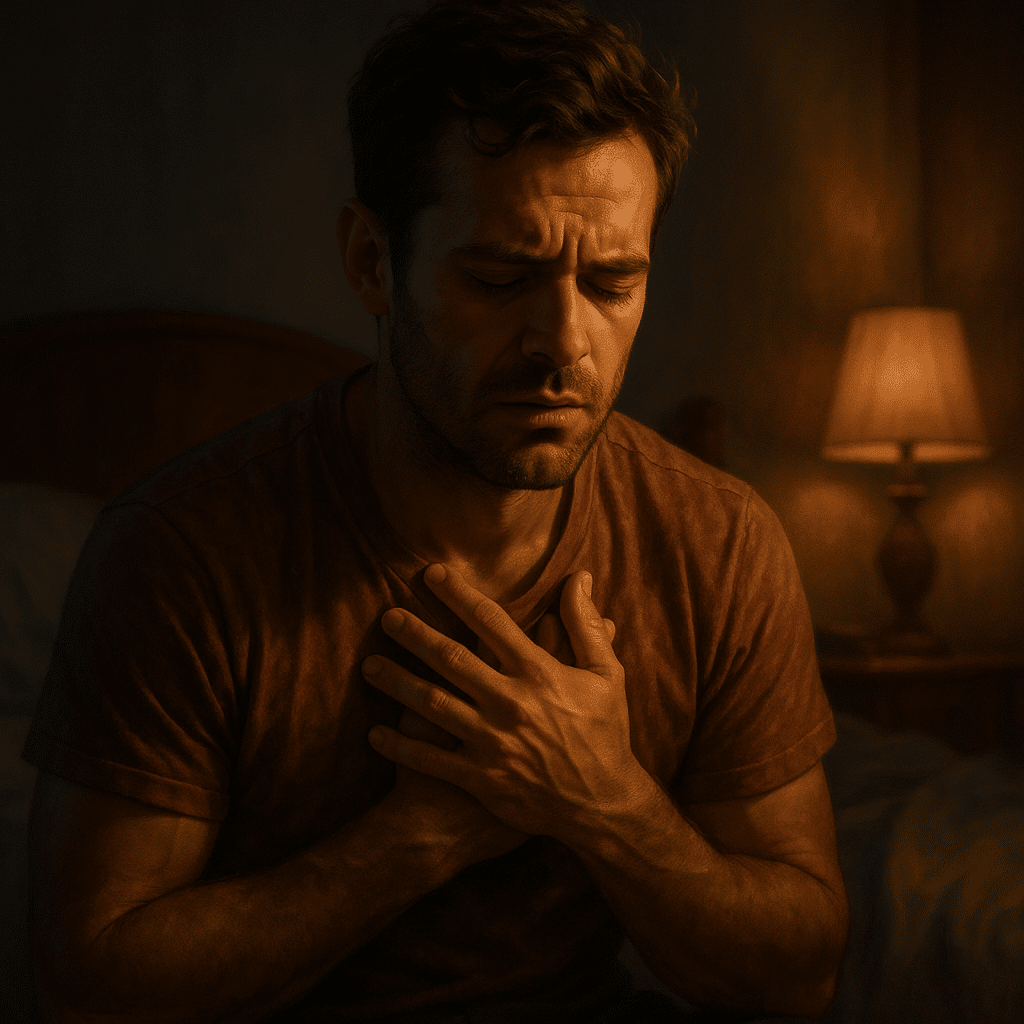
When panic wakes you, the sympathetic system floods your body with adrenaline. Your heart races, breathing turns shallow, and your chest feels tight. However, God designed a balancing system called the parasympathetic response. Slow, diaphragmatic breathing activates the vagus nerve, which lowers heart rate and eases tension. Therefore, the quickest path out of a surge is to slow the breath, lengthen the exhale, and let the body stand down. Clinicians also note that structured patterns work better than vague advice to “take a deep breath.”
Consequently, you can use a timed method to keep carbon dioxide balanced and prevent dizziness. Spiritually, short breath prayers pair well with each step and help you cast your cares on the Lord while your body settles. Simply put, deep breathing exercises for panic attacks at night work by activating the body’s built‑in brake. As the body learns the new rhythm, sensations like tingling or lightheadedness often fade. Equally, the sense of doom eases because you now understand what happens inside the body. Another helpful shift is to notice how your rib cage moves; place your hand low on the belly so you feel expansion where it matters. For a clinical overview of the panic response and skills that help, see this Mayo Clinic Press Q&A.
What to do the moment you wake in panic
Earlier, orientation helps. Turn on a low light, sit up, and look around the room. Name three things you see and two things you feel, like the sheet or the mattress. Next, place a hand on your belly and begin slow breathing. Say out loud, “This is panic. It feels intense, and it will pass.” Because naming the experience reduces fear of the unknown, your alarm begins to ease. Then choose one method from this guide and follow the count. If your mind races, read a short verse you keep by the bed, or repeat it from memory.
Additionally, sip water, loosen tight clothing, and avoid clock‑watching, since it can spike adrenaline. After five minutes, reassess. If symptoms drop, continue breathing for another five minutes and lie back down. However, if worry remains high, sit in a chair and keep the lights low while you breathe. You can listen to a calm psalm. Finally, when peace returns, jot a quick note about what helped so you can strengthen your nightly routine. When you follow deep breathing exercises for panic attacks at night right away, the wave often passes faster. For more immediate skills, explore our guide on how to stop a panic attack.
How to practice and why it works
You can calm a night surge by pairing prayer with a slow, repeatable rhythm. Before you begin, sit upright, place a hand on your belly, and remind yourself that the wave will pass. Then choose one method and follow a timer or count. Because structure matters, decide in advance which pattern you will use first and practice for five to ten minutes during the day so the movement feels natural in the dark.
Also, keep the room dim and avoid bright screens so melatonin continues to rise. Accordingly, the techniques below give you a simple, reliable path back to rest. Each one is easy to memorize, and each one pairs with short Scripture lines so your attention stays grounded in truth. Another benefit is that these methods do not require special tools; still, you can add a soft eye mask, a white noise machine, or a lavender diffuser if those items support your routine. Finally, remember the goal: steady breathing that signals safety. These deep breathing exercises for panic attacks at night reduce hyperventilation, keep carbon dioxide in range, and quiet the alarm in your chest. For research summaries, see the Scientific Reports meta‑analysis on breathwork and the American Heart Association infographic.
Diaphragmatic (belly) breathing for night panic
Diaphragmatic or belly breathing teaches your body to shift from chest breathing to a calm rhythm. First, sit up in bed or rest with your head elevated. Place one hand on your chest and one on your belly so you can feel the movement. Then, inhale through your nose for a slow count of four while your belly rises and your chest stays steady. Next, purse your lips and exhale through your mouth for five counts. Repeat this pattern for several minutes, aiming for five to six breaths per minute.
As you breathe, whisper a breath prayer: inhale “Be still,” exhale “and know.” This practice engages the diaphragm and stimulates the vagus nerve. Because the vagus nerve brakes the heart, your pulse begins to slow and a sense of safety returns. If you feel dizzy, shorten the inhale and keep the exhale slightly longer. Importantly, do not rush; instead, let the breath flow like a gentle tide. With practice, this skill becomes automatic in the middle of the night. For prevention, practice for five minutes during the day so your body learns the pattern.
Many people find that this single habit reduces the frequency and intensity of night episodes. Moreover, belly breathing pairs well with a short verse, which can redirect attention away from scary sensations. As your body calms, your thoughts usually follow. Among deep breathing exercises for panic attacks at night, belly breathing is the foundation. For step‑by‑step coaching, read Harvard’s guide to learning diaphragmatic breathing and our internal primer on deep breathing exercises.
Why this helps
Comparatively, chest breathing keeps the body on alert, while belly breathing maximizes oxygen exchange and boosts the rest‑and‑digest response. Consequently, your body receives a clear safety signal even when your thoughts still race.
Box breathing (4×4) as part of deep breathing exercises for panic attacks at night
Box breathing uses a simple four‑part rhythm: inhale, hold, exhale, hold. Start by inhaling through your nose for four counts, then hold gently for four. Exhale through your mouth for four, and hold again for four. Because each side of the “box” is equal, your mind gets a clear focus while your body slows down. Additionally, the brief holds prevent you from over‑breathing, which helps steady carbon dioxide levels.
You can picture drawing a square in the air with a finger as you count. Meanwhile, pray through John 14:27 in four parts: “Peace I leave,” “my peace I give,” “do not be troubled,” “do not be afraid.” Continue for at least four minutes or until your heart rate eases. If you feel strain, shorten the counts to three and build gradually. Therefore, box breathing works during sharp spikes and also as a daily practice before bed. As part of deep breathing exercises for panic attacks at night, the box method is easy to remember. For a clinician’s bedtime checklist, visit UW Medicine’s piece on calming nocturnal panic.
4‑7‑8 breathing for nighttime panic
The 4‑7‑8 technique extends the exhale, which nudges the nervous system toward rest. Start by blowing all the air out in a soft whoosh. Inhale through your nose for a count of four, hold gently for seven, and exhale through your mouth for eight. Repeat the cycle four times. Because the exhale is longer than the inhale, your heart rate tends to slow after a few rounds. Moreover, the counting gives your mind a steady anchor.
If seven feels too long, begin with shorter holds and progress as comfortable. As you practice, pair the steps with 1 Peter 5:7: inhale “I cast my anxiety on You,” hold “You care for me,” and exhale “I release this fear.” Therefore, this method fits well at bedtime and during a 2 a.m. wake‑up. You can also combine it with grounding skills from our guide to grounding techniques for anxiety. Because it extends the exhale, 4‑7‑8 sits at the center of deep breathing exercises for panic attacks at night. The American Heart Association highlights 4‑7‑8 as a calm‑promoting pattern.
Resonant/coherent breathing (5–6 breaths per minute)
Resonant breathing sets a pace near five breaths per minute: inhale for six seconds and exhale for six seconds. Consequently, heart and breath synchronize, which often increases heart‑rate variability and signals safety. Set a timer for five to ten minutes and sit comfortably with shoulders relaxed. Additionally, let your belly expand on the inhale and soften on the exhale. For a faith focus, repeat Psalm 23: inhale “The Lord is my shepherd,” exhale “I have what I need.”
Because this rhythm is gentle, it works as a daily exercise to prevent night surges. It also helps after a nightmare because the slow pace lowers arousal without effortful thinking. If six seconds feels long, try five in and five out and extend over time. Finally, end the session by thanking God for His presence and for the gift of breath. Over a week, this steady practice strengthens your response to deep breathing exercises for panic attacks at night. For additional evidence‑based breathing options, review the NHS step‑by‑step guide.
Amazon product recommendations to support your routine
Helpful tools can make night recovery easier. While none of these items replace treatment, they support your plan and create a calming sleep environment. Select products that fit your budget and test them during calm evenings so they feel familiar when panic hits. Here are practical options many people appreciate. Choose accessories that make deep breathing exercises for panic attacks at night simpler to apply in the dark. Accordingly, pick items that remove friction: dim light, comfortable bedding, and a single card with counts. Another useful category is scent; a mild lavender blend can cue relaxation when used consistently with breathing. Because sensitive noses sometimes react, test a small amount first. Equally, a white noise machine can mask startling sounds so your body stays in rest mode. Finally, a soft eye mask may help you return to sleep after the wave passes.
- Weighted blanket: gentle pressure may reduce arousal for some people. See weighted blankets on Amazon.
- Lavender essential oil diffuser: pair a mild scent with breathing to create a sleep cue. Browse sleep diffusers.
- White noise machine: steady sound can dampen startle responses. Compare white noise machines.
- Guided breathwork device: tactile prompts help you keep pace in the dark. Explore breathing exercise devices.
- Nasal strips: simple support for clearer airflow when lying down. See nasal strips.
Before purchasing, write down the exact steps you plan to take and rehearse them at dusk. After a week, review what helped and adjust your toolkit. For a whole‑person approach that blends faith and skills, our guide on faith and science for anxiety offers next steps.
When to seek care and how to combine help
It is wise to know when to seek medical care. Chest pain, fainting, or severe shortness of breath can also signal a physical issue. Therefore, talk with your clinician about your symptoms, medications, and sleep habits. A physician can rule out conditions like thyroid problems or sleep apnea and discuss treatment options. Therapy, especially cognitive behavioral therapy, often includes breathing training and gradual exposure. Consequently, people learn to face sensations without fear and see attacks fade. Medication may also help when panic is frequent or disabling.
Selective serotonin reuptake inhibitors are commonly used for long‑term prevention, and short‑acting medications are sometimes prescribed for brief relief. Because every plan is personal, follow your clinician’s guidance and ask questions. Meanwhile, keep practicing your breathing skills daily. Additionally, consider lifestyle supports that improve sleep pressure: reduce late caffeine, maintain a consistent bedtime, and dim bright screens an hour before sleep. Importantly, do not stop or change medication without medical advice. For a plain‑language overview of diagnosis and care, review the NIMH guide to panic disorder.
Conclusion: practice grace and a steady rhythm
Night fear loses power when you respond with a practiced pattern. You have learned why the body surges and how to apply slow, structured breathing to settle it. Moreover, you have integrated prayer, simple tools, and follow‑up resources so the plan does not depend on willpower alone. Keep practicing these skills daily, because repetition trains the nervous system.
On difficult nights, start the count, whisper a verse, and let your breath be your prayer. In time, you will often return to sleep more quickly and wake with renewed confidence. Also, schedule a brief check‑in with a friend or mentor to share progress, because anxiety often thrives in isolation. Equally, celebrate small wins such as falling asleep faster or using one technique without prompting. Finally, keep a card by the bed so you can begin deep breathing exercises for panic attacks at night without thinking. For a devotional companion, see our Christian meditation guide for anxiety.