Your Go-To Anxiety Verse: 15 Scriptures for Peace
Estimated reading time: 14 minutes
Introduction: Finding Your Anchor in the Anxious Storm
In a world churning with uncertainty, it’s easy to feel adrift in a sea of anxiety, where waves of worry threaten to pull you under. You are far from alone in this struggle; according to the Anxiety & Depression Association of America, anxiety disorders are the most common mental health concern in the United States. However, for people of faith, there is a timeless anchor available in the storm: the profound power of a single, resonant anxiety verse from Scripture. This is not about ignoring the storm but about holding fast to an unshakeable truth while the winds howl.
Using Anxiety Verses for Stress Relief
For centuries, believers have turned to scripture on worry for solace, and modern science is beginning to understand why this practice is so effective. Intentionally focusing on God’s word on anxiety, for instance, can have a tangible impact on your mind and body. It helps to calm the nervous system and challenge the automatic negative thoughts that fuel the anxiety cycle. This intersection of faith and physiology is powerful, as spiritual practices can be a significant source of comfort and resilience, a fact supported by research from institutions like the Mayo Clinic on the connection between spirituality and stress relief. Engaging with calming scripture actively rewires your response to stressful triggers over time.
Throughout this article, we will explore not just a list of Bible verses for anxiety, but a practical guide on how to weave them into the fabric of your daily life. Consequently, our approach integrates timeless Christian Theology with evidence-based principles from modern psychology, including Cognitive Behavioral Therapy (CBT). The goal is to equip you with a holistic toolkit that nurtures both soul and mind, helping you cultivate a lasting sense of biblical peace. If you feel you need more direct support, professional organizations like the American Association of Christian Counselors are available to help you find qualified help.
Understanding the Anxious Mind: a Christian and Scientific Perspective
When we seek out scripture on worry, we are acknowledging a profound truth: anxiety is felt in both body and soul. For centuries, Christian theology has provided a framework for understanding human suffering, yet modern science offers valuable insights into the mechanics of our minds. According to the American Psychological Association, anxiety is a future-oriented state of mind, often involving a physiological stress response. In other words, our faith and our biology are deeply intertwined. This understanding allows us to approach God’s word on anxiety not as a mere platitude, but as a divine intervention that can interact with and calm our very nervous system.
The Science Behind Anxiety and Panic
From a scientific perspective, the feelings of panic or persistent dread are often tied to the body’s sympathetic nervous system—its natural alarm system. For instance, when faced with a perceived threat, our bodies release adrenaline and cortisol, preparing us for ‘fight or flight.’ While this response is a gift for survival, chronic activation due to stressors can lead to significant health issues, as detailed by the National Institute of Mental Health. Therefore, understanding this biological process is not a departure from faith; rather, it is an act of stewardship, learning about the intricacies of the bodies God has given us and why finding biblical peace is so essential for our holistic well-being.

Just as a lighthouse provides an anchor in a stormy sea, a powerful anxiety verse can illuminate the path to peace and guide you through worry.
This is precisely where faith and practices like Cognitive Behavioral Therapy (CBT) can work in harmony. While an anxiety verse can anchor our thoughts in God’s promises, therapeutic techniques help us actively reframe the distorted thinking that fuels the physical stress response. The American Association of Christian Counselors champions this integrated approach, viewing professional help as a resource provided by God for healing. Ultimately, engaging with a calming scripture like Philippians 4:6-7—”Do not be anxious about anything”—becomes more powerful when we also wisely care for the psychological and physiological aspects of our being.
Why a Go-to Anxiety Verse Is a Powerful Spiritual Tool
Having a go-to anxiety verse is a profound spiritual discipline that acts as an anchor in the turbulent sea of worry. In essence, this practice aligns with principles seen in evidence-based therapies like Cognitive Behavioral Therapy (CBT), which involves identifying and reframing negative thought patterns. When feelings of panic begin to surface, you are not just reciting words; you are actively renewing your mind as encouraged in Romans 12:2. Instead of allowing anxious thoughts to dominate, you intentionally replace them with God’s truth. For instance, redirecting your focus to a calming scripture about His faithfulness can, over time, retrain your brain’s responses to stress triggers. This simple act of turning to scripture on worry is a powerful first step toward reclaiming your peace.
Anxiety Verses for Physical Calm
Furthermore, this spiritual habit has tangible effects on your physical body. Intense anxiety often triggers the body’s fight-or-flight response, a state managed by the sympathetic nervous system. Reciting Bible verses for anxiety can act as a circuit breaker. The focused, meditative act of repeating a verse helps engage the parasympathetic nervous system, which promotes a state of rest and calm. According to research published by institutions like the American Psychological Association, practices similar to this, such as mindfulness and meditation, can reduce rumination and emotional reactivity. In other words, when you meditate on God’s word, you are not just soothing your soul but also calming your physical nervous system.
Ultimately, the power of a single verse lies in its ability to immediately reconnect you with God’s presence and promises. It’s a declaration of faith over fear, affirming that you trust Him more than your anxious feelings. Studies from organizations like the Mayo Clinic Health System have highlighted the positive correlation between spiritual beliefs and improved mental health outcomes. This practice turns abstract faith into a concrete action. Choosing to memorize and rely on a specific verse like Philippians 4:6-7 (“Do not be anxious about anything…”) builds a spiritual muscle that provides strength, comfort, and a direct line to the biblical peace that God offers His children. As noted in a review on spirituality and health, such practices can foster a sense of hope and resilience.
Top 5 Bible Verses for Anxiety About the Future
Finding the right bible verses for anxiety is a profound step in calming fears about what is to come. When our minds race ahead with worry, God’s word on anxiety provides a powerful anchor, reminding us of His sovereignty and faithfulness through time. Consequently, this spiritual practice helps ground us in promises that are far more certain than our anxieties about tomorrow.

Understanding the anxious mind combines both spiritual wisdom and scientific insight. An anxiety verse can be a grounding tool for Christians navigating the complexities of worry.
For instance, Jeremiah 29:11 offers a divine perspective, assuring us of God’s plans for our welfare and a future filled with hope. This powerful scripture on worry directly counters the narrative that the future is a threatening void. In addition, Jesus gives a very practical instruction in Matthew 6:34: “Therefore do not worry about tomorrow.” This focus on the present moment is a core principle in therapies like CBT, as highlighted by the American Psychological Association.
Similarly, the well-known anxiety verse in Philippians 4:6-7 encourages us to actively redirect anxious thoughts through prayer, promising a peace that “transcends all understanding.” This biblical peace is not just an idea; research covered by the National Institutes of Health shows that prayer can have a measurable calming effect on the nervous system. Furthermore, 2 Timothy 1:7 reminds us that God gives a spirit of power and love, not of fear. This helps us reframe anxiety, which, as Psychology Today notes, often stems from future concerns rather than present danger.
Finally, Proverbs 3:5-6 calls us to “Trust in the Lord with all your heart and lean not on your own understanding.” This is a call to release the burden of needing to control everything about the future. In essence, these verses collectively guide us to shift our focus from an unpredictable future to the unwavering character of God, providing a solid foundation of faith over fear.
Calming Scripture for Overwhelming Moments
When you feel the sudden grip of anxiety, a powerful tool is to have a go-to calming scripture ready. This practice is more than just a spiritual exercise; it is a psychological grounding technique that can help regulate your nervous system. For instance, focusing your mind on a specific anxiety verse pulls your attention away from the overwhelming spiral of worry and onto a single, life-giving truth. This mental shift can interrupt the feedback loop of panic, as noted by mental health resources like Healthline, which explains how sensory focus brings you back to the present. In short, God’s word on anxiety provides a firm anchor, allowing your mind and body to find a moment of peace amidst the storm.
Anxiety Verse: Redirecting Worry with Prayer
Consider, for example, the profound peace offered in Philippians 4:6-7: “Do not be anxious about anything, but in every situation, by prayer and petition, with thanksgiving, present your requests to God. And the peace of God, which transcends all understanding, will guard your hearts and your minds in Christ Jesus.” This passage offers a direct, actionable command to redirect anxious energy into prayer. This process mirrors principles used in Cognitive Behavioral Therapy (CBT), where individuals learn to challenge and reframe destructive thought patterns. According to the American Psychological Association, changing your thoughts can change your feelings and behaviors. Consequently, meditating on this scripture on worry is a way of actively guarding your heart and mind with divine truth.
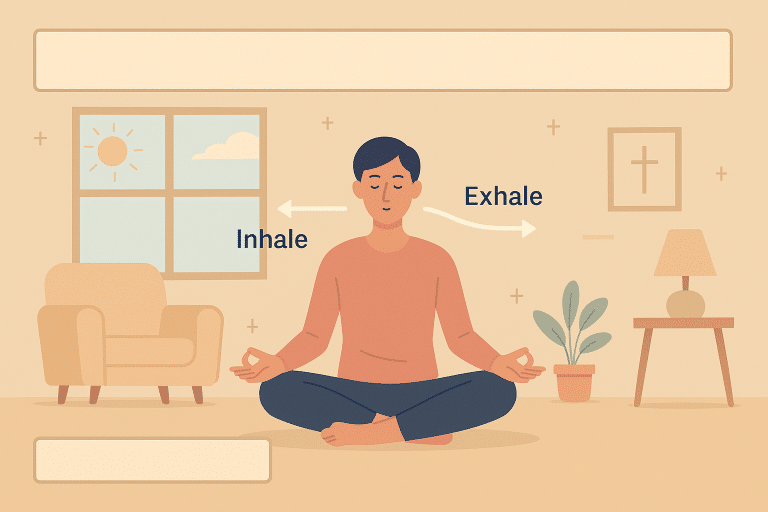
To make this practice truly effective, combine reading with intentional breathing. As you slowly inhale, silently recite a portion of a verse, and as you exhale, recite the next. This simple act of deep, diaphragmatic breathing has a powerful, direct impact on your body’s stress response. Research from institutions like Cleveland Clinic shows that this technique stimulates the vagus nerve, which helps slow your heart rate and lower blood pressure. In other words, you are physically calming your body while spiritually renewing your mind. Over time, consistently turning to a chosen anxiety verse in moments of distress can build new neural pathways, fostering a more resilient and faith-filled response to stress.

Having a specific anxiety verse ready can act as a spiritual anchor, providing immediate comfort and peace when feelings of worry arise.
Scripture on Worry for Finding True REST
When the mind races with worry, God’s word on anxiety offers a profound invitation not just to momentary calm, but to a deep and lasting rest. In fact, Jesus directly addresses those struggling with heavy burdens in Matthew 11:28-30, saying, “Come to me, all you who are weary and burdened, and I will give you rest.” This isn’t merely an instruction to get more sleep, but a call to a state of spiritual and mental repose that, as clinical psychologists note, is essential for a healthy mind. True biblical peace involves entrusting our entire being to God’s care, allowing our over-activated nervous systems to find a true Sabbath. It is a conscious decision to shift our focus from the chaos of our worries to the consistency of His presence.
Anxiety Verse: Cast Your Worries on God
Consequently, this divine rest requires an active release of the very anxieties we tend to hold onto so tightly. The apostle Peter gives us a practical step for this exchange: “Cast all your anxiety on him because he cares for you” (1 Peter 5:7). This act of “casting” is a powerful spiritual discipline that mirrors therapeutic techniques like cognitive reframing. Instead of letting worries circle endlessly, we intentionally hand them over to God. In other words, this practice helps down-regulate the body’s stress response, as described by organizations like the American Psychological Association, moving us from a state of “fight or flight” to one of “rest and digest.” It is an acknowledgment that we were not designed to carry these loads by ourselves.
Ultimately, this journey toward rest culminates in a sense of security that is not dependent on our circumstances. The Psalmist captures this beautifully in Bible Gateway, writing, “In peace I will lie down and sleep, for you alone, Lord, make me dwell in safety.” This scripture on worry highlights that our ability to rest peacefully is directly linked to our trust in God’s sovereign protection. This sense of safety is foundational for anyone grappling with anxiety. Moreover, Christian counselors often emphasize that integrating such truths into our daily thoughts can reshape our neural pathways over time. As explained by the The Gospel Coalition, this biblical concept of rest is a rich theological promise that has real-world implications for our mental and spiritual well-being, offering a true sanctuary from the relentless storm of worry.
How to Activate Your Go-to Anxiety Verse
Simply choosing a go-to anxiety verse is a wonderful first step, but activating its power requires you to intentionally engage with it. In other words, moving from passively reading to actively integrating the scripture into your thoughts can make all the difference. The goal is to transform God’s word from a collection of letters on a page into a living, active truth that reshapes your response to stress. This practice involves creating new neural pathways, allowing the truth of a calming scripture to become your mind’s automatic response when anxious thoughts arise. Over time, this discipline helps embed the verse deep within your memory and heart.
Anxiety Verse Recitation for Peace
One powerful method is to memorize and slowly recite your scripture on worry, paying close attention to each word. For instance, this physical act of speaking can have a profound, calming effect on your nervous system by engaging what experts in psychology call the vagus nerve, which helps regulate stress. Furthermore, you can use the verse as a tool for cognitive reframing, a concept central to Cognitive Behavioral Therapy. When a fearful thought appears, you actively counter it with the truth of your chosen verse. Many also find that writing their verse down in a journal helps solidify its message, a practice supported by research on the benefits of expressive writing from the University of Rochester Medical Center.

When fears about the future arise, scripture on worry offers a powerful anchor. A single anxiety verse can shift your perspective from fear to faith, providing a solid foundation of peace.
Ultimately, these practices are not magic formulas but spiritual disciplines that retrain your mind and spirit. They are intentional ways of taking your thoughts captive and aligning them with the promises of God (2 Corinthians 10:5). Consistently turning to God’s word on anxiety helps interrupt the cycle of worry and allows you to experience the biblical peace that surpasses all understanding. This proactive engagement transforms a simple verse into a powerful anchor, holding you steady through the storms of anxiety and fear.
Integrating God’s Word on Anxiety with Professional Help
While a personal, go-to anxiety verse is a powerful anchor, integrating this spiritual practice with professional help can create a comprehensive support system. In fact, seeking guidance from a licensed therapist or counselor is not a sign of weak faith; rather, it can be an act of wisdom, utilizing the skills God has given to trained professionals. Many Christians find that combining the spiritual truth of scripture with therapeutic strategies provides a robust framework for healing. According to the American Association of Christian Counselors, this integrated approach honors both the spiritual and psychological dimensions of our being, leading to more holistic well-being.
For instance, the practice of meditating on verses about stress directly complements evidence-based therapies like Cognitive Behavioral Therapy (CBT). A core component of CBT involves identifying, challenging, and reframing negative thought patterns. In other words, when an anxious thought arises, you can actively counter it with the truth found in a calming scripture like Philippians 4:13, “I can do all this through him who gives me strength.” This method, as explained by the American Psychological Association, transforms a spiritual discipline into a practical, therapeutic tool that can rewire the brain’s response to worry over time.
Furthermore, it is essential to acknowledge the biological component of anxiety. Our nervous system can become dysregulated, and in some cases, medication may be a necessary tool to restore chemical balance, which is a view supported by many faith leaders and organizations like NAMI FaithNet. Using medication is not a substitute for faith but can be a gift of God’s common grace that calms the body enough to fully engage in therapy and spiritual practices. Ultimately, this allows a person to more effectively apply God’s word on anxiety to their heart and mind, fostering true and lasting peace.
Conclusion: a Life of Biblical Peace Over Fear
Embracing your go-to anxiety verse is more than a momentary comfort; it is the first step on a transformative journey toward a life of biblical peace. Throughout this article, we have explored how God’s word on anxiety serves as a powerful anchor in the stormiest of emotional seas. By understanding the interplay between Christian theology and the science of our nervous system, you can actively rewire your responses to stress. In short, this practice turns passive faith into an active, moment-by-moment reliance on God’s promises, allowing you to find a firm foundation when everything else feels uncertain.
Consequently, this journey doesn’t require a choice between faith and science; in fact, they can work together beautifully. Modern, evidence-based approaches like Cognitive Behavioral Therapy (CBT) are increasingly being integrated with spiritual practices. According to the American Psychological Association, many therapists recognize the profound role faith plays in healing. For those seeking guidance, resources like the American Association of Christian Counselors can connect you with professionals who share your values. Therefore, seeking professional help is not a failure of faith but rather a wise stewardship of the mental and emotional resources God has given you.
Ultimately, the path from fear to faith is a process of renewing your mind, just as Scripture encourages in Romans 12:2. Consistent meditation on Bible verses for anxiety can create new neural pathways, making peace your default response rather than worry. Research has consistently shown a positive link between religious practices and mental well-being, as highlighted in studies from the National Institutes of Health. Continue to build your collection of calming scripture, practice turning to it in moments of distress, and watch as God’s truth slowly but surely replaces the narrative of fear with one of unshakable peace.