
Sympathetic Vs Parasympathetic Nervous System Explained Simply
Estimated reading time: 12 minutes
Are You Wired and Tired? Understanding God’s Design for Rest
Do you ever feel stuck in a state of being both exhausted and on edge? This feeling of being “wired and tired” is incredibly common in our fast-paced world, but it is not the state of peaceful living God desires for us. To understand this struggle from a perspective that integrates both faith and physiology, we need a basic framework for the sympathetic vs parasympathetic nervous system explained simply. In short, God designed your body with two complementary systems: one to act and one to rest. According to the American Psychological Association, chronic activation of the stress system can have significant health consequences, highlighting the need to understand this internal balance.
Fight or Flight Vs. Rest and Digest Explained
Think of your Autonomic Nervous System as having two distinct modes. The first is the Sympathetic Nervous System, often called the “fight or flight” response. This is the body’s accelerator, designed to mobilize you for immediate, intense action—like David facing Goliath. It’s a gift for survival. On the other hand, the Parasympathetic Nervous System serves as the body’s brake, initiating the “rest and digest” response. This system is designed for recovery, healing, and spiritual connection. In other words, it’s in this state of calm that we can most easily follow Jesus’s invitation in Matthew 11:28: “Come to me, all you who are weary and burdened, and I will give you rest.” For instance, studies from institutions like Mayo Clinic show that intentionally activating this rest state is crucial for managing stress.
Unfortunately, modern life—with its constant digital notifications, social pressures, and demanding schedules—can hijack our internal wiring, leaving the accelerator floored and the brakes worn out. This chronic state of “fight or flight” keeps us from the spiritual, emotional, and physical restoration God intends for His children. Understanding how these systems work is not just a scientific exercise; rather, it is an act of stewardship over the bodies God has given us. As a result, we can partner with Him, using both spiritual disciplines and practical, evidence-based techniques to find true rest. As explained by Christian mental health advocates at AACC, integrating our faith with psychological insights provides a powerful path toward holistic well-being.
The Autonomic Nervous System Explained: Your Body’s God-given Control Center
God, in His infinite wisdom, designed our bodies with a remarkable internal control system that operates without our conscious thought. This is the Autonomic Nervous System (ANS), the part of our physiology responsible for regulating essential functions like heart rate, digestion, and breathing. In other words, it’s the silent, steady hand that keeps our internal world in balance. Understanding this system is a key first step in Christian stress management, as it reveals the intricate care woven into our very being. It’s composed of two main branches working in harmony, which provides a framework for the sympathetic vs parasympathetic nervous system explained simply.
Fight or Flight Vs. Rest and Digest Explained
Think of the two branches of the ANS like the gas and brake pedals in a car. The Sympathetic Nervous System is the gas pedal; it activates the “fight or flight” response to prepare you for action or perceived danger. Conversely, the Parasympathetic Nervous System acts as the brake, initiating the “rest and digest” state that calms your body and conserves energy. According to the Cleveland Clinic, these two systems are meant to work in a dynamic balance. When this balance is disrupted, for instance by chronic stress, we can feel perpetually “on,” leading to both physical and spiritual exhaustion.

Feeling ‘wired and tired’ often means your sympathetic nervous system is dominant. God designed our bodies to find balance through the parasympathetic ‘rest and digest’ state, which is essential for true restoration and peace.
This brilliant design is a testament to the truth found in Psalm 139:14, that we are “fearfully and wonderfully made.” These systems are not a design flaw but a divine provision for navigating the world. However, in our fallen world, the “fight or flight” response can become chronically activated. As explained by Simply Psychology, prolonged sympathetic activation is linked to anxiety and other health issues. Therefore, learning how to calm our nervous system isn’t just a health strategy; it’s a way of stewarding the body God gave us, partnering with Him to restore the peaceful, balanced function He intended. We honor His design when we seek this regulation through both spiritual disciplines and evidence-based care, a connection highlighted by research from the National Institutes of Health on stress and the body.
The ‘fight or Flight’ Response: Your Sympathetic Nervous System Explained
To truly grasp the dynamics of your internal world, especially the tug-of-war between “fight or flight vs rest and digest,” we must first explore the body’s God-given alarm system: the Sympathetic Nervous System (SNS). Think of the SNS as a divinely installed first responder. When your brain perceives a threat—whether it’s a car swerving into your lane or a stressful email from your boss—it’s the sympathetic division that leaps into action. This powerful system was designed by a loving Creator not for our harm, but for our protection, equipping us with the immediate resources needed to confront or flee from genuine danger. It is a beautiful and intricate part of His design for our preservation.
Understanding Your Fight or Flight Response
Once triggered, the SNS unleashes a cascade of physiological changes to prepare you for action. Your adrenal glands, for instance, release adrenaline and cortisol, which act like a high-octane fuel source for your body. According to the Cleveland Clinic, this hormonal surge increases your heart rate, elevates blood pressure, and sends more oxygen-rich blood to your muscles. In other words, every system is primed for peak performance in a crisis. This response is not inherently sinful or bad; on the contrary, it is a testament to the wisdom woven into our very cells, enabling us to protect ourselves and others in moments of peril.
However, this system, intended for short-term emergencies, can get stuck in the “on” position in our modern world of chronic stressors. The constant pressure from work, finances, and even the 24-hour news cycle can lead to a state of prolonged sympathetic activation, contributing to anxiety, burnout, and physical ailments as noted by The American Psychological Association. This state of being perpetually “wired and tired” is not the abundant life God desires for us. As an antidote, Scripture reminds us of our true source of peace, stating, “For God has not given us a spirit of fear, but of power and of love and of a sound mind” (2 Timothy 1:7). Understanding this physiological reality is the first step in applying timeless biblical truths to modern Christian stress management.
The ‘Rest and Digest’ System: How God Designed Parasympathetic Calm
In stark contrast to the emergency-ready ‘fight or flight’ response, God also designed a beautiful, intricate system for calm and recovery. This provides a clear answer when seeking the sympathetic vs parasympathetic nervous system explained simply: one is for stress, and the other is for peace. Known as the Parasympathetic Nervous System, this is our God-given ‘rest and digest’ mode. When activated, primarily through the crucial Vagus Nerve, it slows the heart rate, aids digestion, and conserves energy. In essence, it’s the physiological state where our bodies can heal and restore themselves, a process experts at the Cleveland Clinic describe as essential for long-term health.
How to Calm Your Nervous System for God’s REST

God designed our autonomic nervous system with two core branches: the sympathetic (‘fight or flight’) for responding to stress and the parasympathetic (‘rest and digest’) for promoting calm and recovery.
This biological design beautifully mirrors God’s spiritual promises for rest. When Jesus invites us, “Come to me, all you who are weary and burdened, and I will give you rest” (Matthew 11:28), He is speaking to a need woven into our very creation. Therefore, engaging our parasympathetic system is not merely a secular self-care trick; it is a way of physically embracing the peace He offers. Our physiology is designed to respond to safety and tranquility. For instance, according to the Mayo Clinic, deliberately activating this calm state can reduce symptoms of stress and improve overall well-being, demonstrating a harmony between faith and physiology.
Thankfully, many Christian spiritual disciplines are powerful tools for nervous system regulation. Practices like contemplative prayer, meditative scripture reading, and even singing hymns can directly stimulate the Vagus Nerve, which in turn signals to your brain and body that you are safe. This process effectively helps to calm your nervous system. Indeed, research highlighted by institutions like the National Institutes of Health has shown that mindfulness and meditation have measurable positive effects on heart rate variability, a key indicator of parasympathetic activity. This reveals that ancient faith practices have profound, evidence-based benefits for our modern, stressed-out lives.
Sympathetic vs Parasympathetic: Why We Get Stuck in Survival Mode
Understanding the delicate balance of the sympathetic vs parasympathetic nervous system explained simply is key to grasping why we often feel spiritually and physically drained. Ideally, our body shifts smoothly between the Sympathetic Nervous System’s “fight or flight” accelerator and the Parasympathetic Nervous System’s “rest and digest” brake. However, modern life—with its constant digital notifications, financial pressures, and relational stress—can jam the accelerator pedal down. Consequently, our bodies get stuck in a state of high alert, a condition some researchers call a high allostatic load, as explained by Simply Psychology. This chronic activation was never part of God’s original design for our physiology, which was intended to handle acute dangers, not a perpetual state of perceived threat.
How Fight or Flight Harms Health & Faith
This prolonged state of survival mode does more than just exhaust us; it can profoundly impact our health and our walk with God. When the sympathetic system runs unchecked, it can contribute to anxiety, digestive issues, and even heart problems, as detailed by the American Psychological Association. Spiritually, it becomes incredibly difficult to feel the peace that surpasses all understanding (Philippians 4:7) when your body is screaming that you are in danger. In other words, this physiological imbalance creates significant static, making it harder to hear God’s still, small voice and trust in His sovereign care. It is not a failure of faith, but rather a response of a body under a heavy and sustained burden.
Thankfully, we are not helpless in this struggle. Recognizing that you are stuck in survival mode is the first, crucial step toward healing and finding biblical calm. God designed our Autonomic Nervous System with an incredible capacity for regulation, and He invites us into practices that actively engage the parasympathetic “rest and digest” response. As we will explore, simple, faith-infused techniques can help us consciously apply the brakes, calm our nervous system, and create the internal space necessary for spiritual rest and renewal. For instance, experts at Harvard Health confirm that intentional practices like deep breathing can effectively counteract the body’s stress response, aligning modern science with timeless spiritual wisdom.
Biblical Calm Techniques: Faith-based Nervous System Regulation Tips
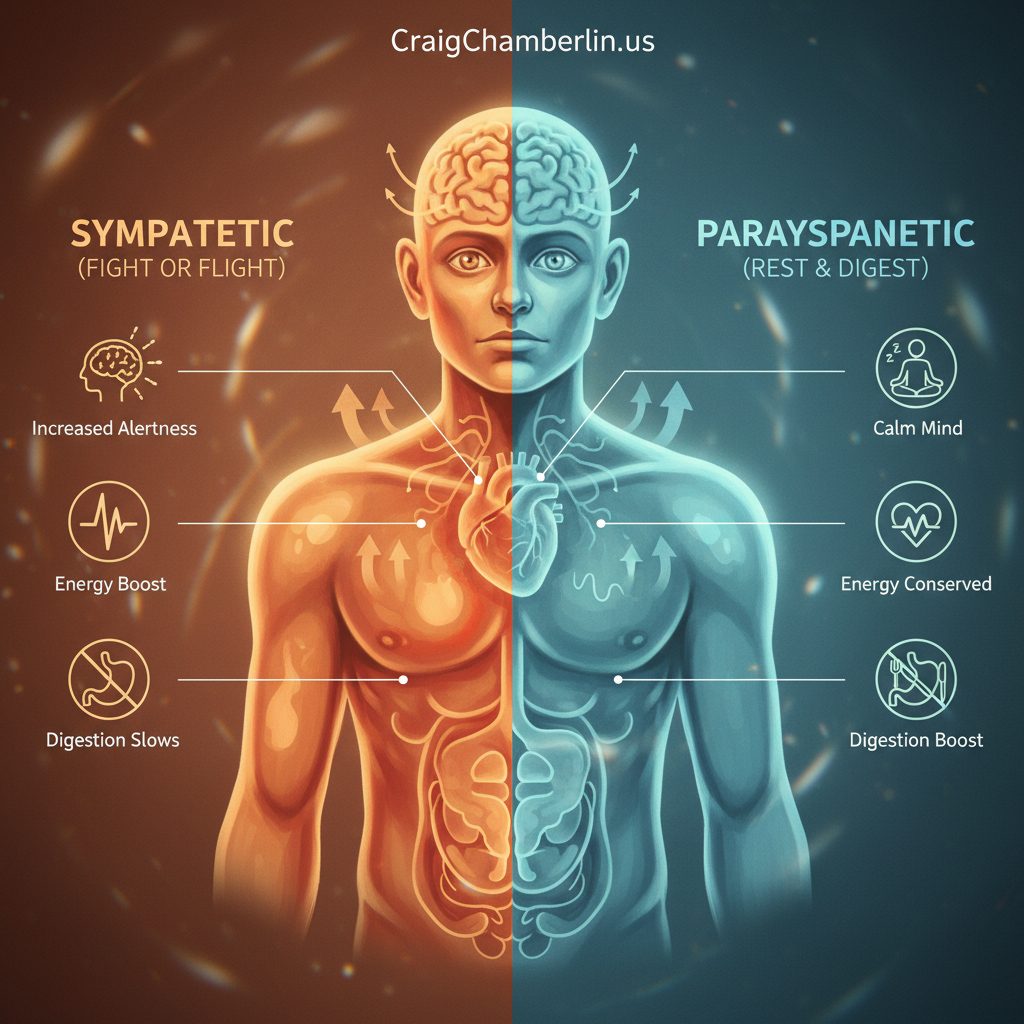
This illustration shows how the sympathetic nervous system activates the ‘fight or flight’ response, preparing your body to face a perceived threat. This is a God-given mechanism designed for our protection in stressful situations.
Integrating faith into our daily lives offers powerful nervous system regulation tips that honor God’s design for rest. When we feel overwhelmed, Christian stress management isn’t just about wishful thinking; it directly engages our physiology to shift us from a state of fight or flight to one of peace. For instance, the Apostle Paul encourages us in Philippians 4:6-7 to “present your requests to God” with thanksgiving, promising that a transcendent peace will guard our hearts and minds. This practice of contemplative prayer can have profound effects on our physical bodies. In fact, studies from institutions like the National Institutes of Health have shown that meditative practices can reduce stress and promote relaxation, which are hallmarks of a regulated autonomic nervous system.
Another practical and deeply spiritual technique is the use of “breath prayers.” This involves aligning slow, deep breathing with a short, repetitive prayer. For example, you might inhale to the words “The Lord is my shepherd,” and exhale to “I shall not want” (Psalm 23:1). This simple act of diaphragmatic breathing is a powerful tool for how to calm your nervous system, as it directly stimulates the Vagus Nerve, activating your parasympathetic “rest and digest” response. In addition, cultivating a spirit of gratitude, as encouraged in 1 Thessalonians 5:18, can fundamentally shift your perspective and physiology. Research from sources like Harvard Medical School confirms that gratitude is strongly and consistently associated with greater happiness. Consequently, these faith-based practices provide tangible ways to live out the peace God promises us.
How to Calm Your Nervous System with Therapy and Practical Steps
While spiritual disciplines are foundational, understanding how to calm your nervous system often involves embracing the practical wisdom God provides through skilled professionals. Seeking help from a licensed therapist is not a sign of weak faith; on the contrary, it is an act of wise stewardship over the mind and body God has given you. The Bible reminds us, “Where there is no guidance, a people falls, but in an abundance of counselors there is safety” (Proverbs 11:14). Professional therapy offers a confidential space to untangle the roots of anxiety and learn evidence-based nervous system regulation tips. In fact, according to the American Psychological Association, therapy helps millions of people of all ages live healthier, more productive lives by equipping them with effective coping strategies.
For instance, many Christians have found profound healing through therapeutic models like Cognitive Behavioral Therapy (CBT). CBT is a practical approach that helps you identify and reframe the automatic negative thoughts that can trigger your sympathetic nervous system’s fight or flight response. This process aligns beautifully with the scriptural call to “take every thought captive” (2 Corinthians 10:5). In addition, therapists can teach tangible exercises such as paced breathing or mindfulness, which are scientifically shown by institutions like the National Institute of Mental Health to stimulate the vagus nerve and activate your parasympathetic rest and digest state. As a result, engaging with these tools, which are supported by extensive research cited by outlets like Harvard Health Publishing, can be a powerful part of your Christian stress management journey, helping you care for the temple of the Holy Spirit.
Conclusion: a Practical Invitation to God’s Rhythm of Rest
Understanding the dynamic of fight or flight vs rest and digest is more than a biological lesson; it is an invitation into a deeper relationship with God. This journey through our God-given wiring reveals a profound truth: our Creator designed us for a rhythm of activity and peace. In other words, managing our stress is not just about feeling better, but about aligning ourselves with the divine intention for our lives, a concept the Bible calls “Shalom.” This holistic peace, as explored by resources like The Bible Project, involves the complete well-being of the whole person in relationship with God and others.
Therefore, integrating faith-based nervous system regulation tips—like breath prayer or mindful scripture meditation—is an act of wise stewardship. When needed, seeking professional counsel from a therapy perspective is not a sign of weak faith; on the contrary, it demonstrates courage in caring for the intricate systems God has given us, a mind-body connection validated by institutions like the National Institutes of Health. Ultimately, as we partner with God to calm our nervous system, we more fully embody the peace Christ promised—a peace that, as the Scriptures say, surpasses all understanding (Philippians 4:7).