Sensory Overload in Crowded Places Coping Tips: A Guide
Estimated reading time: 12 minutes
Introduction: Finding God’s Stillness in a World of Noise
Does the vibrant energy of a fellowship hall, a bustling conference, or even a large worship service sometimes feel like too much? For many, what begins as joyful community can quickly become a disorienting wave of noise, light, and movement. If you find yourself feeling overwhelmed and needing to escape, you are not alone, and this experience is not a reflection of your faith. This article is designed to offer compassionate, faith-based, and practical sensory overload in crowded places coping tips, helping you find God’s peace in the midst of life’s beautiful chaos. In other words, we will explore how you can remain present and engaged without sacrificing your well-being.
Managing Sensory Overload in Crowds
This intense experience, often called overstimulation in crowds, is a very real physiological response. In fact, many people have a temperament known as Sensory Processing Sensitivity, a trait that involves deeper cognitive processing of physical, social, and emotional stimuli, as detailed by sources like Psychology Today. Consequently, their nervous system can become dysregulated more easily in high-stimulus environments. This is not a disorder or a weakness, but rather a God-given way of wiring that comes with unique strengths. The Bible reminds us to “Be still, and know that I am God” (Psalm 46:10), a call that invites us not only into spiritual quiet but also into the crucial practice of nervous system regulation. God designed our intricate bodies, and He provides a path to stillness even when the world feels loud.
Therefore, how do we bridge the gap between our physiological needs and our spiritual life? We can start by viewing evidence-based psychological tools as gifts for stewarding our minds and bodies well. For instance, therapeutic approaches like Cognitive Behavioral Therapy (CBT), which the American Psychological Association describes as highly effective for anxiety, offer practical skills for reframing overwhelming thoughts. When we combine these proven strategies with Christian mindfulness and prayer, we create a holistic approach to wellness. As organizations like the Biblical Counseling Center emphasize, faith and practical mental health strategies can work hand-in-hand. This guide will walk you through these integrated techniques, empowering you to find peace in chaos and fully embrace the community you cherish.
Understanding Sensory Overload: a God-given Nervous System Response
Finding effective sensory overload in crowded places coping tips begins with understanding the source of the overwhelm. Far from being a spiritual weakness, this experience is a natural response from a nervous system wonderfully designed by God. In essence, when your brain perceives an unmanageable flood of input—like the cacophony of sounds, sights, and movements in a busy market—it activates an internal alarm. For instance, this reaction is not a flaw but a God-given protective mechanism signaling that your capacity has been reached and it is time to seek a calmer environment. This perspective shifts the focus from self-criticism to compassionate self-stewardship.
Tips for Sensory Overload in Crowded Places
Our brains are miraculously complex, yet they have intentional limits. As explained by experts in sensory health, like those at the STAR Institute for Sensory Processing, our minds are constantly working to organize countless sensory inputs. In a crowded setting, this system can become completely inundated, leading to the anxiety and stress characteristic of overstimulation. This isn’t a sign of being broken; rather, it reminds us that we are ‘fearfully and wonderfully made’ (Psalm 139:14). These limits are a part of our human design, pointing to our need for intentional rest and nervous system regulation.

Finding a moment of peace with God amidst the noise is a powerful first step. These sensory overload in crowded places coping tips can help you find stillness even in a crowd.
Consequently, the intense feelings of anxiety or even panic attacks that arise can be misinterpreted as a failure of faith. However, God’s grace fully encompasses our human biology. The peace that God offers ‘transcends all understanding’ (Philippians 4:7) and can guard our hearts and minds even when our bodies are in distress. Understanding the physiological roots of sensory overload frees us to embrace both spiritual practices and evidence-based help. According to the American Psychological Association, therapies like Cognitive Behavioral Therapy (CBT) are highly effective. Integrating these tools with faith, as encouraged by organizations like the American Association of Christian Counselors, is a powerful path toward holistic well-being.
Grounding Techniques: Biblical Help for Overwhelm in the Moment
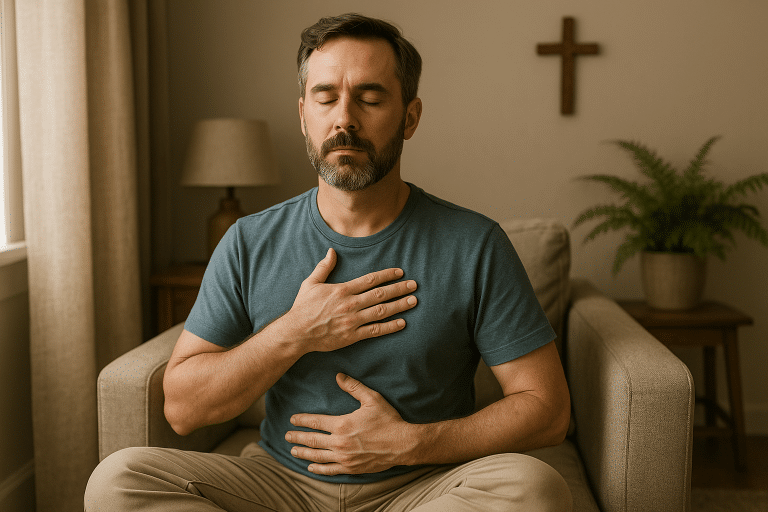
When you need immediate biblical help for overwhelm, grounding techniques can be a lifeline. These simple, evidence-based practices are powerful sensory overload in crowded places coping tips because they pull your attention away from the overwhelming chaos and back to the present moment. In essence, grounding reconnects your mind with your body, anchoring you in the physical reality of God’s creation. This act of intentional presence helps with nervous system regulation, reminding you that even in a crowd, you are held in God’s unwavering peace. It is a practical way to “be still, and know that I am God” (Psalm 46:10), right where you are.
Coping with Sensory Overload: the 5-4-3-2-1 Method
A widely used method recommended by therapists practicing Cognitive Behavioral Therapy (CBT) is the 5-4-3-2-1 technique. When you feel overstimulation in crowds building, pause and intentionally notice five things you can see, four things you can feel, three things you can hear, two things you can smell, and one thing you can taste. This cognitive exercise redirects your focus to the tangible world God has made, interrupting the cycle of anxiety. For instance, you might notice the texture of your sleeve or the distant sound of a bell. This mindful observation is a form of prayer, fulfilling the command to think about what is true and lovely (Philippians 4:8) and calming your spirit in the process.
Another powerful tool involves focused breathing and touch. You can practice “box breathing”: inhale for four seconds, hold for four, exhale for four, and hold again for four. While doing this, you might also hold a small, smooth stone or a cross in your pocket, focusing on its solid, cool feel. This combination of regulated breathing and tactile sensation provides your brain with a competing, calming signal. Consequently, it lessens the intensity of the external sensory input causing panic attacks. This is a physical embodiment of casting your anxieties on Him, because He cares for you (1 Peter 5:7), allowing His peace to guard your heart and mind.
Proactive Planning: Practical Sensory Overload in Crowded Places Coping Tips
Anticipating challenges is a cornerstone of a faith-filled, peaceful life, and this wisdom applies directly to our discussion of practical sensory overload in crowded places coping tips. Rather than simply reacting to overwhelm, we can proactively prepare our minds and bodies, an approach that honors the sensitive nervous systems God gave us. For instance, by creating a plan before entering a potentially chaotic environment, we can significantly reduce the anxiety that often accompanies sensory processing sensitivity. This preparation is not about a lack of faith, but rather a wise stewardship of our well-being, allowing us to engage with the world more freely.
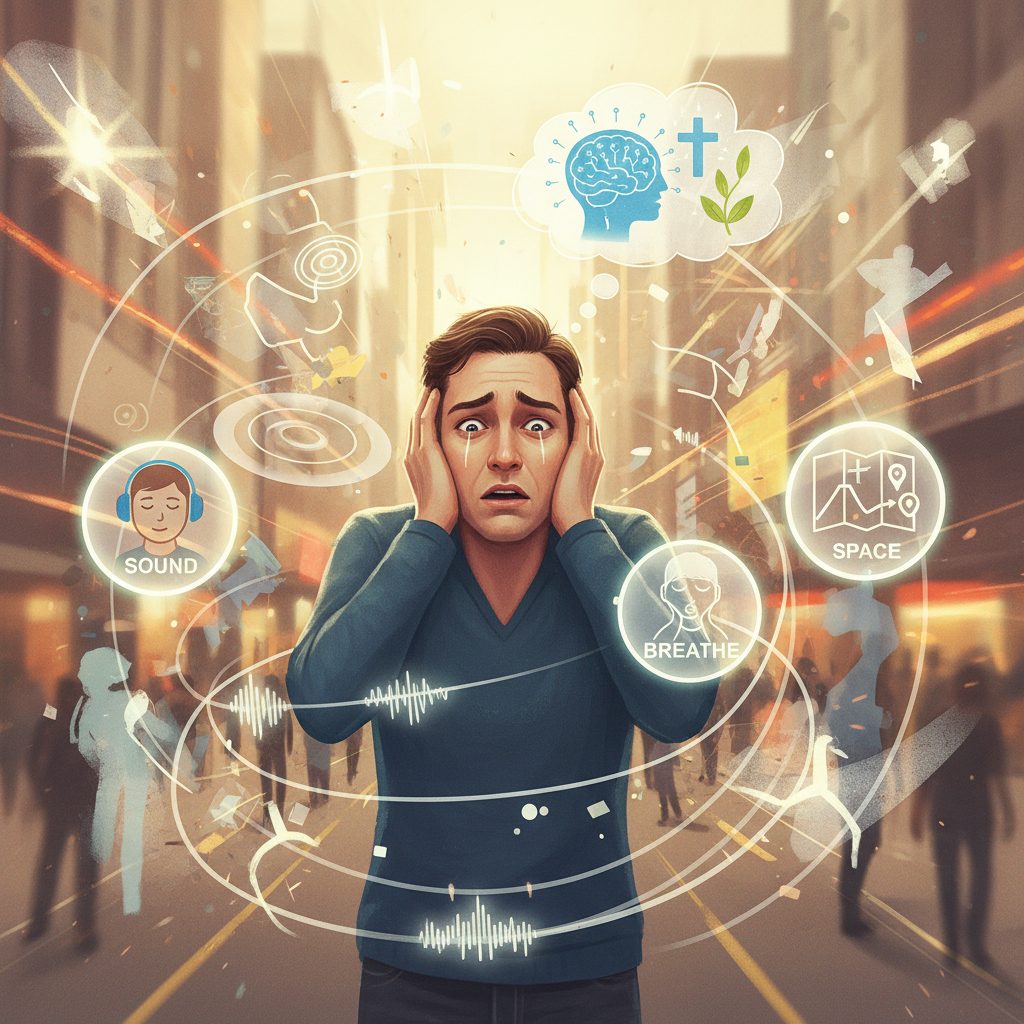
One of the most effective strategies for managing sensory issues is to prepare a physical toolkit and scout the environment. This might include noise-reducing earplugs, sunglasses to soften harsh lighting, or a small, grounding object to discreetly hold in your pocket. As experts at Healthline Sensory Overload explain, managing external stimuli is key to preventing overwhelm. In addition, you can try visiting a new place during off-peak hours to familiarize yourself with the layout, identifying quieter areas or exits you can use if you begin to feel overstimulated.
Pre-crowd Prayer & Mindset Strategies
Beyond physical tools, spiritual and mental preparation are vital. Before you leave home, take a moment for quiet prayer, asking for God’s peace which “transcends all understanding” (Philippians 4:7) to guard your heart and mind. This practice aligns with principles of Cognitive Behavioral Therapy (CBT), which involves identifying and reframing anxious thoughts before they spiral. According to the American Psychological Association, CBT techniques empower individuals to change their behavioral responses to stress. In other words, you can rehearse a new, more peaceful reaction in your mind before ever stepping into the crowd.
Finally, always establish a clear exit strategy. This isn’t admitting defeat; on the contrary, it is exercising the wisdom found in Proverbs 22:3: “The prudent see danger and take refuge, but the simple keep going and pay the penalty.” Knowing you have a planned escape route—whether it’s stepping outside for five minutes or simply heading home—can prevent the feeling of being trapped, a common trigger for panic attacks. As detailed by resources like Verywell Mind on managing anxiety in public spaces, having a sense of control is incredibly empowering. This foresight allows you to regulate your nervous system and re-engage when you feel ready.
The Power of Prayer and Mindfulness in Managing Sensory Issues
For Christians seeking help with managing sensory issues, integrating prayer with mindfulness offers a powerful pathway to peace. This approach, often called Christian mindfulness, is not about emptying the mind but rather filling it with God’s presence and truth. According to sources like Psychology Today, this reframing is key to its effectiveness and can profoundly aid in nervous system regulation. Indeed, the Apostle Paul encourages this focus when he writes, “Finally, brothers and sisters, whatever is true, whatever is noble, whatever is right, whatever is pure, whatever is lovely, whatever is admirable—if anything is excellent or praiseworthy—think about such things” (Philippians 4:8). This practice directly counters the chaotic inputs that cause overstimulation in crowds, creating a sanctuary within your own mind.
A simple yet profound technique is the breath prayer. As you inhale, you might silently pray a name for God, like “Abba, Father,” and as you exhale, a simple petition, such as “grant me peace.” Consequently, this rhythmic practice of prayerful breathing can slow a racing heart and calm anxious thoughts, a benefit of mindfulness recognized by the American Psychological Association. Research has also explored the positive effects of prayer on anxiety, such as work discussed by Baylor University, showing a measurable impact on well-being. Furthermore, Christian counselors often integrate these methods, viewing them as a way to practically apply the biblical call to “be still, and know that I am God” (Psalm 46:10), a concept explored by resources like Focus on the Family. This demonstrates that faith and psychology can work hand-in-hand, offering some of the most effective sensory overload in crowded places coping tips.
Seeking Professional Support: When Crowd Anxiety Help Is Needed

When facing sensory overload, grounding yourself in prayer can be a powerful biblical technique to manage overstimulation in the moment, even in the most crowded places.
While the spiritual and practical strategies discussed earlier are foundational, there are times when seeking professional crowd anxiety help is a wise and necessary step. In fact, recognizing when we need support beyond our own capacity is a sign of humility and good stewardship of our mental health. If you find that sensory overload consistently leads to severe anxiety, panic attacks, or causes you to avoid essential activities, it may be time to consult a professional. God provides healing through many channels, and for many people, evidence-based therapy and medicine are powerful instruments of His grace and care.
Several therapeutic avenues can offer significant relief from overstimulation in crowds. For instance, Cognitive Behavioral Therapy (CBT) is a highly effective approach for managing anxiety. According to the American Psychological Association, CBT helps individuals identify and challenge distorted thought patterns and change their behavioral responses to anxious situations. Furthermore, you might seek a therapist specializing in Sensory Processing Sensitivity. These professionals, often found through resources like the STAR Institute for Sensory Processing, can provide tailored strategies for nervous system regulation.
In some circumstances, a medical professional might also recommend medication to help manage the physiological symptoms of severe anxiety. It’s important to view this not as a spiritual failing, but as a medical tool that can help regulate an overwhelmed nervous system, thereby creating the stability needed to effectively practice other coping strategies. This aligns with the biblical call to care for our bodies as temples of the Holy Spirit (1 Corinthians 6:19-20). As explained by the National Institute of Mental Health, medications can be a critical part of a comprehensive treatment plan. Ultimately, seeking professional support is a courageous step toward embracing the full and peaceful life God desires for you.
Creating a Sensory Toolkit: Your Practical Christian Sensory Strategies
Developing a set of practical Christian sensory strategies is a powerful way to prepare for overwhelming situations. Think of this as creating a personal “toolkit,” a collection of physical and spiritual resources you can turn to for managing sensory issues before they escalate. Consequently, this proactive approach transforms our response from reactive panic into intentional care for our God-given nervous system. It is about being wise and prepared, embodying the spirit of the faithful servant who stewards their resources well, including their own well-being.
Your physical toolkit might include items designed for nervous system regulation. For instance, high-fidelity earplugs or noise-canceling headphones can significantly reduce overstimulation in crowds. Similarly, sunglasses can ease visual stress under harsh lighting. Many people also find comfort in tactile tools; for example, a smooth stone, a fidget spinner, or a small tube of calming lavender lotion can provide a grounding focal point. As explained by the STAR Institute for Sensory Processing, these tools help manage sensory input. Furthermore, research increasingly supports the use of aromatherapy for anxiety, with sources like Healthline Essential Oils for Anxiety noting its calming effects.
Alongside these physical aids, your spiritual toolkit is equally vital for finding peace in chaos. This might be as simple as a note card with a comforting scripture, such as Philippians 4:7: “And the peace of God, which transcends all understanding, will guard your hearts and your minds in Christ Jesus.” In addition, you could have a playlist of calming worship music ready on your phone or use a prayer app. These spiritual anchors work in tandem with physical tools to offer holistic support. Integrating faith into these moments is a core part of Christian mindfulness, a concept supported by organizations like the American Association of Christian Counselors, which champions the connection between psychological health and spiritual life.
Conclusion: Walk in Peace, Not Overwhelm
Mastering sensory overload in crowded places coping tips is not about eliminating your God-given sensitivity, but about stewarding it with grace and wisdom. Throughout this journey, we have reframed overstimulation as a physiological response of the nervous system, not a failure of faith. Instead of condemnation, God offers His peace, a peace that, as we learn from Bible Gateway, is unlike anything the world can give. Understanding our unique wiring, a topic explored by experts at the STAR Institute for Sensory Processing, is a critical first step. Ultimately, He invites us to walk in His strength, transforming potential panic into an opportunity to depend on Him more deeply.
Therefore, embracing the practical and spiritual tools discussed—from grounding techniques to creating Christian sensory strategies—is an act of faithful stewardship in managing sensory issues. This journey toward coping with overwhelm is about progress, not perfection. For some, the path may also include seeking professional crowd anxiety help. Evidence-based methods like Cognitive Behavioral Therapy (CBT), explained well by the American Psychological Association, are valuable tools that can be integrated into a faith-based approach, a perspective supported by organizations like the American Association of Christian Counselors. Consequently, you are equipped to step out in faith, not fear, finding peace in the chaos and trusting that He who began a good work in you will carry it on to completion.