How to Stop a Panic Attack Using Breathing Exercises
Estimated reading time: 12 minutes
When Fear Overwhelms: a Christian’s First Step to Calm
In moments of overwhelming fear, discovering how to stop a panic attack is crucial. Therefore, in moments of overwhelming fear, discovering how to stop a panic attack using breathing exercises can be a powerful first step. It is also faith-affirming. At such times, when your heart pounds and your thoughts race, it’s easy to feel a disconnect. This involves the peace promised in Scripture. It also involves the terror you’re experiencing. However, a panic attack is not a failure of faith. In fact, it is an intense physiological event, often described as a sudden adrenaline surge that triggers the body’s fight-or-flight response, according to Medical News Today. Understanding this physical reality is crucial because it allows us to respond with both grace for ourselves and wisdom in our actions.
God Designed Our Bodies
Ultimately, God designed our bodies with these protective systems. However, He also provided a beautiful, built-in tool for calm. It is our breath. Researchers at Stanford Medicine note that breathing is unique. It is both an automatic function and something we can consciously control. This makes it a powerful bridge between our mind and body. Although Jesus gives us a peace the world cannot understand (John 14:27), Bible Gateway / Medical Data notes that worldly pressures can still overwhelm our earthly bodies. Therefore, using our breath is a practical way to steward our bodies and anchor our minds back to the present moment where God’s peace can be found.
Consequently, approaching panic attack breathing techniques is not about denying our fear. Instead, it is about engaging it. Indeed, God has provided. These are the tools. This process involves more than just inhaling and exhaling; it’s about intentionally calming our Nervous System and reminding our spirit of God’s sovereignty. As experts at Cleveland Clinic explain, simply reminding yourself that the intense feeling is temporary and will pass is a key cognitive strategy. In the sections that follow, we will explore specific, Christ-centered breathing prayers and faith-based grounding exercises to help you reclaim calm and find biblical anxiety relief in the midst of the storm.
What Is a Panic Attack? a Christian Perspective on Mind and Body
Understanding what happens during an anxiety attack is the first step. Therefore, this helps in learning how to stop a panic attack. It involves using breathing exercises. From a physical standpoint, a panic attack is an overwhelming surge of intense fear. Medical News Today often describes it as a sudden adrenaline rush that triggers the body’s fight-or-flight response. Consequently, this can feel terrifying and confusing, especially for a person of faith. It is crucial to remember, however, that this physiological event is not a reflection of a weak spirit, but rather a response from a body that is fearfully and wonderfully made yet living in a fallen world.
The Sensations Are Frightening, But Not Dangerous.
During this intense response, your body experiences real, physical symptoms like a racing heart, shortness of breath, and dizziness. These sensations are frightening. However, it is vital to recognize that panic attacks are time-limited. They are also not life-threatening. The Cleveland Clinic notes this. This knowledge itself is a powerful tool for grounding yourself in reality when your feelings are chaotic. Therefore, as Christians, we can cling to the dual truth that while our bodies may be in distress, our lives are secure in God’s hands (John 10:28), and the physical storm will indeed pass.

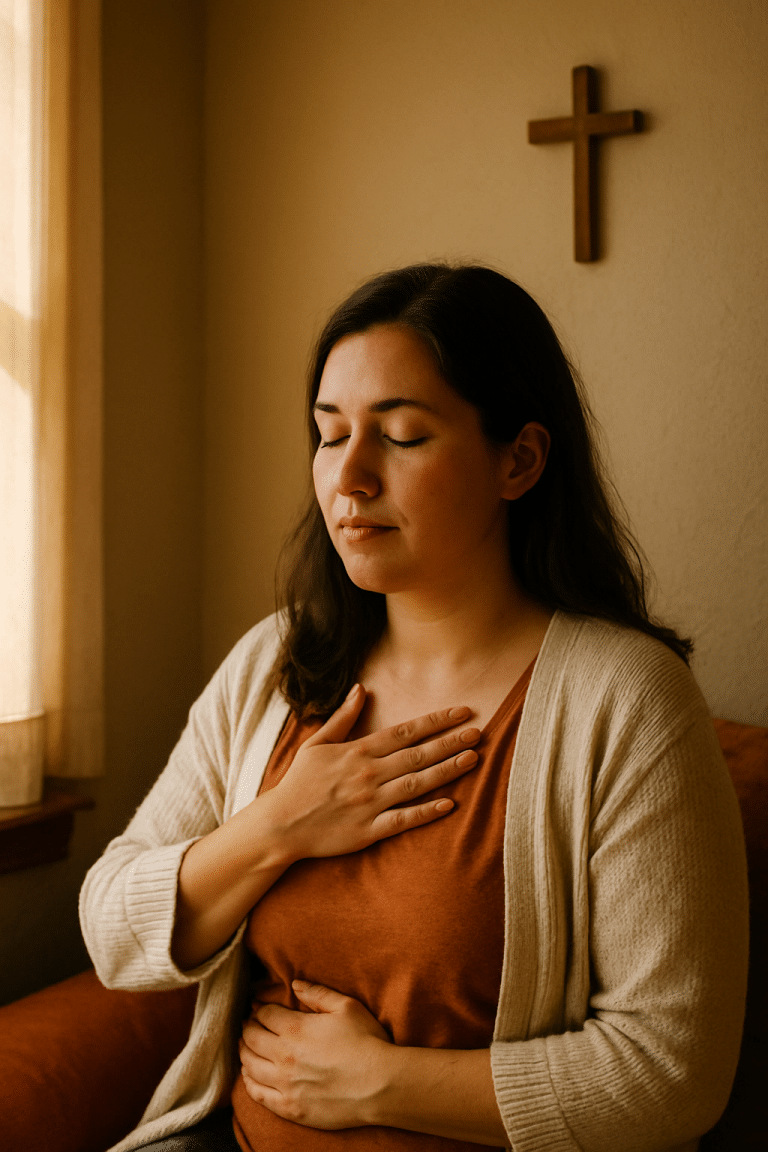
When fear overwhelms, focusing on your breath is a powerful first step. These panic attack breathing techniques can ground you in the present moment and restore a sense of God’s peace.
Indeed, this experience highlights the profound connection between our mind and body, a design from our Creator. In fact, our breath serves as a powerful, God-given bridge between our physical and spiritual state. Research from Stanford Medicine explains that breathing is unique. It is an automatic function. However, we can also consciously control it. As the Biblical Counseling Coalition points out, this connects directly to the theological concept of the ‘breath of life.’ Ultimately, by intentionally guiding our breath, we can actively participate in calming our nervous system and stewarding the peace God offers.
The Science of Calm: How Breathing Exercises Stop a Panic Attack
Essentially, understanding how to stop a panic attack using breathing exercises starts with acknowledging the biology at play. Indeed, a panic attack is a sudden, overwhelming surge of adrenaline that triggers the body’s “fight or flight” response. Medical News Today explains why symptoms like a racing heart and shortness of breath occur. Remarkably, our breath serves as a unique bridge. It connects our automatic bodily functions with our conscious will. Because breathing is a process we can deliberately control, it becomes one of the most powerful tools for managing our internal state, a concept that researchers at Stanford Medicine emphasize. Consequently, by intentionally changing our breathing pattern, we can directly influence our body’s physiological panic response.
Taking Back Your Power
When you deliberately engage in calm breathing for anxiety, then you are actively signaling to your Nervous System. In doing so, you signal this. The perceived danger has passed. For instance, slow, deep breaths—especially with a prolonged exhalation—stimulate the Vagus Nerve. This helps regulate key bodily functions and promotes a state of rest. According to UCLA Health, this serves as a direct physiological countermeasure to the stress and anxiety cascade. In effect, you are using the body’s own built-in calming mechanism to restore balance and interrupt the feedback loop of fear. This conscious action is a beautiful example of stewarding the intricate body God has given us.
Additionally, from a faith perspective, this physical intervention carries profound spiritual weight. The very act of breathing connects us to God. He first breathed the “breath of life” into humanity. Indeed, this act is recorded. It is detailed in Genesis 2:7. Therefore, when we use panic attack breathing techniques, we are not just performing a clinical exercise; we are partnering with God’s design for our bodies to find peace. The Biblical Counseling Coalition effectively frames this as aligning our physical state with the spiritual truth of God’s life-giving presence. Ultimately, each intentional breath can become a prayer—a physical declaration of trust in the One who holds our very next breath.
Step-by-step Guide: How to Stop a Panic Attack Using Breathing Exercises
When a panic attack strikes, then knowing how to stop a panic attack using breathing exercises provides an immediate, powerful tool. Indeed, a panic attack is fundamentally a physiological event. Medical News Today describes it as a sudden surge of adrenaline that triggers the fight-or-flight response. Fortunately, God designed our bodies. We have a brilliant mechanism for regaining control. As researchers at Stanford Medicine explain, our breath is unique because it is both an automatic function and something we can consciously command, making it the perfect bridge between our physical state and our spiritual will.

Understanding the connection between your mind, body, and spirit is the first step in finding peace during overwhelming moments of anxiety.
How To Begin
To begin this panic attack breathing technique, first, find a comfortable place to sit or stand. Then, place a hand. Put it on your stomach. Next, close your mouth. Afterward, inhale slowly and deeply through your nose for a count of four. Feel your stomach rise. Then, hold your breath for just a moment. Finally, and most importantly, exhale very slowly through your mouth for a count of six or eight, making the exhale noticeably longer than the inhale. This simple process of calm breathing for anxiety is a direct physiological countermeasure to the body’s stress signals, a point UCLA Health emphasizes. Repeating this cycle for one or two minutes can significantly calm your nervous system.
Moreover, you can transform this physical act into a powerful breathing prayer for panic. For instance, as you inhale, meditate on receiving the peace that Christ promises in John 14:27. Conversely, as you exhale, consciously release your specific fears and worries into His loving care. This faith-based grounding exercise aligns with sound cognitive advice. Indeed, the Cleveland Clinic highlights this important advice. You should remind yourself that intense feelings are temporary. Furthermore, it emphasizes that you are not in danger. Therefore, by pairing biblical truth with intentional breath, you actively steward both your body and spirit back toward a state of God-given peace.
Breathing Prayer for Panic: Infusing Your Faith Into a Grounding Exercise
Indeed, a breathing prayer for panic offers a profound way to integrate faith into grounding exercises. Specifically, this approach transforms a simple physiological tool into an act of worship and trust. The Bible often connects breath with God’s life-giving power. The Biblical Counseling Coalition refers to this. It is called by this name. It is the ‘breath of life’. Because breathing is both an automatic function and something we can consciously control, it serves as a powerful bridge between our spiritual intentions and our body’s physical state. Indeed, this unique dual nature explains why breathwork effectively manages anxiety. Researchers at Stanford Medicine explored this concept. Consequently, when you feel the surge of panic, intentionally pairing your breath with prayer can directly counter the body’s stress response.
Now, to put this into practice, you can align short, comforting scriptures with your breathing rhythm. For instance, as you inhale slowly, silently recite “The Lord is my peace” (Judges 6:24). Then, as you exhale fully, release the thought. This thought is “I will not fear. This method offers more. It does not just calm your Nervous System. It actively follows the biblical instruction to renew your mind. Moreover, this practice of replacing catastrophic thoughts with God’s promises is a core principle of Christian cognitive reframing. The Biblical Counseling Coalition endorses it. Therefore, by focusing your mind on divine truth while simultaneously calming your body, you create a powerful, faith-based anchor in the storm of a Panic Attack. Clinical sources like the Cleveland Clinic also support this cognitive coping strategy—reminding yourself of a greater truth—as an effective way to manage panic symptoms.
Biblical Anxiety Relief: Scripture to Anchor You During an Attack
Finding effective biblical anxiety relief during a panic attack involves actively engaging your mind with God’s truth. Specifically, when your body is screaming danger, Scripture can serve as a powerful cognitive anchor to redirect your thoughts. In fact, this practice aligns with the therapeutic goal of cognitive reframing. Here, you intentionally replace anxious, catastrophic thoughts. You substitute them with affirming truths. The Biblical Counseling Coalition supports this approach, viewing it as a practical application of renewing your mind (Romans 12:2) in a moment of intense fear. Consequently, this spiritual exercise provides a firm foundation when your emotions feel unstable.

This illustration shows the physiological changes that occur when you use calm breathing for anxiety, demonstrating God’s intricate design for our bodies to find peace.
The Power Of Scripture
Memorizing a few key verses can equip you to respond with faith instead of fear. For example, you can repeat Isaiah 41:10. Therefore, do not fear, for I am with you. Do not be dismayed. For I am your God. ”. ” This verse directly counters feelings of isolation and helplessness. Similarly, focusing on the promise in John 14:27—”Peace I leave with you; my peace I give you”—can shift your focus from the storm within to the peace Christ offers, a concept you can explore via Bible Gateway / Medical Data. Ultimately, these verses are not just words but are declarations of God’s character and promises, providing a lifeline back to a state of spiritual and mental calm.
However, it is important to see this practice not as a magical cure. Indeed, it is a spiritual discipline. Additionally, it strengthens you over time. The Cleveland Clinic reminds us that panic attacks are temporary, and holding onto an eternal scriptural promise can help you endure the few minutes they last. This journey of learning to trust God in moments of panic is a process of spiritual transformation. Therefore, as the Biblical Counseling Center notes, healing is often a gradual process that deepens your reliance on God. This faith-based grounding exercise, especially when paired with calming breathing, becomes a powerful, holistic tool for managing anxiety.
When to Seek Professional Christian Panic Attack Help
Learning how to stop a panic attack using breathing exercises is an invaluable skill. However, it is also wise to recognize this. Sometimes, these techniques prove insufficient. Indeed, they are simply inadequate. Consequently, if you find that panic attacks are frequent, intensely severe, or significantly disrupting your daily life and relationship with God, seeking professional Christian panic attack help is a crucial next step. This is not a failure of faith; rather, it is an act of stewardship over the mind and body God has given you. The journey toward healing is often a process of spiritual growth that, according to the Biblical Counseling Center, deepens our trust in God over time. Ultimately, seeking support from a skilled professional honors God by utilizing the resources He provides for healing.
Support That Compliments Your Faith
Fortunately, a licensed Christian counselor or therapist can offer support that complements your faith and personal spiritual practices. For instance, they can integrate evidence-based methods like Cognitive Behavioral Therapy (CBT) with biblical truth. This helps you actively replace catastrophic thoughts with scripture. This approach is advocated by the Biblical Counseling Coalition. It helps to renew your mind, as described in Romans 12:2. Furthermore, a professional can help identify potential underlying triggers, such as past trauma or even physiological imbalances, that contribute to the sudden adrenaline surge Medical News Today describes as a key component of a panic attack.
Remember, the Cleveland Clinic notes that a panic attack is a real, time-limited physiological and emotional experience. Therefore, there is no shame in seeking medical or psychological guidance to manage it effectively. A professional can provide a safe space to explore the roots of anxiety. Moreover, they can also equip you with broader coping strategies. These go beyond just breathing. In conclusion, combining your faith-based grounding exercises with the guidance of a caring professional can create a comprehensive plan for lasting peace and resilience, allowing you to walk more fully in the freedom Christ offers.
Conclusion: Walking in Peace and Power, One Breath at a Time
The journey to overcome anxiety is a path of steady transformation rather than an instant fix. As you have learned, mastering various panic attack breathing techniques isn’t just about crisis management. Instead, it is an invitation to deepen your trust in God’s design. This includes your body. Furthermore, it also includes your spirit. This process aligns with the perspective from the Biblical Counseling Center, which frames healing as a journey of long-term spiritual growth. Consequently, each intentional breath becomes an act of faith, affirming that you are not powerless against the sudden adrenaline surge that Medical News Today explains is central to a panic attack. You are actively participating in your own calming process.
Ultimately, your breath is a powerful, God-given bridge between your physical and spiritual self. While breathing is an automatic function, Stanford Medicine emphasizes its unique nature. Specifically, it is a process we can consciously control to manage our internal state. We manage our internal state. We do this through it. By pairing these physical exercises with the spiritual practice of renewing your mind through Scripture, which the Biblical Counseling Coalition encourages, you engage in holistic healing. Therefore, you can walk forward not in fear, but in the peace and power promised in Christ, equipped with tools to steward your mind and body well, one intentional breath at a time.