Guided Deep Breathing Exercises For Beginners: Christian Calm
Estimated reading time: 8 minutes
Introduction
When life feels loud, even faithful people struggle to slow down and breathe. Yet God designed breath as a built‑in pathway to peace. This article delivers guided deep breathing exercises for beginners that align biblical wisdom with modern science. You will learn why slow breathing calms the body, how to practice it step by step, and how to pair it with short Scripture prayers. Along the way, you will find links to clinical research, practical tools, and simple ways to measure progress. As you practice, you can make your body an ally in prayer, not an obstacle, and you can welcome the “peace of God, which transcends understanding” (Philippians 4:6–7).
Scientific evidence shows that controlled, slower breathing increases parasympathetic activity and reduces anxiety markers. For example, a Stanford study found that five minutes a day of extended‑exhale “cyclic sighing” improved mood more than mindfulness meditation (Stanford Medicine). Likewise, a meta‑analysis of randomized trials reported significant reductions in stress and anxiety with breathwork (Scientific Reports). In practice, that means you can use breath to help your nervous system shift from fight‑or‑flight toward rest‑and‑digest (American Heart Association). Therefore, starting small, staying consistent, and integrating Scripture can steadily cultivate calm and focus for prayer.
Because formation happens over time, begin gently. Choose one technique, practice daily for five to ten minutes, and log how you feel before and after. Then celebrate small wins. For those who want a primer on breath prayer, see a concise explanation of ruach/pneuma (breath/spirit) and how Christians have historically prayed with the breath (BioLogos). As your confidence grows, you can add longer sessions or use breathing as a two‑minute reset before meetings, conflict, or bedtime.
What Triggers Stress And How Slow Breathing Calms The Body
Stressors such as deadlines, interruptions, or tension at home can activate your sympathetic nervous system. Consequently, your heart rate climbs, muscles tighten, and breathing turns shallow. However, slow diaphragmatic breathing reverses those cues by lengthening exhalation, stimulating the vagus nerve, and signaling safety to the brain. Clinical resources describe how simple patterns like 4‑7‑8 breathing deliberately stretch the exhale to promote calm (Cleveland Clinic). Box breathing uses equal counts with brief holds to rebalance blood gases and slow the heart rhythm (MedicineNet). In short, you can nudge physiology toward peace in minutes.
Spiritually, Scripture constantly invites stillness with God—“Be still, and know that I am God” (Psalm 46:10). Therefore, using your breath to quiet the body can become a doorway to prayer rather than a replacement for it. Many believers also find that naming a verse on the inhale and a phrase of trust on the exhale keeps attention anchored in Christ rather than looping through worries. If your mind wanders, gently return to the words and the rhythm. Additionally, if symptoms are severe or persistent, combine these practices with professional care; relaxation exercises are standard tools in mental health treatment.
Step‑By‑Step: Guided Deep Breathing Exercises For Beginners
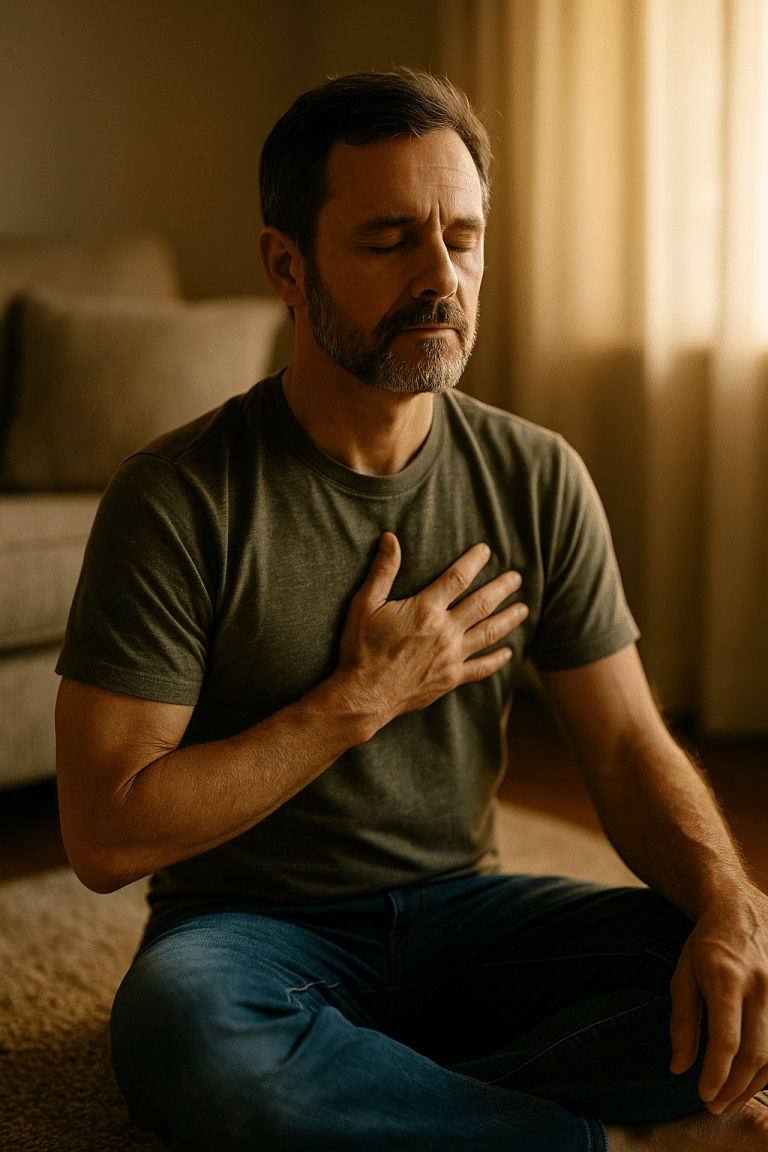
Start in a comfortable position with an upright spine. Place one hand on your chest and one on your belly. Then breathe through your nose, letting the belly rise before the chest. Next, lengthen the exhale slightly more than the inhale. Finally, continue for several minutes at a pace that feels easy. Because mastery grows with repetition, keep sessions short, consistent, and positive. Importantly, stop if you feel dizzy, and consult your clinician if you have respiratory conditions.
Diaphragmatic Breathing For Beginners
Practice belly breathing for four slow breaths at a time. Inhale for a smooth count of four as your abdomen expands; exhale for a comfortable count of five or six as your belly relaxes. Repeat for five rounds, pause, and notice any change in tension. Because longer exhales increase parasympathetic tone, prioritize an easy, steady release of air. You can also add the 4‑7‑8 pattern—inhale four, hold seven, exhale eight—as a sleep wind‑down (Cleveland Clinic). Alternatively, use box breathing—four counts in, hold four, four counts out, hold four—to reset during the day (MedicineNet). Over time, these rhythms become second nature and can precede prayer, Bible reading, or conversations that require patience.
Timing And Pacing Tips
Set a gentle cadence rather than chasing big breaths. Many beginners find that five to six breaths per minute feels comfortable after a week of practice. Therefore, consider a timer or metronome to guide the pace. For a powerful quick reset, try two rounds of the extended‑exhale “cyclic sigh”: take a deep inhale, then a second shorter top‑off inhale, then exhale slowly until empty; repeat for two to five minutes (Stanford Medicine). To track progress, jot down a simple before/after stress rating each session. Gradually your baseline often drops, and you’ll notice you recover faster after spikes of anxiety. If you prefer structured guidance, follow clinical summaries that outline why slower breathing benefits cardiovascular and emotional health (AHA infographic; meta‑analysis).
Integrate Breath Prayer With Scripture
Because words shape attention, pair every breath with a short prayer. For example, inhale, “Jesus, I trust You,” and exhale, “You are near.” Alternatively, inhale, “Be still and know,” and exhale, “that I am God” (Psalm 46:10). Historically, Christians have used forms of breath prayer for centuries; the language of breath and Spirit appears across Scripture and the tradition (history and physiology). Moreover, integrating breath prayer can reduce rumination because the mind has a simple, grace‑filled task. If you prefer a practical overview of relaxation methods that clinicians teach, review this short summary that includes breathing as a core tool.
Consider a four‑week plan. Week one: two minutes per day of belly breathing with Psalm 23:1—inhale, “The Lord is my shepherd,” exhale, “I lack nothing.” Week two: add two minutes of 4‑7‑8 before bed. Week three: insert two rounds of box breathing before difficult conversations. Week four: use cyclic sighing for five minutes during afternoon fatigue. Track a simple 0–10 stress number before and after each session. In many cases, people observe a drop of two to three points within weeks, which aligns with published outcomes for breathwork interventions (Scientific Reports). For further reflection, explore how Christian stillness practices lower reactivity and open space for joy in daily life (internal reflection guide).
Case Study: A Beginner’s Four‑Week Baseline And Outcome
Sarah, a 38‑year‑old volunteer, began with a daily five‑minute routine after work. Initially, she rated her stress 7/10. After two weeks she averaged 5/10; after four weeks her average dropped to 4/10. She also reported fewer late‑night racing thoughts and more patience with family. Notably, the most helpful practice was a two‑minute breathing pause before evening chores. Her outcome mirrors what controlled trials find: brief, regular sessions produce reliable gains across mood and perceived stress (meta‑analysis). Because Sarah also met with a counselor, she combined spiritual formation, breath practice, and wise care—an integrated approach that many Christians can emulate.
If you use medication for anxiety or depression, you can still practice these rhythms. Medicines and evidence‑based therapies are appropriate gifts when needed, and breathing complements them, not competes with them. As Luke the physician reminds us, God often works through ordinary means, and you can gratefully receive help while you practice presence with Christ. For extended reading on nervous system regulation and faith, review cornerstone guidance on nervous system resets and gentle routines (cornerstone overview; daily routine).

Amazon Product Recommendations To Support Practice
Although breathing needs no equipment, a few simple tools can support consistency. Consider these well‑reviewed options; read descriptions carefully, and consult your clinician if you have medical questions.
- Book—Education And Motivation: Breath: The New Science of a Lost Art by James Nestor offers engaging history and practical tips that reinforce slow, nasal breathing.
- Device—On‑Demand Calming: The CalmiGo Natural Calming Device provides guided exhale pacing and aroma to support focus during stressful moments.
- Trainer—Breathing Muscles: A simple inspiratory trainer like POWERbreathe Plus adds light resistance to strengthen breathing mechanics for those who want a fitness‑style routine.
- Sleep—Quieter Nights: A compact sound machine such as HoMedics White Noise Machine can reduce nighttime arousal so you can practice 4‑7‑8 without distractions.
- Journal—Track Change: A minimal notebook like the LEUCHTTURM1917 dotted journal makes before/after stress tracking quick and concrete.
To deepen learning, review clear, concise explainers from medical and research sources: an overview of relaxation exercises, a clinician‑friendly infographic on how slow breathing lowers stress (AHA), and the research showing five minutes of daily practice can lift mood (Stanford).
Conclusion: Practice With Hope And Patience
Your breath is always with you, and so is the Lord. Therefore, use guided deep breathing exercises for beginners as a daily way to slow down, remember God’s nearness, and let His peace guard your heart. Begin with five minutes, keep a simple log, and pair each exhale with gratitude. Over time, you will likely notice a calmer baseline, quicker recovery after stress, and more space for prayer, listening, and joy.