Bibles Verses About Faith: Strengthen Your Belief
Estimated reading time: 12 minutes
Bibles Verses About Faith When Your Faith Is Shaken, Where Do You Turn?
Moments of doubt can feel isolating, yet they are a universal part of the human experience and the Christian life. When the foundations of your belief feel unsteady, turning to bible verses about faith can provide a powerful anchor in the storm. This practice isn’t about ignoring your questions; rather, it’s about engaging with a source of timeless wisdom and divine reassurance. For instance, Scripture offers a wellspring of comfort and strength, reminding us that we are not the first to walk this path of uncertainty. It provides a roadmap back to trust, filled with stories of those who wrestled with God and emerged with a deeper, more resilient faith.
Bible Verses for Strengthening Your Faith
Faith can be shaken for many reasons, from personal tragedy and unanswered prayers to intellectual challenges that seem to contradict long-held beliefs. It’s crucial to understand that these periods of questioning are not a sign of spiritual failure but an opportunity for profound spiritual growth. In fact, psychology recognizes that wrestling with existential questions is a normal part of developing a mature worldview, as noted by researchers at the American Psychological Association. In other words, your doubt doesn’t disqualify you from God’s love; instead, it can be the very catalyst that deepens your relationship with Him as you seek answers and comfort.
So, where do you begin when the noise of the world and the silence of heaven feel overwhelming? The Bible provides direct encouragement for trusting God when circumstances are difficult. Throughout its pages, you’ll find countless bible quotes about faith that act as a balm to a weary soul. These passages are more than just words; they are divine promises and historical accounts of God’s faithfulness. Engaging with these verses helps reframe our perspective from fear to trust, a practice that cognitive-behavioral therapists also endorse as a way to manage anxiety, as explained by Psychology Today. Furthermore, many Christian counseling services, such as those discussed by Focus on the Family, integrate scripture on faith as a foundational tool for healing and hope. This article will guide you through some of the most powerful verses, offering solace and strength for your journey.
What the Bible Says About Faith: hebrews 11:1
When seeking to understand what the bible says about faith, there is no more foundational scripture than Hebrews 11:1. This verse acts as a cornerstone for the entire Christian life, defining faith not as a blind leap but as a confident trust. It states, “Now faith is confidence in what we hope for and assurance about what we do not see.” Consequently, this single sentence provides a powerful framework for navigating the complexities of spiritual growth and the challenges that test our belief. For those wanting to explore the verse in its broader context, resources like the Bible Gateway commentary offer valuable insights into the surrounding chapter.
The Biblical Definition of Faith
This definition from Hebrews has two crucial parts that work together. First, faith is “confidence in what we hope for,” which points to a deep, settled conviction in God’s promises for the future, even when our present circumstances seem bleak. It is a trust rooted not in our feelings, but in the unchanging character of God Himself. Second, it is the “assurance about what we do not see,” which directly addresses the spiritual realm. In other words, faith allows us to perceive a reality that transcends our physical senses, grasping the truth of God’s presence and power. As explained by many theologians, the original Greek words suggest a firm, underlying reality, not just wishful thinking, as detailed by sources like the Biblical Studies Foundation.
Therefore, this biblical definition does not ignore the existence of doubt; rather, it speaks directly into it. Faith is the very means by which we navigate uncertainty, holding onto the assurance of God’s truth when we cannot see the path ahead. It is a dynamic and active trust in God, not a static state of intellectual agreement free from questions. Embracing this truth can be incredibly freeing for those struggling, as it reframes doubt not as a failure of faith but as an opportunity for it to be exercised and strengthened. This perspective is often explored in Christian counseling, which provides tools for managing uncertainty while nurturing spiritual growth, a topic well-covered by publications like Christianity Today.

When doubt feels overwhelming, turning to scripture can anchor your heart. These Bible verses about faith are a powerful reminder that you are not alone in your questions or struggles.
Scripture on Faith for Fiery Trials: james 1:2-4
Overwhelming challenges often lead people to search for bible passages on faith. They seek scriptures that offer not just comfort, but also meaning. The book of James provides a powerful, if initially startling, perspective. James 1:2-4 instructs believers to, “Consider it pure joy… whenever you face trials of many kinds.” The reason given is that “the testing of your faith produces perseverance.” This scripture on faith, therefore, reframes suffering not as a meaningless tragedy, but as a crucible for profound spiritual growth.
This process of testing is not about divine punishment; rather, it is an opportunity to develop steadfastness. This biblical concept aligns with the modern psychological principle of post-traumatic growth, where people experience positive change after adversity. According to the American Psychological Association, such trials can foster a greater appreciation for life. For the Christian, this process is also deeply spiritual. As theologian John Piper explains, God’s purpose in our trials is to wean us from self-reliance and deepen our faith in his sufficiency. In other words, the testing James speaks of builds a resilient spiritual foundation.
Ultimately, the goal James describes is to become “mature and complete, not lacking anything.” This does not mean a life free from problems. Instead, it implies developing a complete spiritual and emotional toolkit to navigate them. Research from sources like the Mayo Clinic highlights how spirituality aids in stress management and overall well-being. Consequently, as perseverance “finishes its work,” you develop an unshakeable character. This leads to a deeper reliance on God’s grace, a key theme in many Christian faith verses, and is the true joy found within the trial.
The Origin of Our Faith: romans 10:17
When exploring what the bible says about faith, it is crucial to understand its source. Faith is not a feeling we must generate on our own; instead, it is a response to a divine initiative. The Apostle Paul clarifies this in Romans 10:17, stating, “Consequently, faith comes from hearing the message, and the message is heard through the word about Christ.” In other words, our Christian faith begins when we engage with the specific message of the Gospel. This verse fundamentally shifts the pressure from us to God, who graciously provides the very “word” that ignites belief. As explained by commentators on Romans 10:17, faith is not blind but is a reasonable response to the testimony of Scripture.
How Bible Verses Build Deep Faith
The concept of “hearing” in this context extends beyond simple auditory perception. It implies a deep, cognitive, and heartfelt listening that allows the truth of the message to take root. This process resonates with psychological principles of belief formation, where repeated exposure and thoughtful processing of information can shape our convictions and worldview. For instance, the American Psychological Association notes how our minds process information to form stable beliefs. In a similar way, when we consistently immerse ourselves in Scripture—reading, studying, and meditating on it—we are actively creating the conditions for God to build and strengthen our trust in Him.
Therefore, if your faith feels weak or distant, the clear path forward is to engage more deeply with God’s Word. This is an active and hope-filled discipline, not a passive wait for a spiritual lightning strike. You can actively cultivate your ability to “hear” the message by exploring different ways to connect with the Bible. For instance, you could try listening to an audio Bible, joining a small group study, or using a structured reading plan. Resources from organizations like The Navigators provide excellent methods for engaging Scripture more effectively. Ultimately, the origin of faith is a beautiful interplay between God’s revealed Word and our willing, attentive hearts.

Powerful Bible Verses About Faith and Action: James 2:17
Many powerful Christian faith verses explore the nature of a vibrant spiritual life, but few are as direct as James 2:17 NIV, which states, “In the same way, faith by itself, if it is not accompanied by action, is dead.” This scripture doesn’t suggest we earn our salvation through good deeds. Instead, it reveals a profound truth about the nature of genuine trust in God. True faith is an active, living force that transforms us from the inside out; consequently, it naturally produces outward evidence, much like a healthy tree naturally bears fruit. It’s an inseparable connection between what we believe and how we live.
Bible Verses on Faith: Shaping Your Actions
From both a spiritual and psychological perspective, our actions are powerful indicators of our deepest convictions. This is sometimes referred to as the belief-behavior connection, a concept explored by sources like Psychology Today. When we truly believe God is our provider, for example, it becomes easier to act with generosity. Similarly, when we fully accept His forgiveness, it empowers us to extend grace to others. Therefore, our actions are not a performance for God but a reflection of His work within us, demonstrating the reality of the faith we profess. This dynamic relationship is a core theme in the Epistle of James, as detailed by theological resources like James 2:14-26.
Ultimately, this verse calls us to a faith that engages our whole being—our hearts, minds, and hands. It’s a faith that comforts the grieving, feeds the hungry, and seeks justice for the oppressed, not out of obligation but out of love. Ministries such as World Vision put this principle into practice daily, showing how collective faith can result in transformative global action. In our own lives, this might look like volunteering, offering a listening ear to a friend in need, or courageously speaking up for what is right. In other words, our faith becomes the very engine of our love for others.
Verses for Trusting God As a Shield: ephesians 6:16
Among the most powerful verses for trusting God, Ephesians 6:16 instructs believers to, “In addition to all this, take up the shield of faith, with which you can extinguish all the flaming arrows of the evil one.” This piece of spiritual armor is not merely a passive block but an active expression of our trust in God. In ancient warfare, a shield protected a soldier’s entire body from incoming attacks. Similarly, what the bible says about faith is that it acts as our spiritual and psychological guard, defending our hearts and minds from the debilitating effects of doubt, fear, and despair. This concept is explored deeply in theological resources like Shield of Faith, which explains its role in the Christian life.
Bible Verses: Combating Negative Thoughts
The “flaming arrows” mentioned in this scripture on faith can be understood as the intrusive, negative, and accusatory thoughts that often fuel anxiety and depression. In modern psychological terms, these are akin to Automatic Negative Thoughts (ANTs), which Cognitive Behavioral Therapy (CBT) aims to identify and reframe. For instance, a thought of worthlessness is a flaming arrow intended to cripple one’s spirit. According to the American Psychological Association, CBT helps individuals challenge these distorted thoughts, a practice that aligns beautifully with the spiritual discipline of raising the shield of faith. Therefore, faith actively counters these attacks by holding onto the truth of God’s promises, extinguishing the destructive power of the lie.
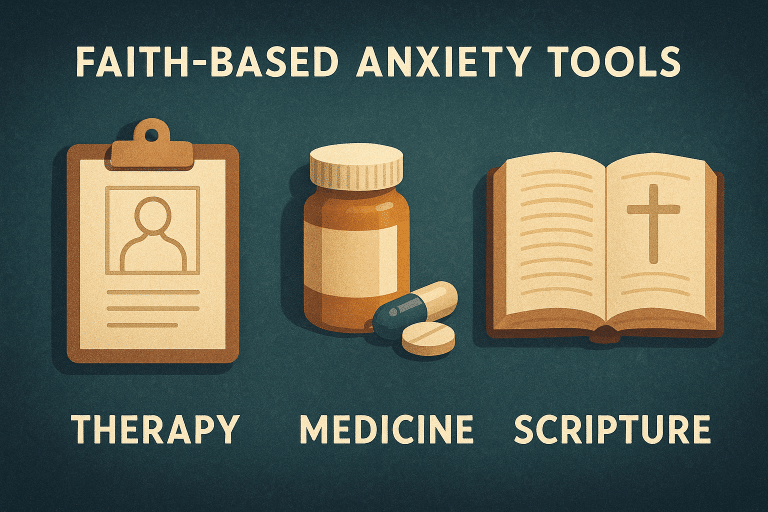
Activating this shield requires a conscious choice to place your trust in God’s character and His word, especially when circumstances feel overwhelming. It involves turning to faith scriptures and holding them up against the onslaught of negative feelings and thoughts. This spiritual practice does not replace the need for professional help in cases of clinical anxiety or depression; rather, it complements it. As discussed in the Christian Century, integrating faith-based practices with evidence-based therapy can lead to profound healing. In other words, by combining our spiritual growth with the tools of psychology, we can more effectively guard our well-being and stand firm in our Christian life.

A Little Goes a Long Way: the Power of Mustard-seed Faith (matthew 17:20)
Many people searching for scripture on faith feel discouraged, believing they do not have enough. However, Jesus addresses this directly in a powerful analogy found in Matthew 17:20. After the disciples fail to heal a boy, Jesus tells them, “Truly I tell you, if you have faith as small as a mustard seed, you can say to this mountain, ‘Move from here to there,’ and it will move. Nothing will be impossible for you.” In other words, the critical factor is not the quantity of our faith, but its genuine presence. This single verse offers profound hope, especially when doubt feels overwhelming.
To appreciate this metaphor, it helps to understand the mustard seed itself. As described by sources like Britannica: Mustard, it is remarkably tiny, yet it can grow into a large, tree-like shrub. Consequently, Jesus’s point is that faith is a living, dynamic force intended for growth. This spiritual principle mirrors concepts in modern psychology; for instance, as explained in Psychology Today, the practice of micro-habits shows how small, consistent actions can create significant life changes. Similarly, a small seed of trust in God, when nurtured, can develop into a resilient foundation for your Christian life.
Therefore, this passage is a divine reassurance for anyone who feels their faith is weak or insufficient. The power to “move mountains”—to overcome seemingly impossible challenges in our lives—does not come from the size of our belief. Instead, as theologians at Faith of a Mustard Seed explain, the power resides in the one in whom we place our faith: God Himself. Your role is not to generate a mountain of faith from nothing, but to plant the small, sincere seed of trust you already have. God takes that humble offering and makes it grow into something capable of withstanding any storm.
Living By Faith One Day at a Time
Ultimately, exploring scripture on faith is about more than just memorizing verses; it’s about cultivating a living, breathing relationship with God. The Christian life is not a single leap but a continuous walk, sustained by trust. Consequently, the powerful Christian faith verses shared throughout this article serve as daily bread, offering nourishment and strength for the journey. They remind us that faith, as defined in Hebrews 11:1, is an ongoing assurance in the things we hope for and a conviction in what we cannot see, guiding our steps in the present moment.
One Day at a Time: Bible Verses for Faith
Living by faith means focusing on today. While God provides a grand vision for our lives, our part is to trust Him with the twenty-four hours in front of us. This approach, often summarized as “one day at a time,” is a powerful tool for managing anxiety and building spiritual resilience, a concept well-regarded in therapeutic communities like those supported by Hazelden Betty Ford. For instance, you can apply James 2:17 NIV by choosing one small act of service today, or you can hold onto Ephesians 6:16 when facing a specific fear this afternoon. This daily practice transforms abstract belief into tangible action, nurtured by consistent spiritual disciplines, as The Navigators ministry often teaches.
Therefore, embracing this daily walk with God doesn’t mean ignoring practical wisdom or professional help when needed. In fact, research from the American Psychological Association highlights how religious belief can be a significant source of strength and coping for many individuals facing life’s challenges. Your faith can ground you as you pursue therapy, seek medical advice, or build healthier habits. God’s grace is sufficient for this day, His mercies are new every morning, and your trust in Him is the anchor that holds you steady, one day at a time (Lamentations 3:22-23).