Simple Deep Breathing Exercises You Can Do Anywhere Today
Estimated reading time: 12 minutes
Introduction: Finding God’s Peace in a Breathless World
In our fast-paced, modern world, it often feels like there is no room to breathe. The constant pressure can leave us feeling overwhelmed by stress and anxiety, spiritually and physically breathless. However, God offers us a pathway back to His peace that is as close as our next inhalation. By learning some simple deep breathing exercises you can do anywhere, we can create moments of holy stillness amid the chaos. This practice is not about escaping reality, but rather about grounding ourselves in God’s presence, which is our ultimate reality and source of strength.
Biblical Breath: Unlocking Your Calm
From the very beginning, breath has been synonymous with life and the Spirit of God. In Genesis 2:7, God “breathed into his nostrils the breath of life,” and man became a living being. In the same way, we can use this God-given rhythm to nurture our well-being. For instance, intentional, slow breathing directly engages our body’s built-in calming mechanisms. This act stimulates the vagus nerve, which, in turn, activates the parasympathetic nervous system to lower our heart rate and blood pressure. Consequently, this form of Christian mindfulness transforms a simple physiological function into a profound act of prayer and trust.
The call to “Be still, and know that I am God” (Psalm 46:10) is an ancient scriptural invitation to find rest in His sovereignty. Interestingly, modern science now affirms the wisdom of this spiritual discipline. Research covered by Harvard Health shows that techniques focusing on the breath can effectively counter the body’s stress response. Furthermore, the American Psychological Association recognizes diaphragmatic breathing as a key tool for stress management. As noted by the National Center for Complementary and Integrative Health, these practices help regulate our emotional and physiological states. This convergence of faith and science shows us that God has provided both spiritual and physical means for us to find His peace.
The Sacred Link Between Breath and Spirit in Scripture
Many people are surprised to learn that the calming breathwork we use for on-the-go relaxation has deep roots in Scripture. In fact, the ancient biblical languages reveal a profound, inseparable connection between our physical breath and our spiritual life. The Old Testament Hebrew word for Spirit, ruach, and the New Testament Greek word for Spirit, pneuma, both carry the same essential meanings: “wind” or “breath.” Consequently, from a biblical perspective, every breath we take is a physical reminder of the very Spirit of God that sustains us, a concept explored by many theologians like those at the The Gospel Coalition. This connection transforms simple deep breathing exercises you can do anywhere into a form of Christian mindfulness.
Divine Breath: Foundation for Calming Breathwork
This divine link is beautifully illustrated from the very beginning. In Genesis 2:7, God “breathed into his nostrils the breath of life, and the man became a living being.” Our existence, therefore, began with an intimate act of divine respiration. This wasn’t a one-time event; it’s an ongoing reality. Job 33:4 echoes this, stating, “The Spirit of God has made me; the breath of the Almighty gives me life.” In other words, our breathing is a continuous, moment-by-moment participation in the life-giving power of our Creator. This perspective shifts breathing for anxiety from a mere self-help technique to a sacred practice of receiving God’s peace.
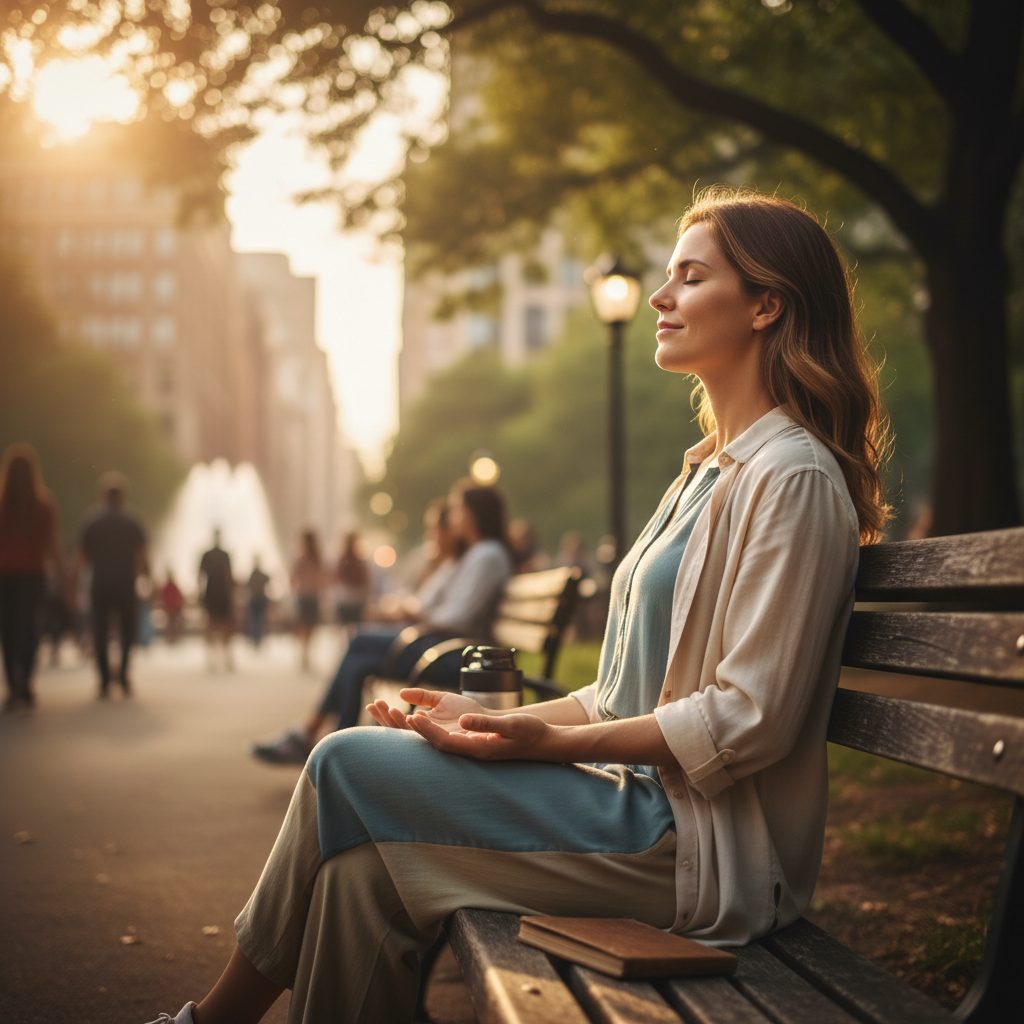
In a world that feels breathless, taking a moment for simple, calming breathwork can help you find God’s peace wherever you are.
Modern science affirms the wisdom of this ancient connection, providing evidence for how our breath influences our well-being. For instance, intentional deep breathing stimulates the Vagus Nerve, a key component of our nervous system. According to health resources like the American Psychological Association, this stimulation activates the Parasympathetic Nervous System, which shifts our bodies out of a “fight-or-flight” stress response and into a “rest-and-digest” state of calm. This God-designed biological mechanism is a powerful tool for managing the physical symptoms of Stress and Anxiety, allowing us to find biblical stillness in our bodies as well as our souls.
How Calming Breathwork Rewires Your Anxious Brain
When you feel overwhelmed by anxiety, it can seem like your thoughts are running wild. However, by using a form of portable stress relief like calming breathwork, you can actively engage a powerful, God-given system for peace that already exists within your body. These simple deep breathing exercises you can do anywhere are not just about distracting yourself; on the contrary, they are a direct line to calming your body’s stress response. This process begins by signaling to your brain that you are safe, consequently interrupting the cycle of panic and worry that anxiety often creates.
So, how does this actually work? The key is the Vagus Nerve, which acts as a superhighway between the brain and the body, managing our stress levels. According to Psychology Today, slow, deep breathing stimulates this crucial nerve. In turn, this activation engages your Parasympathetic Nervous System, often called the “rest and digest” system. This system effectively puts the brakes on the “fight or flight” response, lowering your heart rate and ushering in a sense of physical and mental stillness. This is a tangible way our bodies are “fearfully and wonderfully made” (Psalm 139:14).
This intentional act of slowing down is a form of Christian Mindfulness, creating space for prayer and awareness of God’s presence amidst the chaos. As sources like Biola University’s Center for Christian Thought explain, this practice isn’t about emptying the mind but filling it with God’s truth. Furthermore, research consistently shows the benefits; for instance, a study in the journal Frontiers in Psychology found that slow breathing techniques can enhance emotional control and psychological well-being. By practicing these on-the-go relaxation techniques, you are stewarding the intricate systems God designed for your flourishing and creating holy moments of biblical stillness.
A Simple Deep Breathing Exercise You Can Do Anywhere: the 4×4 Box Breath
Among the most effective and simple deep breathing exercises you can do anywhere is the “box breath,” also known as four-square breathing. This technique is a powerful tool for portable stress relief because it directly engages your body’s relaxation response. In fact, it’s a foundational practice taught to Navy SEALs to maintain calm and focus under immense pressure. The rhythmic nature of this calming breathwork helps to regulate the Vagus Nerve, consequently shifting your body out of a state of high alert and into the safety of the parasympathetic nervous system. According to a study highlighted by Forbes Health, this structured breathing pattern has been shown to significantly decrease stress and improve cognitive function.
Simple Box Breathing for Portable Stress Relief
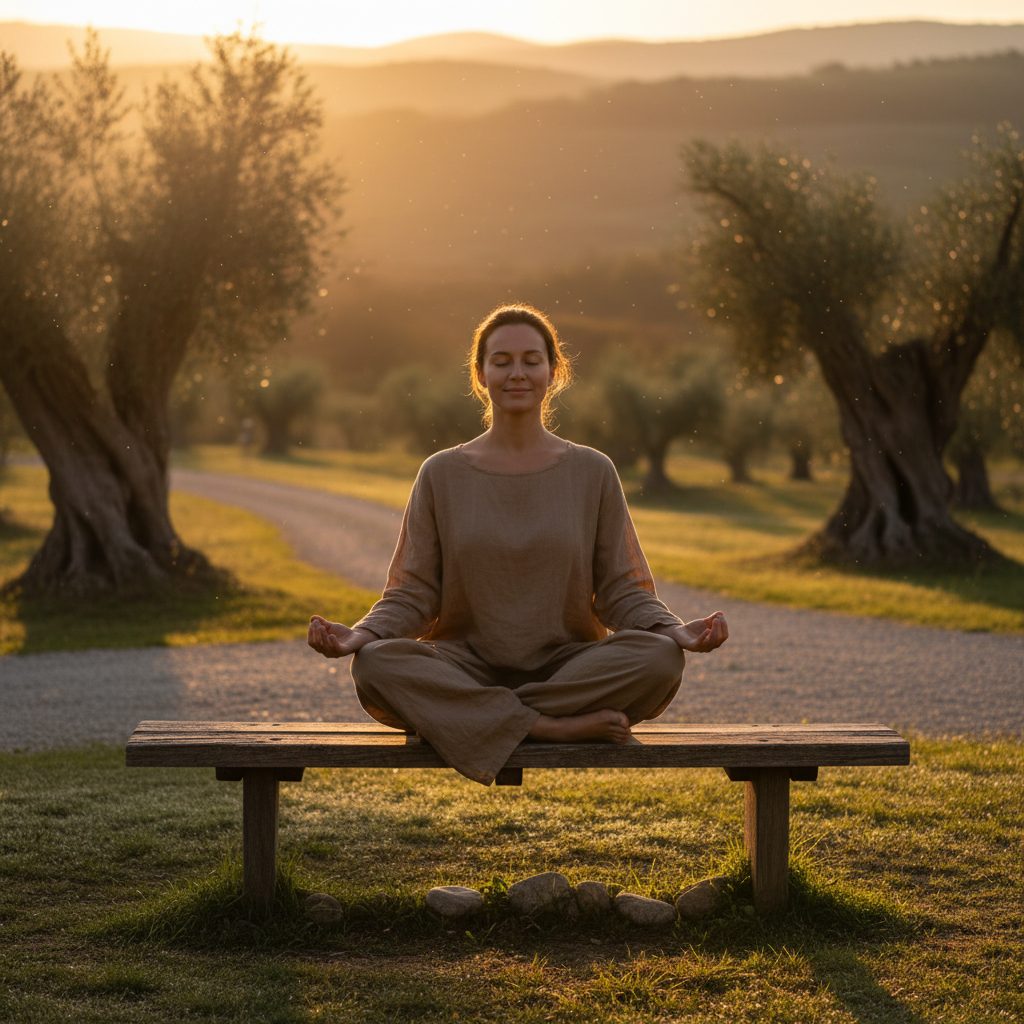
Scripture highlights the profound link between breath and spirit. Practicing simple deep breathing exercises can be a form of prayer and a way to find peace anywhere, connecting your body and soul.
The practice itself is beautifully simple. First, find a comfortable seated position and gently exhale all the air from your lungs. Then, follow this four-step pattern: 1. Inhale slowly through your nose for a count of four. 2. Hold your breath for a count of four. 3. Exhale slowly through your mouth for a count of four. 4. Hold your breath again for a final count of four. You can repeat this cycle for several minutes until you feel your heart rate slow and a sense of peace settle over you. This method of breathing for anxiety mirrors the biblical instruction to “be still, and know that I am God” (Psalm 46:10), creating an island of intentional stillness in your day. Research from institutions like the Mayo Clinic Health System confirms that such deliberate breathing can lower blood pressure and reduce the physical symptoms of anxiety.
Furthermore, you can transform this exercise into a profound moment of Christian mindfulness by weaving prayer into the rhythm. For instance, on each four-second step, you can meditate on a name for God, such as “Father,” “Son,” “Holy,” “Spirit.” Or, you might use a simple, grounding prayer like, “Lord Jesus,” “Christ have,” “mercy on,” “me a sinner.” In doing this, the box breath becomes more than a psychological tool; it becomes a sanctuary for communion with God. You are not just calming your body but also centering your soul on the Creator. In other words, you are filling your mind with God’s presence, an approach that Psychology Today notes can have remarkable benefits for mental and spiritual well-being.
Turning Your Breath Into Prayer: Simple Breath Prayer Exercises
For centuries, Christians have used simple breath prayer exercises as a powerful form of on-the-go relaxation and devotion. This practice beautifully merges the physical act of breathing with the spiritual act of prayer, consequently transforming a simple bodily function into a moment of communion with God. In fact, it provides a tangible way to follow the Apostle Paul’s encouragement to “pray without ceasing” (1 Thessalonians 5:17), grounding our anxious thoughts in the steady rhythm of God’s presence. Instead of being a complex ritual, it is a portable stress relief method that anchors your heart to Scripture.
Simple Breath Prayer for Christian Calm
To begin, simply choose a short phrase from Scripture or a name for God that resonates with you. For instance, you could inhale deeply while silently praying “Lord Jesus Christ,” and then exhale slowly while praying, “have mercy on me.” Another example is inhaling “Abba, Father,” and exhaling, “I belong to you.” The key is simplicity and repetition, allowing the prayer to sync with your breath, which helps to quiet the noise of anxiety and focus your mind. This method of Christian mindfulness turns your attention away from sources of stress and toward the source of peace.
This powerful technique offers both spiritual and physiological benefits. On a spiritual level, it fosters a continuous conversation with God, reinforcing your trust and dependence on Him. From a scientific perspective, this form of rhythmic breathing is known to calm the nervous system. Specifically, studies highlighted by the American Psychological Association show that intentional breathing stimulates the Vagus Nerve, which in turn activates the Parasympathetic Nervous System and lowers the body’s stress response. As explained by Christian Today, this ancient practice is a profound way to care for both soul and body, embodying the command to find our rest in Him (Matthew 11:28-30). This aligns with historical contemplative traditions, which Biola University’s Talbot School of Theology notes have long been a part of Christian spirituality.
The 4-7-8 Method: Powerful Breathing for Anxiety Relief
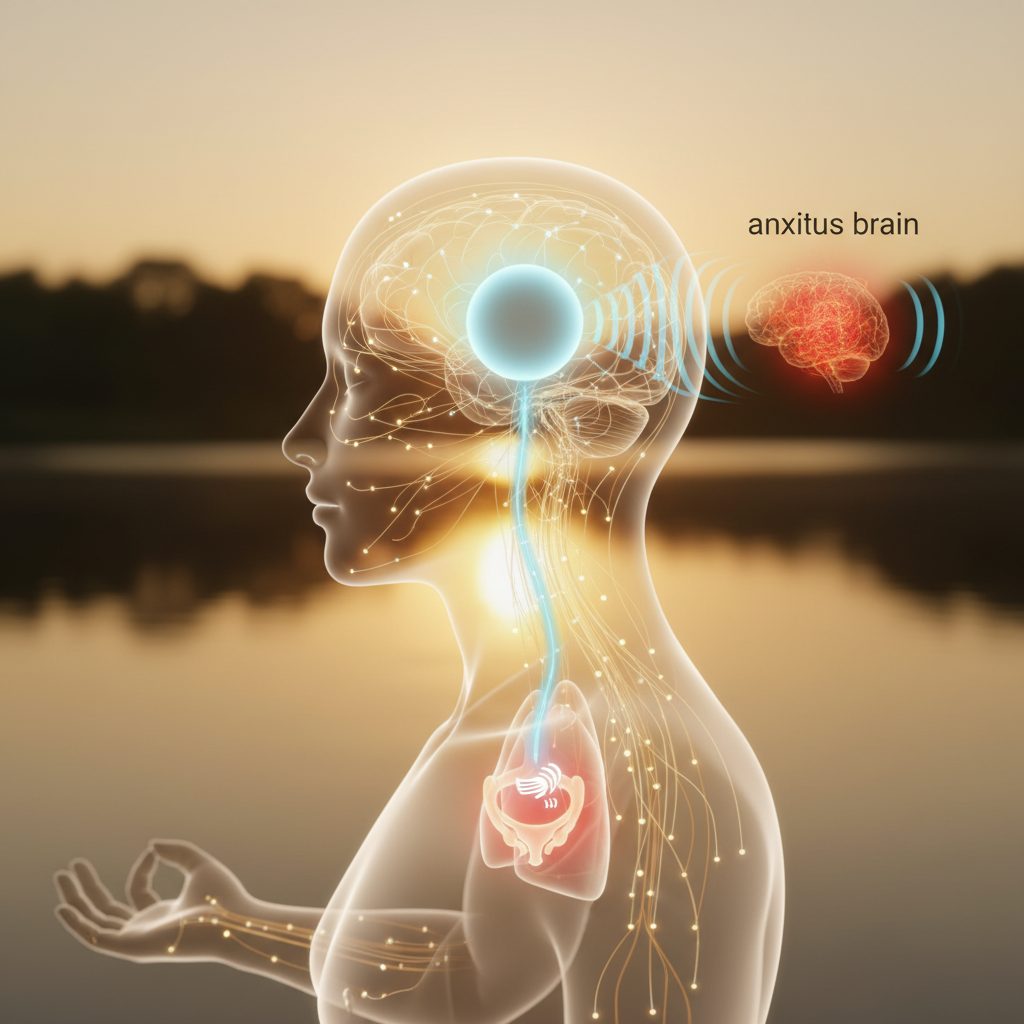
Practicing calming breathwork is a form of portable stress relief that helps regulate your nervous system and rewire your brain’s response to anxiety.
Among the most effective forms of calming breathwork for anxiety is the 4-7-8 method, a powerful yet simple technique you can use even in moments of high stress. To begin, find a comfortable position and exhale completely through your mouth. Next, close your mouth and inhale quietly through your nose for a mental count of four. Then, hold your breath for a count of seven. Finally, exhale completely through your mouth, making a whoosh sound, for a count of eight. According to Healthline 4-7-8 Breathing, repeating this cycle at least three times can have a profoundly tranquilizing effect on the nervous system.
Physiological Anxiety Relief Through Deep Breathing
The specific genius of this method lies in its physiological impact. The extended exhale, in particular, is a key component for stimulating the Vagus Nerve. This nerve is a primary channel of your Parasympathetic Nervous System, which controls the body’s “rest-and-digest” functions. As the American Psychological Association explains, deep breathing techniques directly counter the “fight-or-flight” response that fuels anxiety. In other words, by intentionally slowing your breath, you are sending a powerful signal to your brain and body that the danger has passed and it is safe to relax.
This physical act of calming, in turn, beautifully serves our spiritual lives. When our bodies are overwhelmed by anxiety, it can feel nearly impossible to hear God’s still, small voice. By practicing the 4-7-8 method, we create an internal space of quiet that allows us to better follow the command of Psalm 46:10: “Be still, and know that I am God.” This form of Christian Mindfulness is not about emptying the mind, but rather, about focusing it on the Prince of Peace. Consequently, as the Cleveland Clinic notes, such intentional relaxation is a powerful tool for managing our well-being, allowing us to embody our faith with a calmer mind and a more peaceful spirit.
Portable Stress Relief: Applying These Techniques in Daily Life
The true power of these spiritual tools lies in their portability. The beauty of quick breathing techniques is that they are not confined to your quiet time chair or prayer closet. Instead, you can carry this sense of peace with you, transforming any moment of stress into an opportunity for communion with God. This form of on-the-go relaxation allows you to anchor yourself in His presence, whether you are facing a looming deadline at work or navigating a crowded grocery store. It is a practical way to obey the command to “be still, and know that I am God” (Psalm 46:10), even when the world around you is anything but still.
Portable Stress Relief: Quick Biblical Breathwork
Consider the moments that typically trigger your body’s stress response. For instance, you might find yourself stuck in traffic, feeling your frustration rise; this is a perfect moment to practice a few rounds of the 4×4 Box Breath. Before walking into a difficult meeting, a minute of a simple breath prayer can center your heart and mind on Christ’s sufficiency rather than your own anxiety. Research from institutions like the American Psychological Association confirms that intentionally slowing your breath can significantly reduce acute stress. In other words, you are using the body God gave you to actively engage your Parasympathetic Nervous System and choose peace.
Integrating these practices throughout your day fosters a continuous conversation with God, moving your faith from a scheduled event to a lived reality. This approach aligns with the Apostle Paul’s encouragement to “pray without ceasing” (1 Thessalonians 5:17). Consequently, deep breathing becomes a physical posture of prayer, a constant and gentle turning of your attention back to the source of all peace. As noted by Harvard Health, these techniques directly counteract the fight-or-flight response, calming the Vagus Nerve and signaling to your brain that you are safe. This physical calming creates spiritual space to better hear His voice, and as a study in Frontiers in Psychology shows, it can even improve cognitive function under stress.
Conclusion: Your Next Breath, Your Next Step Toward Peace
The journey toward peace often begins with a single, intentional choice. Throughout this article, we have explored a variety of simple deep breathing exercises you can do anywhere, transforming the very air you breathe into a tool for on-the-go relaxation and a deeper connection with God. This practice of Christian mindfulness is not about emptying the mind, but rather, filling it with the truth of His presence. In fact, by integrating calming breathwork into your daily rhythm, you are actively choosing to receive the peace that surpasses all understanding, a peace that God promises can guard your heart and mind in Christ Jesus (Philippians 4:6-7). This is more than a coping mechanism; consequently, it is an act of worship and trust.
Ultimately, mastering these techniques is a process that requires grace and patience with yourself. Start small by choosing one exercise, such as the 4×4 Box Breath or a simple breath prayer, and practice it for a few minutes each day. Remember that these methods are gifts, tools that can work alongside prayer, community, and, when needed, professional therapy to support your well-being. Your next breath is an invitation from the Holy Spirit to find stillness and rest in His presence. Therefore, take that next step, breathe deeply of His grace, and walk forward in the peace that He so freely gives.