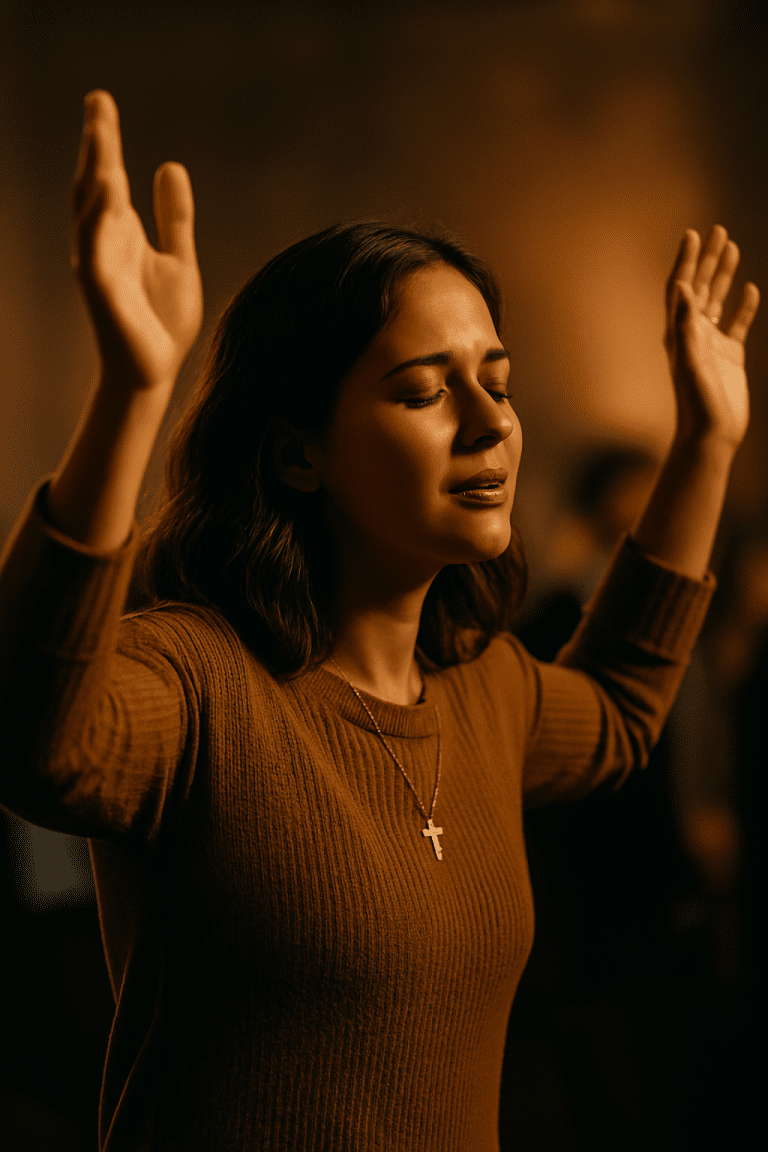
Resting in God vs Performing for Approval: Find Worth
Estimated reading time: 16 minutes
Introduction: the Exhausting Treadmill of Performing for Approval
Many Christians live on a relentless spiritual treadmill, constantly striving but never feeling like they have truly arrived. This struggle between resting in God vs performing for approval creates a cycle of exhaustion and anxiety, otherwise known as a Christian performance mentality. Instead of experiencing the freedom and joy promised in Christ, life becomes a series of spiritual checklists, leaving many feeling spiritually empty and on the brink of burnout. In reality, this constant effort to earn God’s favor is a heavy burden that He never intended for us to carry. It not only damages our relationship with God but also takes a significant toll on our mental and emotional health.
Overcoming Christian Performance Mentality
This deep-seated need for approval often stems from a misunderstanding of the Gospel, frequently complicated by personal history and psychological patterns. Consequently, we try to manage our worth by doing more—more ministry, more prayer, more good deeds—believing our value is tied to our output. This state of constant striving can dysregulate the nervous system, contributing to conditions like anxiety and depression. However, Jesus offers a profound alternative in Matthew 11:28-30: “Come to me, all you who are weary and burdened, and I will give you rest.” This invitation is not to work harder, but to enter into a state of active trust and dependence on Him.
Throughout this article, we will explore the roots of this performance-driven faith, drawing from Christian theology and psychology. We will also uncover practical, evidence-based pathways to dismantle the framework of religious legalism and people-pleasing. Ultimately, the goal is to guide you off the treadmill of performance and into the liberating peace that comes from finding your identity in Christ alone. It is a journey from striving to finally start resting, allowing you to experience the fullness of God’s unconditional love and grace.
The Roots of the Christian Performance Mentality
The struggle between resting in God vs performing for approval often begins long before we consciously recognize it. For many, this Christian performance mentality is rooted in early experiences where acceptance felt conditional upon achievement. Consequently, this pattern gets transferred onto our relationship with God. We develop a deeply ingrained belief that we must constantly earn His favor. This isn’t just a spiritual issue; it is also a psychological one that can activate our nervous system’s threat response. As detailed by outlets like Psychology Today, the fear of rejection can drive a compulsive need to please others, a habit that easily morphs into a performance-based faith.
This performance-driven approach is further solidified by a misunderstanding of grace, often stemming from what is known as overcoming religious legalism. Instead of embracing our identity in Christ alone, we fall into a pattern of striving that mirrors the world’s success-oriented culture. However, scripture directly confronts this by stating, “For it is by grace you have been saved, through faith—and this is not from yourselves, it is the gift of God—not by works, so that no one can boast” (Ephesians 2:8-9). As theologians at The Gospel Coalition explain, legalism adds human rules to God’s commands, creating an impossible standard. This inevitably leads to the need for spiritual burnout recovery, a condition that experts at Fuller Studio highlight requires intentional rest and a rediscovery of God’s unconditional love to heal.
God’s Approval Not Man’s: What Scripture Says About Your Worth

The journey from a Christian performance mentality to a place of rest often begins by answering a pivotal question: whose approval are you truly seeking? Making the conscious shift to finding worth in God is not simply a comforting idea; it is a profound reordering of your identity away from the fragile opinions of others and toward the unchanging truth of God’s love for you. This foundational step moves you from the exhausting treadmill of seeking validation to the secure ground of being fully known and accepted.
Consequently, Scripture consistently calls us to seek God’s approval, not man’s. The Apostle Paul powerfully illustrates this choice in Galatians 1:10, asking, “Am I now trying to win the approval of human beings, or of God? Or am I trying to please people? If I were still trying to please people, I would not be a servant of Christ.” Furthermore, our value is established not by our accomplishments but by our position as God’s creation. Ephesians 2:10 reminds us that we are “God’s handiwork,” and as organizations like The Gospel Coalition emphasize, rooting our identity in Christ alone is the true antidote.
From a psychological perspective, this spiritual truth directly dismantles the cognitive distortions that feed anxiety and perfectionism. For instance, the relentless pursuit of external validation is a significant mental burden, a topic frequently explored by resources like Psychology Today. When we truly internalize that our worth is secure, we interrupt the damaging cycles of self-criticism and worry that dysregulate the nervous system. In other words, embracing God’s unconditional acceptance is a vital tool for both spiritual and mental flourishing, a principle championed by the American Association of Christian Counselors.
Resting in God Vs. Performing for Approval: a Neurological Perspective
The struggle between a Christian performance mentality and true rest has a physical basis in our nervous system. When we constantly perform for approval, our brain perceives a threat of failure and rejection, activating the sympathetic nervous system’s “fight-or-flight” response. Consequently, our bodies are flooded with stress hormones. As the American Psychological Association explains, chronic activation of this system can lead to anxiety and spiritual burnout. This state of high alert is the opposite of the peace God promises.
In contrast, resting in God shifts us into a state of safety regulated by the parasympathetic nervous system. Spiritual disciplines like prayer and meditation on scripture can calm the amygdala, the brain’s fear center. For instance, research from the National Institutes of Health shows these practices can rewire neural pathways, reducing anxiety’s grip. This neurological shift helps us internalize our identity in Christ alone, moving from anxious striving to peaceful being.
Ultimately, choosing to rest is an act of faith that impacts our biology. It is a decision to trust in God’s unconditional acceptance, as promised in Ephesians 2:8-9, which states we are saved by grace, not works. In other words, this trust physiologically down-regulates our internal alarm. Feeling safe, as explained by resources from the Polyvagal Institute, is a prerequisite for health and connection. Therefore, embracing God’s grace is not just a theological concept; it is a direct pathway to recovering our nervous system.
Practical Steps to Cultivate an Identity in Christ Alone

Transitioning from a life of performing for approval to one of resting in God requires intentional, grace-filled practices. This journey involves more than just understanding theological concepts; it’s about actively renewing your mind and heart to align with the truth of your identity in Christ alone. Consequently, these steps are not a new set of rules to follow perfectly but are invitations to experience God’s love more deeply. By engaging in these practices, you can begin to untangle your worth from your works, which is a crucial step in spiritual burnout recovery. Ultimately, this path is about building a foundation on the unshakable reality of who God says you are.
A foundational step is to actively partner with God in the renewal of your mind, as encouraged in Romans 12:2. One powerful, evidence-based tool for this is Cognitive Behavioral Therapy (CBT), which helps identify and reframe the distorted thought patterns that fuel the performance mentality. According to the American Psychological Association, CBT is effective at changing patterns of thinking or behavior that are behind people’s difficulties. For instance, when you think, “I must succeed to be loved,” you can learn to replace it with the truth: “I am already fully loved and accepted in Christ.” This isn’t about ignoring reality, but about aligning your thoughts with a deeper, more permanent spiritual reality.
Reclaiming Disciplines: Stop Striving, Start Resting
In addition, you can reclaim spiritual disciplines as acts of connection rather than performance. Practices like scripture meditation, contemplative prayer, and solitude are not meant to earn God’s favor but to create space to receive it. Instead of reading the Bible to check a box, you can meditate on a passage, asking God how it reveals His character and your secure place in His family. Resources like Soul Shepherding offer guidance on ancient practices like Lectio Divina. In short, the goal shifts from trying to impress God to simply being with Him, allowing His presence to heal and restore your nervous system.
Finally, cultivating this new identity is not a solitary endeavor. It is vital to connect with a trusted community that reinforces God’s grace and your intrinsic worth. Furthermore, do not hesitate to seek professional help from a licensed Christian counselor who can provide tools to address deep-seated patterns of people-pleasing and anxiety. Organizations such as the American Association of Christian Counselors can be a valuable resource for finding qualified therapists. Seeking therapy is a sign of wisdom and strength, acknowledging that God works through many avenues, including trained professionals, to bring healing and freedom.
From Christian People-pleasing to God-pleasing: a Mindset Shift
The journey from Christian people-pleasing to a life that genuinely pleases God represents a profound mindset shift, moving from a place of anxiety to one of security. At its core, this transition addresses the fundamental question of audience: are we living for the approval of a fickle crowd or for the unchanging love of our Creator? This distinction is central to understanding the difference between resting in God vs performing for approval. People-pleasing is often rooted in a fear of rejection and an unstable sense of self-worth, a pattern that Psychology Today notes can be exhausting and detrimental to mental health. Ultimately, shifting our focus from human validation to divine acceptance is the first step toward freedom.
Stop Striving: God’s Approval, Not Man’s
Scripture directly confronts this struggle for approval. The Apostle Paul asks pointedly in Galatians 1:10, “Am I now trying to win the approval of human beings, or of God? Or am I trying to please people? If I were still trying to please people, I would not be a servant of Christ.” In other words, a divided loyalty is impossible. Choosing God’s approval not man’s means we can stop striving to earn a love that is already freely given to us through grace. Consequently, our actions can become a joyful response to God’s love rather than a desperate performance to win it from others. This new motivation allows us to build an identity in Christ alone, which is the only truly stable foundation for our worth.
Embracing this new mindset has profound practical implications for our well-being. For instance, when we are secure in God’s unconditional love, we are liberated to love others authentically, without needing anything in return. This breaks the cycle of anxiety and potential burnout tied to constantly monitoring others’ reactions. According to research highlighted by The National Center for Biotechnology Information, a secure sense of self is closely linked to greater resilience and lower levels of distress. This shift allows us to serve from a place of fullness and rest, not from a deficit of needing to be validated, paving the way for a more peaceful and sustainable spiritual life.

Spiritual Disciplines for Finding Worth in God
Transitioning from a Christian performance mentality to a posture of rest requires intentional practices that reorient our hearts. The journey of finding worth in God is not about adding more religious tasks to your to-do list; in fact, it is about subtracting the pressure to perform. Spiritual disciplines are tools for relationship, not rules for righteousness. Consequently, they help us move from striving to abiding, creating space to internalize our identity in Christ alone. When we engage with God in these ways, we are not trying to earn His love, but rather we are learning to receive the love He has already freely given, as emphasized in Ephesians 2:8-9.
Lectio Divina: Stop Striving, Start Resting
One transformative discipline is Lectio Divina, or “divine reading.” Unlike academic study, this practice involves slowly reading a passage of Scripture four times, listening for a word or phrase that resonates. You meditate on it, speak to God about it, and finally, rest in His presence. For instance, you might slowly read Psalm 23, focusing not on dissecting the text but on feeling the comfort of the Shepherd. This method, explored by sources like Desiring God, moves the Bible from a book of rules to a wellspring of relational connection, which is crucial for those in spiritual burnout recovery.
Practicing silence and solitude is another powerful antidote to the need for approval. In a world that demands constant noise and productivity, choosing to be still before God is a radical act of trust. This discipline involves setting aside time to simply be with God without an agenda, listening more than speaking. This practice directly calms a chronically activated nervous system, complementing therapeutic work from a psychological perspective. Ultimately, as detailed by organizations like Discipline of Solitude, it teaches us that our being, not our doing, is what God values most. It’s in the quiet that we hear His whisper: “Be still, and know that I am God” (Psalm 46:10).
Navigating Spiritual Burnout Recovery
Embarking on spiritual burnout recovery is a courageous step away from the exhausting cycle of resting in God vs performing for approval. Burnout in a faith context often feels like more than just fatigue; it can manifest as cynicism, a sense of divine distance, and deep emotional exhaustion from the Christian performance mentality. Consequently, this state of depletion is not a sign of spiritual failure but rather a physiological and emotional response to chronic stress, as the World Health Organization has noted in professional contexts. The invitation from Jesus in Matthew 11:28-30, “Come to me, all you who are weary and burdened, and I will give you rest,” is not a command to do more, but a gentle call to cease striving. True recovery begins when we accept this invitation to stop striving and start resting in His sufficiency.
The journey out of burnout requires a compassionate and multi-faceted approach, integrating both spiritual and psychological wisdom. Recovery is not another task to perfect; instead, it is a process of gently returning to grace. For instance, seeking support from a trauma-informed therapist can be incredibly beneficial. Therapeutic models like Cognitive Behavioral Therapy (CBT) are effective for restructuring the performance-based thoughts that fuel burnout, a principle supported by extensive research from institutions like the American Psychological Association. Furthermore, engaging with a safe church community or a spiritual director can provide the relational support necessary for healing. For those seeking professional guidance, resources like the American Association of Christian Counselors offer directories to find qualified practitioners who understand the intersection of faith and mental health.
Why “trying Harder” Isn’t the Answer: Overcoming Religious Legalism

The struggle of resting in God vs performing for approval often leads believers down the path of religious legalism, a system of beliefs that measures righteousness by a checklist of rules and regulations. This Christian performance mentality suggests that if we just try harder, pray more, or follow stricter rules, we can earn God’s favor and finally feel secure. However, this approach is fundamentally at odds with the gospel of grace. Instead of bringing peace, it creates a cycle of anxiety and spiritual burnout, as we can never be “good enough” on our own. True spiritual growth isn’t about stricter self-discipline, but about deeper surrender to the finished work of Christ.
Legalism places the burden of salvation and sanctification squarely on our shoulders, an impossible weight to carry. The Apostle Paul powerfully addressed this in his letter to the Galatians, stating, “It is for freedom that Christ has set us free. Stand firm, then, and do not let yourselves be burdened again by a yoke of slavery” (Galatians 5:1). This “yoke of slavery” is the constant pressure to perform. In contrast, Jesus offers an entirely different way, inviting us to take His yoke, which is easy, and His burden, which is light (Matthew 11:28-30). Overcoming religious legalism, therefore, begins with recognizing that our effort is not the source of our worth or salvation. It requires a profound shift from self-reliance to Christ-reliance, embracing the freedom He has already secured for us.
When Faith Meets Science: the Role of Therapy and Medicine
The journey from resting in God vs performing for approval is not just a spiritual battle; it often has profound effects on our mental and physical health. When our nervous system is constantly activated by the fear of falling short, it can lead to chronic anxiety and depression. Consequently, embracing a holistic approach that integrates Christian theology with sound psychology and medicine is not a sign of weak faith. On the contrary, it is a wise recognition that God provides healing through many channels, including skilled professionals. We honor God when we steward our whole being—spirit, mind, and body—by seeking help when we need it.
Overcoming Christian Performance with Therapy
Professional therapy, for instance, can be an invaluable tool for overcoming a Christian performance mentality. Modalities like Cognitive Behavioral Therapy (CBT) are highly effective at identifying and restructuring the distorted thought patterns that fuel the need for man’s approval. According to the American Psychological Association, CBT helps individuals challenge negative core beliefs, which aligns perfectly with the biblical call to “take every thought captive” (2 Corinthians 10:5). A therapist can provide a safe space and proven strategies to untangle the lies we’ve believed about our worth, helping us internalize our identity in Christ alone.
In some cases, medicine may also play a crucial role in spiritual burnout recovery. Just as a diabetic needs insulin to function, some individuals may need medication to help regulate a nervous system impacted by trauma or biological factors. As explained by the National Alliance on Mental Illness, these treatments can restore chemical balance, thereby creating the mental and emotional stability needed to engage with God and community. Furthermore, research from institutions like the Mayo Clinic highlights that treating conditions like anxiety and depression often requires a multi-faceted approach. Viewing medicine as a form of God’s common grace allows us to see it not as a crutch, but as a bridge back to health, enabling us to more fully stop striving and start resting in Him.
Conclusion: Your Invitation to a Life of True REST
The journey of understanding resting in God vs performing for approval is ultimately an invitation from Jesus Himself. Throughout this article, we have explored the deep roots of the Christian performance mentality, the freedom found in Scripture, and the practical steps to stop striving and start resting. This path is not about adding more rules but about embracing a new way of being, rooted in your secure identity in Christ alone. As Christ promises, “Come to me, all you who are weary and burdened, and I will give you rest” (Matthew 11:28). In other words, this is a call to release the heavy yoke of performance and, as detailed by theologians at The Gospel Coalition, take up the light yoke of grace.
Embracing this life of rest is a continuous process, one that requires patience and immense grace. There will be days when the old habits of people-pleasing and self-judgment reappear. However, these moments are not failures; they are opportunities to return to the truth of God’s unconditional love. Remember that healing from spiritual burnout recovery often involves both spiritual and psychological support. As publications like Psychology Today explain, performance mindsets are deeply ingrained patterns. Therefore, seeking guidance from a professional, faith-informed counselor can be a courageous and vital step in your healing. Resources like the American Association of Christian Counselors can be an excellent place to start. Consequently, you are invited not to a destination of perfection, but into a lifelong journey of peace with the One who has already approved of you.