Prayer and Faith: Find Strength in Difficult Times
Estimated reading time: 12 minutes
Introduction: Finding an Anchor in the Storms of Life
In a world filled with uncertainty, anxiety, and constant change, many people find themselves searching for a stable anchor to hold onto. For Christians, the interconnected practices of prayer and faith serve as that steadfast foundation in the midst of life’s storms. Faith, biblically defined as the assurance of things hoped for and the conviction of things not seen (Hebrews 11:1), is the bedrock of a Christian spiritual life. Moreover, prayer is the vital means by which believers interact with the divine, creating a powerful anchor for emotional resilience. According to research published on pmc.ncbi.nlm.nih.gov, this spiritual practice is essential for coping with stress and finding stability. Consequently, strengthening faith through prayer is not merely a religious duty but a lifeline to the peace of God.
Processing Emotions with the Power of Prayer
But how exactly does this process work? From both a theological and psychological perspective, prayer functions as a powerful tool for emotional processing. As one article from Stanford News notes, prayer can be likened to a counseling session where individuals can openly express their deepest concerns, fears, and hopes to God. This act of articulation helps untangle complex emotions and brings clarity to overwhelming situations. In other words, when you pour out your heart to Jesus Christ, you engage in a therapeutic dialogue that can calm a dysregulated nervous system and reframe your perspective. This allows you to hand over the burdens of anxiety and depression to a loving God who listens and cares deeply for your well-being.
Ultimately, the power of prayer extends beyond immediate emotional relief; it cultivates a lasting sense of meaning and hope, which are crucial for long-term mental and spiritual health. As explained by research on PMC NCBI, prayer can foster a positive outlook by shifting your focus from present struggles to the enduring promises of God. This guide is designed to explore the profound connection between prayer, faith, and healing. Throughout this article, we will delve into a biblical prayer guide, explore how to trust God more deeply, and provide practical steps for integrating these timeless truths into your daily life for a more joyful and resilient walk with Christ.
The Unbreakable Link: How Prayer and Faith Sustain Each Other
In the Christian spiritual life, prayer and faith are deeply intertwined, creating a self-sustaining cycle of trust and communication with God. Faith, biblically defined as the assurance of things hoped for (Hebrews 11:1), is the foundation upon which we build our relationship with Him. Consequently, prayer becomes the active expression of that faith—the tangible way we interact with the divine and bring our hopes, anxieties, and gratitude before Him. According to research published by PMC NCBI, this interaction provides a crucial emotional anchor, grounding us during life’s inevitable storms. In short, without faith, prayer can feel like an empty ritual; without prayer, faith can become a passive, untested belief.
Prayer: Building Faith & Emotional Wellness
This dynamic relationship means that one directly fuels the other. For instance, when we engage in heartfelt prayer, we are exercising our faith muscle, stretching our capacity to trust God’s character and promises. This practice of strengthening faith is not merely a spiritual exercise; it has profound psychological benefits. Research highlighted by Stanford News suggests that prayer functions much like a counseling session, offering a dedicated space for emotional processing and coping. As we consistently bring our inner world to God, the resulting peace and clarity reinforce our belief that He is present and engaged, which in turn encourages more prayer.
Ultimately, this reinforcing loop builds spiritual resilience. A strong faith prompts us to turn to God first in times of trouble, while the act of prayer itself becomes a powerful coping mechanism. Theologians and psychologists alike observe that prayer helps redirect our minds from negative, anxious thoughts toward positive, eternal truths. This cognitive shift, as described by PMC NCBI Articles, functions similarly to principles in cognitive behavioral therapy (CBT). Therefore, as prayer steadies our nervous system and calms our minds, our faith is affirmed, proving that God provides a real and accessible peace that surpasses all understanding.

Just as a lighthouse guides ships through a storm, prayer and faith provide an unshakeable anchor and a guiding light through the uncertainties of life, offering hope and stability.
The Science of Solace: How Prayer Calms the Anxious Brain
Beyond its spiritual significance, the power of prayer has tangible effects on our mental state, engaging the brain in ways that actively reduce anxiety. While the transcendent nature of conversing with God can be challenging to measure, research shows that prayer can help manage psychological distress by activating brain regions associated with emotion regulation, as noted by National Center for Biotechnology Information. In essence, the consistent practice of prayer and faith reshapes our neurological pathways, building a biological foundation for peace and resilience against the storms of anxiety and depression. This intersection of Psychology and Theology provides a powerful framework for understanding how Christian spiritual life supports profound mental wellness.
Prayer: a Neurological Exercise for Peace
Specifically, neuroscientific studies using fMRI imaging reveal that prayer stimulates the frontal lobe, the brain’s center for reasoning, emotional control, and focus. According to The Bridge Devotionals, this activation helps regulate the amygdala, the part of the nervous system that triggers our fight-or-flight response to stress. Consequently, by directing our thoughts toward God, we are not just engaging in a spiritual act; we are performing a neurological exercise that strengthens our capacity for self-control and diminishes the power of anxious feelings. This process demonstrates how faith is not a passive belief but an active force for transformation.
Moreover, this mental process mirrors the principles of cognitive behavioral therapy (CBT), a cornerstone of modern Psychology. Prayer serves as a powerful coping tool that helps redirect attention from negative ruminations to positive, faith-based truths, a concept supported by research available from PMC NCBI Articles. Instead of dwelling on worries, we can focus on God’s promises and character. For instance, meditating on God as “the God of all comfort” (2 Corinthians 1:3) can transform our inner state, an idea explored by Westmont: Faith and Brain Benefits. This intentional shift quiets the anxious brain and cultivates a lasting sense of solace rooted in the unchanging nature of Jesus Christ.
How to Trust God When Your Faith Feels Weak
Navigating moments of doubt is a universal aspect of the Christian spiritual life, and learning how to trust God when your faith feels fragile is a critical skill. The journey of strengthening faith often involves persistent prayer and faith, even when God feels distant. Instead of viewing doubt as a sign of failure, we can see it as an invitation to lean more deeply into God’s presence and promises, transforming uncertainty into a foundation for a more resilient trust.
God invites us into an honest relationship, one where we can bring our doubts and fears without pretense, much like the psalmists did throughout Scripture. Prayer, in this context, becomes a powerful tool for emotional processing. As researchers at Stanford News note, prayer can function much like a counseling session, providing a dedicated space to articulate our deepest concerns to God. Consequently, this act of voicing our struggles is often the first step toward renewing our trust and finding spiritual footing again.
Prayer & Faith: Overcoming Anxious Thoughts
Furthermore, faith is not merely an emotion; it is a conscious decision to place our trust in what we know to be true about God’s character. When feelings of doubt create negative mental loops, prayer can act as a powerful intervention. This practice helps redirect our attention from anxious ruminations toward the positive truths of Scripture, a dynamic similar to principles found in cognitive behavioral therapy (CBT), as noted by National Center for Biotechnology Information. By intentionally focusing on God’s faithfulness, we actively participate in strengthening our own faith.

In the Christian spiritual life, prayer and faith are deeply intertwined. A moment of quiet prayer not only expresses faith but also strengthens it, creating a self-sustaining cycle of trust and communication with God.
When your faith feels weak, begin with small, deliberate actions. For instance, start by reading a single verse that defines faith, such as Hebrews 11:1, which describes it as “confidence in what we hope for and assurance about what we do not see.” You can also make it a point to engage in daily reflection, which Westmont Faith and Brain Benefits suggests is vital for preventing emotional withdrawal. In other words, these simple acts of turning toward God, even with a whisper of a prayer, build momentum and slowly rebuild the spiritual resilience needed to navigate seasons of uncertainty.
A Biblical Prayer Guide for Navigating Crisis
When crisis strikes, a biblical prayer guide offers a powerful framework for navigating the storm. The intentional practice of prayer and faith serves as an emotional anchor, and the Bible provides a rich tapestry of examples for every human experience. According to research from PMC NCBI 9713100, prayer is a primary way believers interact with the divine, fostering resilience. In essence, Scripture provides the language for our hearts when words fail, guiding us into honest conversation with God and strengthening faith.
For instance, the Psalms model how to bring raw emotions, from lament to praise, directly to God. This form of prayer can be profoundly therapeutic; research covered by Stanford News likens it to a counseling session for processing our deepest concerns. Following the example of Jesus Christ in Gethsemane (“not as I will, but as you will,” Matthew 26:39), we also learn to embrace surrender. Consequently, this complete and honest dialogue is foundational to a robust Christian spiritual life, building trust even when we don’t have the answers.
Ultimately, this biblical approach helps us apply the wisdom of passages like Philippians 4:6–7, which encourages presenting requests to God with a thankful heart. This practice is a form of cognitive reframing, helping to redirect focus from negative rumination to positive spiritual truths, a principle supported by findings on PubMed Central. By consistently engaging with God through scripture-based prayer, we cultivate a deeper sense of meaning and hope, as another study from PMC NCBI confirms. This builds an unshakable trust in God’s sovereignty through all circumstances.
Wisdom in Wellness: Integrating Christian Spiritual Life with Modern Medicine
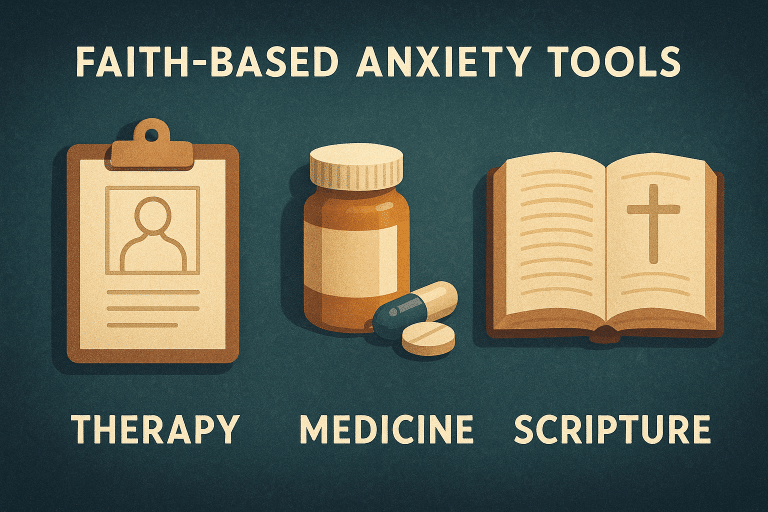
Navigating a healthy Christian spiritual life often involves embracing all the tools God provides for healing and wellness. For too long, a false divide has been suggested between faith and modern medicine, but this is a misunderstanding of God’s common grace. In truth, seeking help from doctors and therapists for conditions affecting the mind and body is an act of stewardship. As noted by Christian Stigma Explained, using medicine or therapy is not only scriptural but wise. A person facing mental health challenges should not feel they must choose between Jesus and professional help; according to Christian Mental Health Medication, they can and should embrace both.
Prayer and Faith in Cognitive Behavioral Therapy
Consequently, prayer and faith can work powerfully alongside evidence-based treatments from psychology and psychiatry. For instance, prayer provides a space for self-reflection that can reveal unhealthy thought patterns, a critical first step toward growth that is also foundational to therapy. This spiritual practice aligns with principles of Cognitive Behavioral Therapy (CBT), where redirecting negative thoughts toward positive truths is key. Research highlighted by PubMed NCBI supports this connection, showing how prayer helps individuals refocus their attention away from distress. In this way, therapy offers practical strategies while prayer strengthens the spiritual and emotional resolve to apply them.

Scientific studies show that the power of prayer can have a tangible calming effect on the brain, engaging neural pathways that reduce anxiety and stress.
Ultimately, integrating modern medicine with a deep spiritual life reflects a holistic understanding of how God designed us as complex beings of spirit, mind, and body. Both theology and psychology affirm that caring for our mental health is essential for overall well-being. Therefore, embracing professional medical care is not a failure of faith but rather a wise and courageous step toward the wholeness God desires for every person. Organizations like NAMI Faith Community Leader consistently point to the profound mental health benefits that come from religion and spirituality, reinforcing that these two realms are powerful allies, not adversaries, in the journey toward healing.
Simple Rhythms for Deepening Your Faith Daily
Cultivating a resilient Christian spiritual life doesn’t require grand gestures; rather, it’s the small, daily rhythms that are essential for deepening your faith. These simple practices provide an emotional anchor, building a foundation of trust. Consequently, this consistency helps stabilize us during life’s storms. Research from PMC 9713100 highlights that prayer and faith serve as a vital connection to the divine, offering stability. Therefore, integrating simple spiritual disciplines into your routine powerfully strengthens your relationship with God.
To begin, consider a simple morning rhythm, such as two minutes in prayer or reading a single verse before starting your day. This small act intentionally shifts your focus from daily anxieties to God’s peace. In fact, this practice mirrors principles of cognitive behavioral therapy, helping redirect attention from negative thoughts to positive truths. Research highlighted by PubMed Central supports prayer as a cognitive tool to reframe one’s mindset. In other words, this simple habit can positively alter the course of your entire day.
Similarly, an evening rhythm can bring closure and peace. Before sleeping, take a moment for quiet gratitude, consciously giving the day’s burdens to God as encouraged in 1 Peter 5:7. This is an active way of strengthening faith. According to Stanford News, prayer functions much like a counseling session for emotional processing. Furthermore, this type of daily reflection and prayer fosters mental well-being. These simple bookends create a steady, life-giving pulse for your spiritual life.
Conclusion: Your Lifelong Journey of Prayer and Faith
Embarking on a path of prayer and faith is not about reaching a final destination, but about nurturing a lifelong relationship with God. This journey provides a steady anchor in the unpredictable storms of life, offering a source of strength that is both constant and renewing. According to research published on PMC, NCBI, NLM, this spiritual practice is a powerful way believers interact with the divine, building emotional resilience. Consequently, each moment spent in communication with God deepens your roots and strengthens your resolve to face whatever lies ahead with hope.
Throughout this guide, we’ve explored how the power of prayer can reshape our Christian spiritual life, calming the nervous system and offering solace for the anxious mind. Indeed, this practice can function like a counseling session, allowing us to process our deepest concerns. As noted by Stanford News, deep faith has tangible health benefits, and prayer is a vital coping mechanism. Furthermore, it serves as a valuable tool for redirecting our focus from negative ruminations to positive truths, a principle also found in cognitive behavioral therapy, as highlighted by PMC NCBI Articles.
Therefore, as you move forward, remember that your journey will have moments of both strength and doubt. In every season, God’s grace is sufficient for you. Continue to cultivate simple, daily rhythms of connection, for this is the essence of deepening your faith. This ongoing conversation, rooted in the promise that He is “the God of all comfort” (2 Corinthians 1:3), can lead to profound feelings of tranquility, as supported by findings on PubMed Central. Ultimately, your walk is a beautiful, continuous unfolding of His presence in your life.