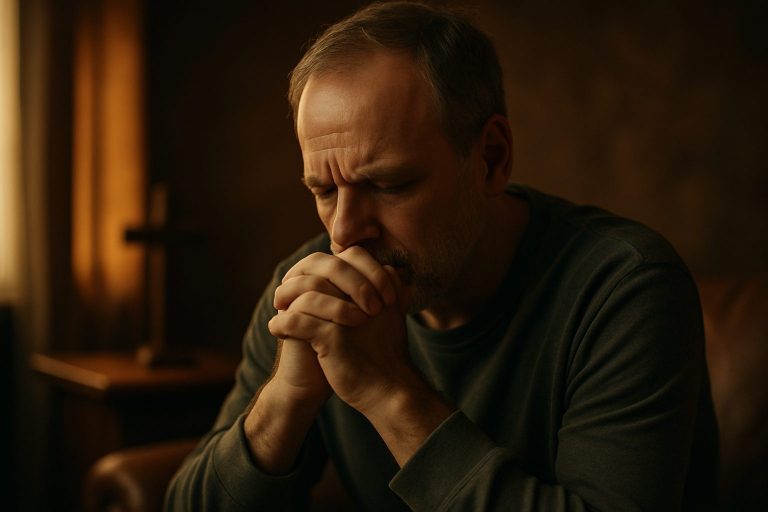
Nervous System Healing Christian Perspective: Find Peace
Estimated reading time: 14 minutes
Introduction: Your Body Keeps the Score, but God Offers Lasting Peace
Many today recognize the profound truth that our bodies physically record our life experiences—our joys, sorrows, and traumas. This can leave us feeling stuck in a state of high alert, battling a ‘fight or flight’ response that feels anything but peaceful. For instance, finding a path toward nervous system healing Christian perspective involves integrating what we know about the body with the deep truths of our faith. Modern science increasingly affirms the biblical concept that our mind, soul, and body are deeply interconnected, as highlighted by research from ncbi.nlm.nih.gov. Consequently, healing is not just a spiritual or mental exercise; it is a holistic process that engages every part of our being, just as God designed.
Why Christians Experience Nervous System Dysregulation
Even with deep faith, Christians can struggle with anxiety, panic attacks, and the lingering effects of trauma. It is crucial to understand that a dysregulated nervous system is not a sign of spiritual failure but rather a sign of our shared human experience in a fallen world. In fact, the Christian tradition has a long history of integrating faith with practical medicine for holistic care, a connection explored by news.stanford.edu. Practices like prayer are not just spiritual petitions; they can actively ‘rewire’ the brain, shifting our focus and fostering neurological calm, as explained by prayerleader.com. Therefore, God invites us to a healing journey that honors the intricate way He has made us, body and soul.
This article will explore the powerful intersection of timeless biblical wisdom and contemporary neuroscience. We will look at how principles of Christian nervous system regulation can be supported by therapeutic models and why seeking professional help is a valid path to wellness. Many are finding that clinical techniques for calming the body are highly compatible with Christian faith, a view supported by resources like newvisioncounseling.org. Ultimately, addressing the stigma against therapy, as advocated by organizations like mentalhealthgracealliance.org, opens doors for deeper healing. You can learn to work with your body to cultivate the unshakable peace that Jesus promises—a peace that surpasses all understanding and guards your heart and mind (Philippians 4:7).
The Science of ‘fight or Flight’ and the Spiritual Roots of Anxiety
Understanding the spiritual roots of anxiety often begins with our physical bodies. God designed us with a remarkable survival mechanism called the sympathetic nervous system, responsible for the “fight or flight” response. When faced with a real threat, this system prepares us to act decisively by releasing stress hormones. However, in our modern world, chronic stressors can keep this system activated, leading to persistent feelings of unease that disconnect us from God’s peace. Research increasingly explores the deep interconnection between spirituality and neuroscience, affirming the biblical idea that our mind, body, and soul are intertwined, as detailed by ncbi.nlm.nih.gov.
Achieving a Sound Mind: Christian Nervous System Healing
This prolonged state of high alert is the opposite of the shalom peace God promises. In other words, when our bodies are stuck in survival mode, it becomes incredibly difficult to experience spiritual tranquility and connection. Scripture reminds us, “For God has not given us a spirit of fear, but of power and of love and of a sound mind” (2 Timothy 1:7). This “sound mind” involves what we now call Christian nervous system regulation. Practices like prayer and worship can have a tangible neurological impact, helping to shift our brains away from fear-based thinking. For instance, as explained by prayerleader.com, consistent prayer can help create new, healthier neural pathways.

Therefore, healing fight or flight biblically involves both spiritual disciplines and practical, evidence-based tools. The goal is to intentionally activate the parasympathetic nervous system, our God-given “rest and digest” state, which facilitates healing and restoration. Christian counseling often integrates clinical techniques to achieve this calm state. As sources like newvisioncounseling.org point out, therapeutic methods designed to soothe the body are fully compatible with a robust Christian worldview. Ultimately, these tools help us steward the bodies God gave us, allowing us to more fully inhabit His peace.
A Nervous System Healing Christian Perspective: How God Designed Us for Peace
A nervous system healing Christian perspective begins with a foundational truth: God did not design us for a life of chronic anxiety or stress. Instead, He created our bodies with an incredible, innate capacity for peace, connection, and resilience. This view isn’t just spiritual; it’s deeply biological. Modern science increasingly affirms what Scripture has long taught about the profound interconnection of our mind, body, and spirit, as explored in research from ncbi.nlm.nih.gov. In other words, our physical and spiritual well-being are not separate but are woven together in a beautiful, complex design intended for wholeness.
Healing Fight or Flight Biblically
At the heart of this design is the autonomic nervous system, a gift that allows us to respond to danger but also to enter states of rest and social engagement. From a faith-based perspective, this isn’t a mere evolutionary accident; it’s divine architecture. God provides the “fight or flight” response for protection while also inviting us into the “rest and digest” state, which the Apostle Paul calls “the peace of God, which transcends all understanding” (Philippians 4:7). Christian counseling often integrates this understanding, using evidence-based techniques to help people engage the calming part of their nervous system, as detailed by sources like newvisioncounseling.org. Consequently, learning Christian nervous system regulation is an act of stewardship, caring for the body God gave us.
This integrated approach means that spiritual practices are also physiological practices. For instance, prayer is not just a conversation with God; it is an activity that can tangibly reshape our neural pathways toward peace. Research covered by prayerleader.com shows how practices like gratitude and worship can actively ‘rewire’ the brain for positive emotional states. This aligns with the long-held understanding in many faith traditions that spiritual devotion promotes physical health, a connection explored by news.stanford.edu. Therefore, when we engage in these ancient faith disciplines, we are participating in God’s intended design for our holistic healing—spirit, soul, and body.
Biblical Trauma Healing: Finding a Felt Sense of Safety in God
For many, the journey of biblical trauma healing involves more than just addressing painful memories; it requires finding a deep, physical sense of safety. Trauma often leaves the nervous system in a constant state of high alert, making true rest feel impossible. However, scripture affirms the deep interconnection of our mind, body, and soul (Mark 12:30), a concept supported by modern research into spirituality and neuroscience from sources like ncbi.nlm.nih.gov. Therefore, a Christian approach to healing acknowledges that our bodies must learn safety just as our minds learn truth. This process involves gently teaching our nervous system that it is safe to rest in God’s presence.
Regulating Nerves Biblically Through Psalms

Consequently, we can find a profound model for this “felt safety” in the Psalms. David often cried out in distress yet consistently returned his focus to God as his refuge and fortress (Psalm 18:2). This biblical pattern mirrors the concept of co-regulation, where a calm presence helps soothe a dysregulated state. In other words, by meditating on God’s unwavering faithfulness, we invite the Holy Spirit to bring a tangible peace that calms our fight-or-flight response. Integrating such scriptural truths with proven clinical techniques is a core part of effective Christian counseling, as explained by centers like newvisioncounseling.org.
This spiritual co-regulation can be cultivated through intentional practices. For instance, gentle, repetitive prayer can physically alter brain patterns, shifting us out of anxiety and into a state of worship and trust. Research highlighted by prayerleader.com shows that practices like gratitude can literally rewire our neural pathways for peace. This aligns with a long history of integrating faith and health, where prayer and practical care work hand-in-hand for holistic well-being, a connection also noted by news.stanford.edu. Ultimately, engaging our faith is not just a cognitive exercise; it is a full-bodied experience of finding sanctuary in our Creator.
Practical Christian Nervous System Regulation Techniques
To achieve effective Christian nervous system regulation, we can integrate timeless biblical principles with evidence-based practices. This approach does not separate the spiritual from the physical; rather, it acknowledges the intricate connection God designed between our mind, body, and soul, a concept supported by modern research as noted by ncbi.nlm.nih.gov. Consequently, when we engage in practices that calm our physical bodies, we create space for our spirits to more readily experience the peace of Christ. These techniques are not about emptying the mind but about filling it with God’s truth and presence, thereby transforming our physiological state from one of fear to one of faith.
Biblical Breath Prayer for Nervous System Healing
One of the most powerful tools is intentional prayer, specifically focusing on gratitude and adoration. Instead of simply asking for rescue from anxiety, we can actively shift our brain’s focus. For instance, engaging in “breath prayer”—inhaling God’s goodness and exhaling our worries—can physically alter brain regions responsible for emotion, as explained by bestselfmedia.com. This practice aligns directly with Scripture’s call to “be transformed by the renewing of your mind” (Romans 12:2). According to prayerleader.com, this kind of worshipful focus can neurologically rewire our responses to stress, making it a spiritual discipline with profound, tangible effects on our fight or flight response.
Furthermore, stewarding the body through intentional rest is a biblical mandate with direct benefits for nervous system health. The principle of Sabbath is not merely a suggestion but a divine command designed for our restoration, and modern science affirms this, with sources like medicalnewstoday.com highlighting the critical role of rest in mitigating anxiety. In other words, honoring the Sabbath can be a form of somatic therapy, allowing our bodies to enter a parasympathetic state of “rest and digest.” This physical act of obedience honors God as our provider, reinforcing our trust and calming the anxious parts of our brain that feel a need to constantly strive. Likewise, as research from health.harvard.edu suggests, nourishing our bodies with a healthy diet can also significantly improve our mental well-being.
Powerful Scripture for Calming Nerves and Soothing Your Soul

Finding the right scripture for calming nerves is a cornerstone of a Christian approach to nervous system regulation. The Bible offers profound peace that can soothe a dysregulated state. In fact, science increasingly recognizes the deep interconnection between spirituality and neuroscience, affirming the biblical truth that our mind and body are linked, as noted by research on ncbi.nlm.nih.gov. When we immerse ourselves in God’s promises, we participate in a process that can tangibly shift our physiological state. Consequently, this spiritual practice helps ‘rewire’ the brain’s response to stress, as explained by experts at prayerleader.com, moving us from fight-or-flight into a felt sense of safety.
Specific passages, for instance, serve as powerful anchors in moments of overwhelm. Consider Philippians 4:6-7, which encourages us to replace anxiety with prayer, promising a “peace of God, which transcends all understanding.” Similarly, Isaiah 41:10 offers a direct command: “So do not fear, for I am with you.” Meditating on these truths is not a denial of our circumstances but a declaration of a greater reality. Indeed, the historical connection between deep faith and positive health outcomes is well-documented, as discussed by news.stanford.edu, showing that spiritual practices provide a foundation for holistic well-being.
A practical way to integrate these verses is through “breath prayer.” This involves choosing a short phrase from scripture and syncing it with your breathing; for example, breathing in “The Lord is my shepherd,” and breathing out “I shall not want.” This practice physically slows your heart rate and engages the calming part of your nervous system. Furthermore, studies highlighted on bestselfmedia.com have shown that daily prayer can physically alter brain regions responsible for emotion. By consistently turning to scripture, you actively partner with God in renewing your mind and calming your body.
The Surprising Power of Prayer and Co-regulation
Prayer is a foundational tool for Christian nervous system regulation, moving beyond a simple list of requests into an embodied experience of connection with God. When we consistently bring our anxieties to God, as instructed in Philippians 4:6, we engage in a practice that can physically alter our minds. Indeed, spiritual disciplines like prayer and gratitude can actively ‘rewire’ the brain, according to research shared by prayerleader.com. This process shifts our neurological focus away from stress and threat, consequently creating new pathways grounded in peace and trust. In this way, prayer becomes less of a momentary plea and more of a transformative state of being.
Christian Co-regulation for Nervous System Safety
This transformative process is best understood as spiritual co-regulation, where our dysregulated nervous system attunes to the constant, peaceful presence of God. Just as a child finds calm in the steady presence of a loving parent, we can find a “felt sense of safety” by turning our awareness toward God’s sovereignty. This is not merely a psychological trick but a reflection of how we are created, as modern science increasingly affirms the deep interconnection of mind, body, and spirit discussed in sources like ncbi.nlm.nih.gov. In essence, engaging with God through prayer invites His regulating presence to soothe our internal state, offering a peace that truly surpasses worldly understanding.
Moreover, God designed this co-regulation to happen horizontally through the community of believers. We are not meant to heal in isolation. For instance, the simple act of praying with a trusted friend or sharing struggles within a small group provides tangible nervous system support, reminding us we are not alone. This aligns with the biblical command to “carry each other’s burdens” (Galatians 6:2). Historically, this integration of faith and communal care has been linked with significant health benefits, a connection supported by research highlighted by news.stanford.edu. Therefore, participating in Christian community becomes a vital part of our healing journey, as we both give and receive the steadying presence of Christ through one another.

Embracing Support: Faith-based Somatic Therapy and Christian Counseling
While God is the ultimate healer, He often works through the wisdom and support of others. Engaging with resources like faith-based somatic therapy or Christian counseling is not a sign of weak faith; instead, it is a courageous step towards wholeness. These approaches wisely integrate psychological insights with the timeless truths of Scripture. Many hesitate to seek professional help due to stigma, yet as mentalhealthgracealliance.org explains, therapy can be a powerful tool that actually deepens one’s spiritual life and understanding of grace.
Specifically, somatic therapies focus on how trauma is held within the body, helping you connect with and release these physical burdens in a safe environment. A Christian counselor then frames this process within a biblical worldview, ensuring that healing aligns with God’s design. For instance, as detailed by newvisioncounseling.org, techniques from Cognitive Behavioral Therapy (CBT) can be used to challenge anxious thoughts, aligning with the biblical call to “take every thought captive.” This process acknowledges the profound mind-body connection that both science and scripture attest to, a concept explored at ncbi.nlm.nih.gov.
Ultimately, seeking this support is an act of stewardship over the mind and body God has given you. A skilled therapist provides tools and a safe “co-regulating” presence that helps calm your nervous system, mirroring the biblical principle of bearing one another’s burdens (Galatians 6:2). This professional support does not replace reliance on God but rather enhances it. In fact, the Christian tradition has long integrated faith with practical care for holistic health, a connection supported by findings from news.stanford.edu. Consequently, this partnership can help you find a felt sense of safety to better connect with the deep, abiding peace of Christ.
Conclusion: Walking Forward in God’s Regulated Peace
This journey through a nervous system healing Christian perspective ultimately brings us to a profound, biblical truth: our Creator designed us for wholeness. In short, healing is not about eliminating every trigger but about learning to return to a state of peace in God’s presence more quickly and consistently. This process recognizes the deep, complex connection between our spiritual, mental, and physical states, a concept supported by modern science which explores the intersection of spirituality and neuroscience, as detailed by ncbi.nlm.nih.gov. We move forward not by ignoring our body’s signals, but by inviting Jesus into them, allowing His peace to regulate our entire being.
Integrating Prayer & Professional Help for Nervous System Healing
Therefore, integrating spiritual disciplines with practical tools is a powerful, God-honoring strategy. For instance, engaging in consistent prayer and worship can literally rewire our brains for peace, shifting our focus away from fear and onto God’s sovereignty, an idea explored by prayerleader.com. Likewise, seeking professional support is not a sign of failed faith; rather, it can be a vital resource that God uses for our healing. As organizations like the Mental Health Grace Alliance explain, therapy can be a powerful tool for spiritual and psychological growth. True strength is found in stewarding our minds and bodies with every resource He provides.
Ultimately, walking in God’s regulated peace is an ongoing invitation to co-regulate with the Holy Spirit. It is a gentle path of returning, again and again, to the safety of His love. This journey is one of grace, where faith practices and informed self-care work together, leading to better overall health outcomes as noted by news.stanford.edu. May you continue to discover the profound, felt sense of safety that comes from entrusting your entire nervous system to the Prince of Peace, living a life marked not by anxiety, but by the resilient calm of Christ Himself.