
Nervous Breakdown Christian Perspective and Hope Today
Estimated reading time: 11 minutes
Introduction: When the World Goes Dark
When life’s pressures become overwhelming, it can feel like the lights have gone out, leaving you in a frightening and isolating darkness. This experience, often called a mental or nervous breakdown, is not a formal medical diagnosis but a term for a period of intense mental distress that leaves you unable to function in your daily life, as explained by the Cleveland Clinic. For Christians, this season of crisis can be particularly disorienting, raising difficult questions about faith, suffering, and God’s presence. This article explores the nervous breakdown Christian perspective and hope, offering a compassionate and biblically grounded path toward healing and restoration.
Biblical Hope for Spiritual Crisis & Burnout
In fact, encountering a spiritual crisis support system becomes vital when feelings of guilt or spiritual failure compound the emotional pain. Many believers wrongly assume that strong faith should prevent such a collapse, leading to shame and silence. However, Scripture reveals a more complex reality; for instance, the prophet Elijah, after a great victory, experienced such profound despair that he asked God to take his life (1 Kings 19:4). His story, explored by the World Evangelical Alliance, shows that God meets us in our frailty. Consequently, seeking help through resources like Christian counseling is not a sign of weak faith but a courageous step toward wholeness, a perspective shared by experts at Bellevue Christian Counseling.
Ultimately, finding faith in crisis is not about discovering a quick fix but about anchoring yourself in enduring truth and supportive relationships. True biblical hope for burnout involves embracing a holistic view of healing that integrates spiritual disciplines with the wisdom of mental health care. God’s Grace extends to all avenues of healing, including the comfort of the Holy Spirit, the care of the church community, and the expertise of trained professionals. As The Gospel Coalition emphasizes, the body of Christ plays a crucial role in providing encouragement and support. Therefore, this journey through the darkness is not one you have to walk alone; there is a tangible and grace-filled path toward the light.
What Is Happening? a Christian Mental Breakdown Explained
When seeking a nervous breakdown Christian perspective and hope, it is crucial to first understand the event itself. While “nervous breakdown” is an outdated term, the Cleveland Clinic clarifies it describes a mental health crisis where overwhelming stress makes daily functioning impossible. For believers, this can feel like a profound spiritual crisis, a true Christian mental breakdown that challenges one’s faith. However, this breaking point is not a sign of spiritual failure; it is a physiological and emotional signal that the burdens have become too heavy for your Nervous System to carry alone.
This experience of faith and emotional collapse has deep biological roots. As research from the National Library of Medicine (PMC) explains, prolonged stress fundamentally alters brain function, especially in our emotional centers. This is not a moral failing but a human response to unsustainable pressure. Indeed, even great figures of faith like the prophet Elijah experienced complete Burnout, as the World Evangelical Alliance notes, yet God met him with quiet care, not condemnation (1 Kings 19:4-8).
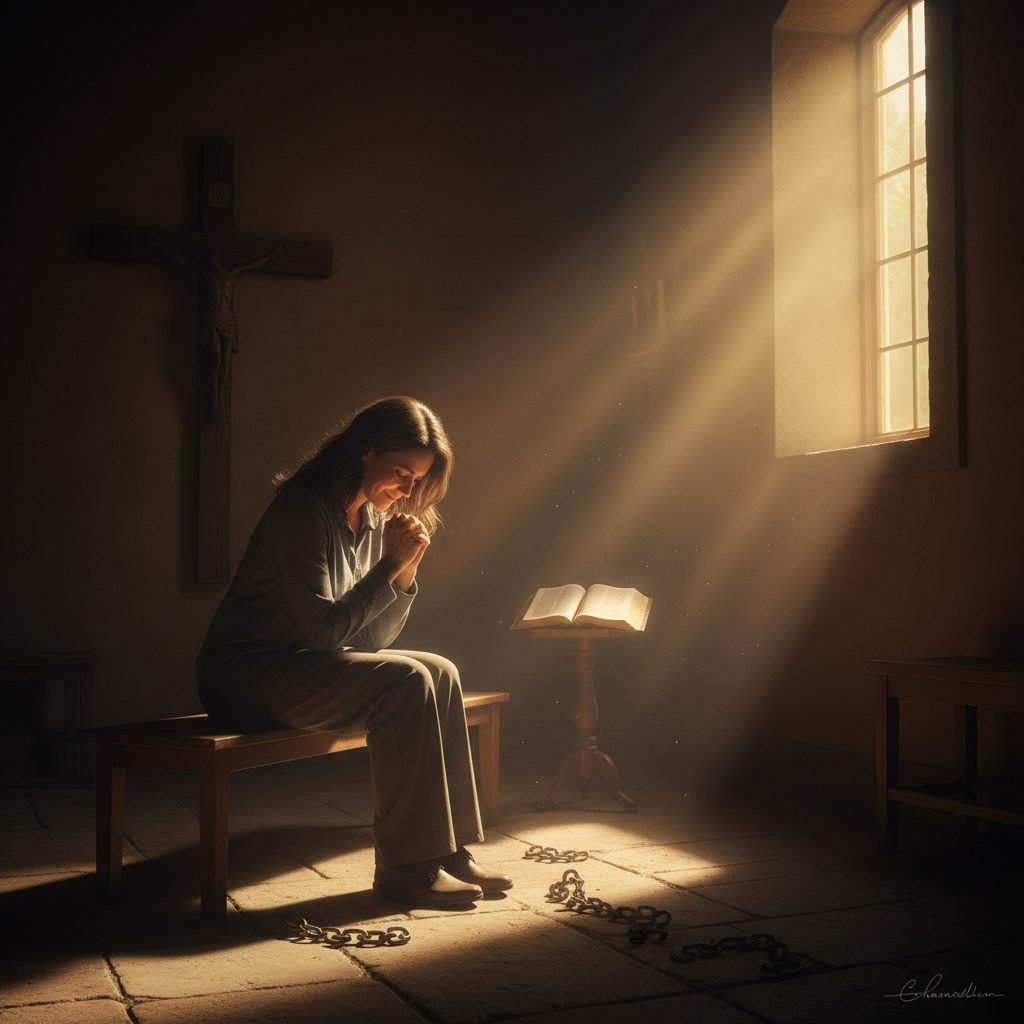
Therefore, understanding what is happening is the first step toward emotional healing. It involves acknowledging the intricate connection between mind, body, and spirit. As organizations like the American Association of Christian Counselors advocate, finding a path forward often requires an integrated approach that honors both faith-based support and professional Mental Health care. Recognizing the crisis is a courageous act that opens the door for God’s Grace to meet you at your breaking point.
Where Is God at My Breaking Point?
When you feel overwhelmed, it is profoundly easy to feel completely alone. The question, “Where is God at my breaking point?” echoes in the silence, often turning a Christian mental breakdown into a crisis of faith. However, Scripture powerfully refutes this feeling of abandonment. For instance, even Jesus experienced deep emotional anguish in Gethsemane, crying out to the Father (Matthew 26:38-39). As The Gospel Coalition highlights, Jesus’s suffering means He is a high priest who can empathize with our weaknesses. Therefore, God is not distant in our pain but is intimately acquainted with it.
Consider the prophet Elijah, who, after a great victory, collapsed into fear and despair, asking God to take his life (1 Kings 19:4). In this moment of complete burnout, God did not rebuke him. Instead, He provided for Elijah’s physical needs with rest and food before speaking in a gentle whisper. This biblical account, explored by the World Evangelical Alliance, illustrates how God meets us in our frailty. He doesn’t always remove the trial instantly; rather, He sustains us through it, proving His faithfulness during an emotional collapse.
Ultimately, God’s presence is a promise fulfilled through the Holy Spirit, our constant Comforter (John 14:26). This divine support often manifests in tangible ways, for example, through the care of a church community or the guidance of a skilled therapist. As writers at Bellevue Christian Counseling affirm, seeking professional help is a wise step for believers. In other words, finding faith in crisis means recognizing God works through many channels—Scripture, prayer, and professional care—to draw near to the brokenhearted (Psalm 34:18).
The Permission to Lament: a Biblical View on Burnout
In seeking a biblical view on burnout, many Christians mistakenly believe they must suppress feelings of despair or exhaustion. However, Scripture provides a powerful and honest framework for navigating a faith and emotional collapse through the practice of lament. This ancient form of prayer gives us permission to bring our raw, unfiltered pain and confusion before God without fear of judgment. In fact, embracing lament is a critical first step in finding a restorative nervous breakdown Christian perspective and hope, turning what feels like our breaking point into a turning point with God.

The Bible is filled with examples of faithful individuals crying out to God in their anguish. For instance, the Psalms are rich with David’s laments, where he honestly questions God’s presence amidst suffering (Psalm 22:1-2). The prophet Elijah, after a great victory, experienced such profound burnout that he asked God to take his life; as the World Evangelical Alliance highlights, God responded not with rebuke but with gentle care. Furthermore, even Jesus expressed deep distress in Gethsemane, demonstrating that profound emotional pain is part of the human experience, not a sign of spiritual failure, a truth echoed by The Gospel Coalition.
Therefore, lament is not a sign of weak faith; on the contrary, it is an act of profound faith. It is the courageous choice to turn toward God in our darkest moments instead of turning away. This biblical practice aligns with modern therapeutic approaches, which emphasize the importance of acknowledging and processing painful emotions. Consequently, as experts at Bellevue Christian Counseling might affirm, integrating these ancient spiritual disciplines can be a vital part of a holistic healing journey. It allows us to be fully human and fully faithful at the same time.
Practical Steps Part 1: Spiritual Disciplines for Christian Emotional Healing
When navigating a crisis of faith and emotional collapse, a key part of the nervous breakdown Christian perspective and hope is engaging with tangible spiritual disciplines. These practices are not magical solutions; rather, they are intentional ways to posture our hearts toward God, creating space to receive His Grace and healing. Instead of a command to simply “try harder,” these disciplines are an invitation to connect with the source of all comfort. In fact, clinical research has demonstrated that spiritual practices like prayer can have a significant positive impact on those with depression and anxiety, as documented in a study on PubMed. Consequently, these ancient faith habits serve as anchors for our Mental Health in the turbulent waters of a spiritual crisis.
Biblical Hope for Burnout: Prayer & Scripture
Two foundational disciplines for Christian emotional healing are prayer and immersion in Scripture. Prayer, in this context, moves beyond a list of requests into a raw, honest dialogue with God, much like the Psalms of Lament. It is a space to voice your pain, confusion, and even anger without fear of judgment. Similarly, Scripture offers profound comfort and perspective. For instance, the story of Elijah in 1 Kings 19 provides a powerful model of biblical hope for burnout. As the World Evangelical Alliance highlights, God met Elijah in his despair not with condemnation, but with gentle care, sustenance, and a renewed sense of purpose. This shows us that God is not distant during our breaking points but draws near to restore us.
Beyond individual practices, Christian life is designed to be lived in community. Therefore, engaging with a trusted church community is a vital spiritual discipline during a mental health crisis. Isolating oneself is a common response to overwhelming stress, yet the body of Christ is meant to provide support and bear one another’s burdens (Galatians 6:2). As The Gospel Coalition points out, the church can be a tangible expression of God’s care. Allowing others to pray for you, offer practical help, or simply provide a listening ear is an act of humility that opens the door for healing. Ultimately, these disciplines work together, weaving a cord of faith that can hold fast even when your own strength fails.
Practical Steps Part 2: a Christian Perspective on Therapy and Medicine
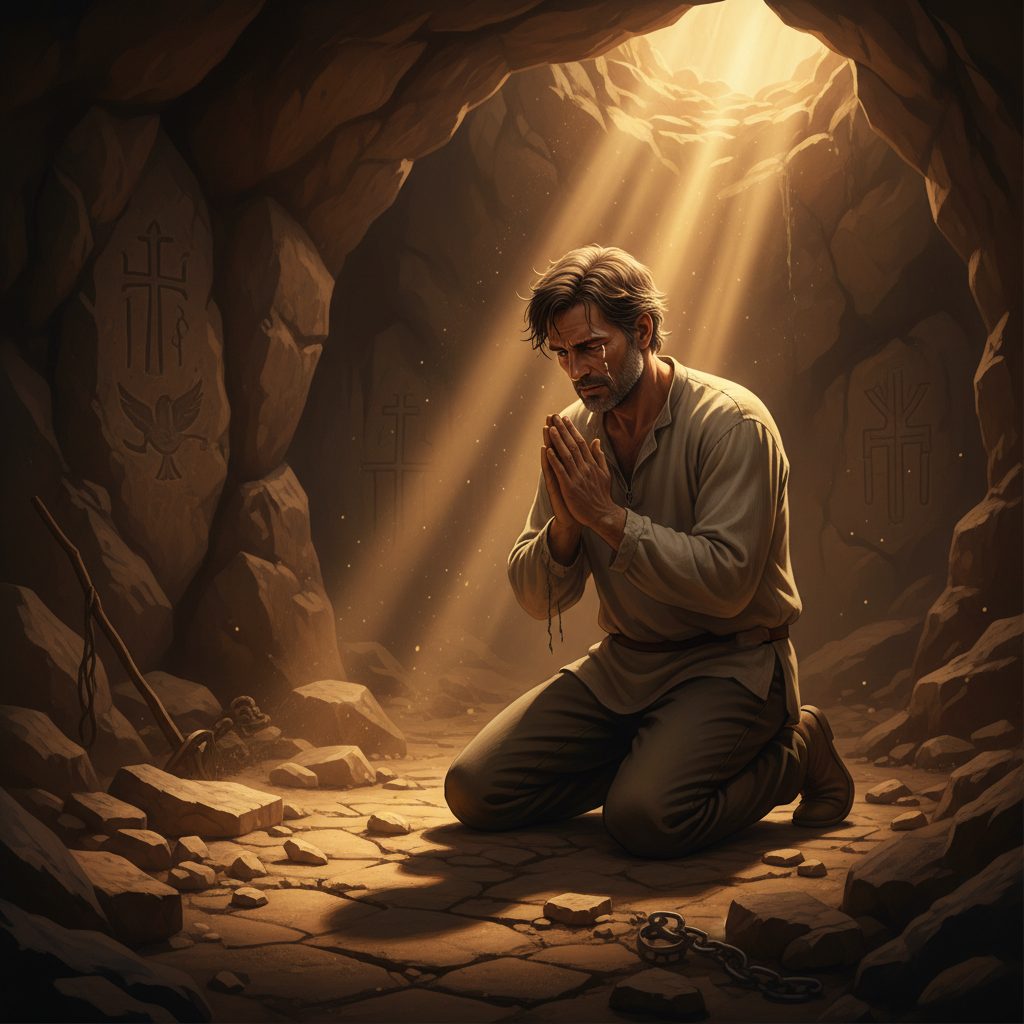
Finding a nervous breakdown Christian perspective and hope often involves embracing all the tools God has provided, including professional help. When you feel you are at your breaking point, it is crucial to understand that seeking therapy or medical advice is not a sign of weak faith. In fact, many Christian counselors view professional help as a vital resource for navigating a mental health crisis. According to Bellevue Christian Counseling, therapy can be an invaluable asset for believers experiencing profound anxiety and despair. Consequently, engaging with these resources can be a powerful act of stewardship over the mind and body God has given you.
Professional Therapy for Christian Emotional Healing
Therapeutic approaches, for instance, can be remarkably aligned with biblical principles. Cognitive Behavioral Therapy (CBT), a widely used method, focuses on identifying and changing destructive thought patterns, which echoes the scriptural call to “be transformed by the renewing of your mind” (Romans 12:2). A trained therapist can provide objective insights and coping strategies that friends and family may not be equipped to offer. The American Association of Christian Counselors champions this integrated model, where professional care becomes a conduit for celebrating the hope found in faith. Therefore, seeing a counselor can be a practical step in applying God’s truth to the intricate workings of your mind.
Similarly, the topic of medicine should be approached with wisdom and discernment, not fear. For some, medication can be a necessary and grace-filled intervention that helps stabilize the brain’s chemistry, much like God provided bread and water to a depleted Elijah before speaking to him. As Christianity.com notes, using medication for mental illness does not negate faith but can instead be a means of common grace that restores a person’s ability to function and engage in spiritual practices. When the body’s physical systems are severely dysregulated, medicine can create the necessary foundation upon which Christian emotional healing can be built.
Rebuilding Your Life: a Nervous Breakdown Christian Perspective and Hope for the Future
Emerging from an emotional collapse requires a gentle and patient approach to rebuilding. The journey forward offers a unique nervous breakdown Christian perspective and hope, framing recovery not as a return to normal, but as a divine recommissioning. For instance, just as God met Elijah in his burnout, He meets us not to erase our struggles, but to sustain us through them. The World Evangelical Alliance highlights that God’s healing for Elijah was a process of restoration and renewed purpose. In the same way, our healing involves gradually reclaiming strength, sustained by Grace and the promise of a future where our brokenness testifies to His faithfulness.
Consequently, rebuilding involves integrating both spiritual resources and practical, evidence-based strategies. While prayer and Scripture are foundational anchors, recovery is also bolstered by tangible actions. For instance, implementing stress management techniques, as noted by the Cleveland Clinic, can help regulate the nervous system. In addition, leaning on the church community is vital for support. This fellowship provides the encouragement that The Gospel Coalition emphasizes is crucial for those facing mental health challenges. This holistic approach creates a sturdy framework for lasting emotional healing.
Ultimately, the future after a breakdown is not a life sentence of fear but an invitation to experience God’s strength in weakness. This season of spiritual crisis support can become the ground where a more resilient faith takes root. It is a powerful reminder of the Apostle Paul’s words: “My grace is sufficient for you, for my power is made perfect in weakness” (2 Corinthians 12:9). This perspective transforms the narrative from permanent damage to profound restoration. Indeed, as the American Association of Christian Counselors argues, faith serves as a critical source of hope and resilience, ensuring our breaking points can lead to a future with renewed purpose.
Conclusion: the Sunrise Is Coming
Navigating a mental health crisis provides a unique nervous breakdown Christian perspective and hope, reframing the experience not as a final failure, but as a profound turning point. It is an invitation to depend more deeply on God’s grace when you feel you are at your breaking point, allowing the support of His people to uphold you. As emphasized by The Gospel Coalition, the church community is essential in providing care and bearing burdens during such overwhelming seasons. Consequently, this painful journey can cultivate a more authentic, resilient, and compassionate faith founded on the rock of Christ, not on our own fleeting strength.
Much like God met a despairing Elijah not with condemnation but with gentle sustenance and a quiet whisper (1 Kings 19), He meets us in our weakness with patient Grace. The World Evangelical Alliance beautifully illustrates that healing often involves God sustaining and recommissioning us in our frailty. This process seamlessly integrates spiritual disciplines with professional care, a holistic model supported by organizations like the American Association of Christian Counselors, which affirms that faith is a vital source of hope. While the night of emotional collapse feels impossibly long, hold onto this promise: the sunrise is coming, for “The steadfast love of the Lord never ceases; his mercies never come to an end; they are new every morning” (Lamentations 3:22-23).