Meditation for Anxiety Before Sleep Routine: A Guide
Estimated reading time: 11 minutes
Introduction: Finding God’s Stillness in the Anxious Night
The stillness of night should bring peace, yet for many, it amplifies the day’s anxieties, making rest feel impossible. If you find your mind racing when your head hits the pillow, establishing a Christian meditation for anxiety before sleep routine can be a profound step toward reclaiming your peace. This practice is more than just a relaxation technique; it is a way of entrusting your deepest worries to God. In fact, the psychological benefits of such spiritual disciplines are well-documented, with studies showing that both prayer and meditation are effective tools for building mental resilience and reducing anxiety, as highlighted by nymentalhealthcenter.com. By intentionally turning our focus from our fears to our faith, we create space for God’s calm to enter our hearts.
Christian Meditation: Scripture for Sleep Anxiety
Unlike secular meditation that often focuses on emptying the mind, Christian meditation is about filling the mind with God’s Word. It is an active engagement with scripture, a practice of prayerful contemplation. The goal is to “be still, and know that I am God” (Psalm 46:10), allowing His truth to quiet the noise of anxiety. This approach aligns with a long history of contemplative Christian tradition, as discussed by theological sources like preceptaustin.wordpress.com, which emphasize a slow, thoughtful reflection on God’s promises. Consequently, instead of striving for an empty mind, we seek a mind renewed and anchored in the unchanging character of God, providing a firm foundation when everything else feels uncertain.
This faith-based approach has powerful, evidence-based benefits for both mind and body. For instance, the practice of focused stillness helps regulate the nervous system, shifting it from a state of high alert to one of rest. Research from Harvard has shown that mindfulness can break the cycle of worry that leads to sleeplessness by invoking what is known as the ‘relaxation response’, according to health.harvard.edu. Furthermore, studies have demonstrated that consistent meditation can even alter brain structures related to stress and emotional regulation, as reported by news.harvard.edu. Therefore, when we engage in a calming sleep meditation rooted in faith, we are not only participating in a spiritual discipline but also utilizing a God-given, biologically-wired mechanism for finding peace and deep, restorative sleep.
Understanding How a Bedtime Prayer for Anxiety Calms the Nervous System
When the mind races with worry at night, the body follows, activating the sympathetic nervous system’s “fight-or-flight” response. A sincere bedtime prayer for anxiety serves as a powerful intervention, intentionally shifting the mind away from anxious loops and toward God’s sovereignty. This practice is not merely psychological; it is a spiritual discipline with profound physical effects. In fact, studies confirm the significant mental health benefits of both prayer and meditation, showing they can reduce feelings of anxiety and build resilience. As noted by nymentalhealthcenter.com, these practices are complementary tools for cultivating mental well-being. Consequently, engaging in prayer helps signal to your body that the perceived threat is gone and that it is safe to rest.
Christian Meditation for Calming Nighttime Anxiety
This intentional shift from worry to worship engages the parasympathetic nervous system, often called the “rest-and-digest” system. For instance, the slow, deep breathing that often accompanies prayer directly stimulates the vagus nerve, lowering heart rate and blood pressure. This physiological change is known as the relaxation response, a state of deep rest that counteracts the negative effects of stress, as explained by health.harvard.edu. From a biblical perspective, this aligns perfectly with God’s call to peace. The Apostle Paul encourages this state in Philippians 4:6-7, urging believers to replace anxiety with prayer and supplication, leading to a “peace of God, which transcends all understanding.” Therefore, we see a beautiful convergence of faith and physiology.

Instead of letting anxiety rule the night, a calming meditation can help you find God’s stillness and prepare your heart for restful sleep.
Ultimately, this practice is a form of Nervous System Regulation rooted in Christian truth. By focusing on Scripture and conversation with God, you are actively renewing your mind (Romans 12:2). Research from Harvard has demonstrated how mindfulness practices can physically change brain structures related to stress and emotional regulation over time, validating it as an evidence-based intervention for anxiety, according to news.harvard.edu. In other words, when Christian Meditation centers on God’s promises, it becomes a therapeutic and spiritual act. It reframes nighttime from a period of anxiety into an opportunity for divine communion, calming both the soul and the body for restorative sleep, a concept supported by research into framing mindfulness within theology from mdpi.com.
What Is Christian Meditation? Separating Biblical Truth From New Age Myths
For many believers, incorporating a Christian meditation for anxiety before sleep routine can feel confusing, especially with the prevalence of New Age concepts. However, biblical meditation is fundamentally different from Eastern or secular mindfulness that seeks to empty the mind. Instead, Christian meditation aims to fill the mind with God’s truth through Scripture and prayer. Consequently, it is an active engagement with the character and promises of God, providing a solid foundation for peace that can calm the nervous system before sleep.
This practice is less about achieving a mystical state and more about a deep, prayerful reflection on God’s Word. As one academic article from mdpi.com frames it, the goal is to “chew on” Scripture, allowing it to saturate your heart and mind. In other words, this form of contemplation is a spiritual discipline rooted in passages like Psalm 1:2, which describes the blessed person whose “delight is in the law of the Lord, and on his law he meditates day and night.” This slow, thoughtful reflection, as detailed by sources like preceptaustin.wordpress.com, is a core tenet of the faith.
Ultimately, this Christ-centered focus provides a powerful tool for reducing nighttime anxiety. While the methods are ancient, modern science increasingly validates their effectiveness for mental health. For instance, studies confirm that both prayer and meditation can significantly reduce symptoms of anxiety and depression, as noted by the nymentalhealthcenter.com. Furthermore, research from news.harvard.edu affirms that mindfulness-based interventions are a proven, primary treatment for anxiety disorders. Therefore, by anchoring your mind in biblical truth, you are engaging in a timeless spiritual practice and a psychologically sound method for finding stillness.
How to Create Your Christian Meditation for Sleep Routine
Creating a sustainable meditation for anxiety before sleep routine is less about rigid rules and more about cultivating a sacred habit of turning to God before rest. The initial goal is simply consistency, as research underscores the value of routine in managing anxiety, according to sciencedirect.com. This practice is an act of faith that creates a space for your nervous system to downshift from the day’s stressors, thereby preparing both mind and body for restorative sleep.
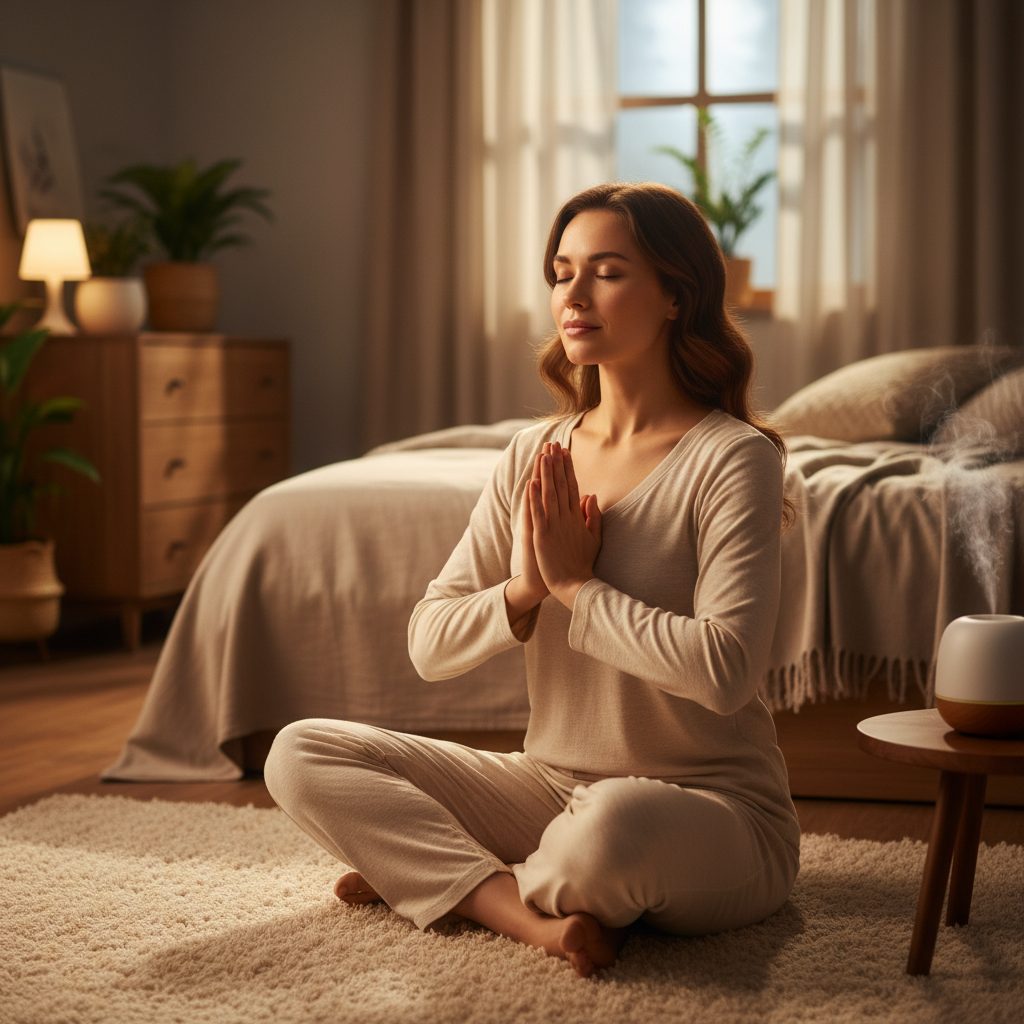
A consistent bedtime prayer can be a powerful part of your meditation for anxiety before sleep routine, helping to calm the nervous system and prepare your mind for rest.
To begin, select a quiet, comfortable space and a consistent time each evening to signal that it’s time to wind down. Then, choose a comforting scripture to focus on, such as Psalm 4:8: “In peace I will lie down and sleep, for you alone, Lord, make me dwell in safety.” Slowly repeating and reflecting on God’s word is a historically Christian form of contemplation, as detailed by preceptaustin.wordpress.com. While meditating on this verse, you can pair it with a simple breathing exercise like the 4-7-8 technique, a method noted for its effectiveness in calming the body’s stress response according to research cited by pmc.ncbi.nlm.nih.gov.
Ultimately, this routine integrates the spiritual truth of God’s sovereignty with the physical reality of Nervous System Regulation. By combining a bedtime prayer for anxiety with mindful breathing, you actively participate in the peace God offers. This consistent practice yields significant psychological benefits, as studies show that both prayer and meditation are effective tools for building resilience against anxiety, as supported by nymentalhealthcenter.com. In other words, you are not just hoping for peace; you are training your mind and body to receive it, stewarding the temple God has given you (1 Corinthians 6:19-20).
Using Biblical Sleep Affirmations to Overcome Nighttime Anxiety
Incorporating biblical sleep affirmations into your evening is a powerful way to create a calming sleep meditation. This practice moves beyond simple relaxation; consequently, it actively re-calibrates your heart and mind to God’s truth, directly countering the lies that fuel nighttime anxiety. Instead of allowing worries to spiral, you intentionally replace them with the promises of Scripture, which aligns with the biblical call to be transformed by the renewing of your mind (Romans 12:2). Indeed, studies confirm the profound psychological benefits of such practices, showing a clear link between prayer and meditation and reduced anxiety. According to nymentalhealthcenter.com, engaging in these disciplines builds mental resilience and fosters a sense of peace, creating an ideal state for deep, restorative rest.
The power of biblical affirmations lies in the meditative act of internalizing God’s Word. This is distinct from simply repeating empty phrases; in other words, it is a process of slowly reflecting on scripture, a concept some theologians describe as “chewing on” God’s truth, as detailed by preceptaustin.wordpress.com. For instance, you might gently repeat a verse like Psalm 4:8: “In peace I will both lie down and sleep; for you alone, O Lord, make me dwell in safety.” As you focus on the meaning of each word, you actively interrupt the cycle of worry and sleeplessness. This mindful engagement with Scripture is a spiritual discipline that, much like the “relaxation response” described by health.harvard.edu, calms the nervous system and invites God’s peace to guard your heart and mind.
Integrating Evening Relaxation Techniques Into Your Faith Practice
To build a powerful meditation for anxiety before sleep routine, we can pair our prayers with evidence-based evening relaxation techniques. These practices do not replace prayer but instead prepare the body and mind to receive God’s peace. For instance, when our bodies are on high alert, it is difficult to quiet our thoughts for meaningful communion. Breaking this cycle of worry is key, as explained by health.harvard.edu. By consciously calming our physical selves, we create a more receptive vessel for the Holy Spirit. This approach aligns with research from nymentalhealthcenter.com, which shows these practices work together to build resilience against anxiety.

One of the simplest yet most effective methods is focused breathing. The 4-7-8 breathing technique, for example, is a clinically recognized way to calm the nervous system, as detailed by pmc.ncbi.nlm.nih.gov. In short, you inhale for four seconds, hold the breath for seven, and exhale for eight. This pattern directly engages the body’s rest-and-digest system, signaling that it is safe to relax. This physical practice aligns with ancient Christian contemplative traditions of “chewing on” Scripture, a concept explored by mdpi.com. Consequently, you can pair this breathing with a short verse, turning a simple act into a profound spiritual discipline.
Beyond breathing, other physical techniques can also reduce nighttime anxiety. Gentle stretching before bed, for instance, releases physical tension stored in the muscles that often contributes to mental restlessness. Furthermore, establishing a consistent wind-down period trains your brain to anticipate sleep. The value of consistency in mental health routines is supported by research highlighted on sciencedirect.com. Ultimately, this is not about rules but about faithfully stewarding the bodies God has given us (1 Corinthians 6:19-20) by creating an environment conducive to the restorative sleep He designed for us.
When Your Meditation Routine Isn’t Enough: Seeking Professional Support
While a consistent meditation for anxiety before sleep routine can be a transformative spiritual discipline, there are times when it may not be sufficient to manage severe or persistent anxiety. It is crucial to recognize that seeking professional help is not a sign of weak faith, but rather an act of wise stewardship over the mind and body God has given you (1 Corinthians 6:19-20). In fact, practices like prayer and meditation are powerful complements to clinical support for building mental resilience, as noted by nymentalhealthcenter.com. Consequently, if your anxiety continues to significantly disrupt your sleep or daily life, it may be time to consider additional support.
Deciding to reach out for help is a significant step. For instance, you should consider professional guidance if you experience overwhelming feelings of dread, frequent panic attacks, or if your insomnia persists for several weeks despite your best efforts with evening relaxation techniques. These are indicators that underlying issues may need to be addressed with targeted, evidence-based strategies. Research has repeatedly validated that mindfulness-based interventions are highly effective for treating anxiety, as highlighted by news.harvard.edu. Therefore, viewing therapy as a tool God can use for healing aligns both faith and sound reason.
A licensed Christian counselor or a therapist who respects your faith can integrate spiritual disciplines with proven methods like Cognitive Behavioral Therapy (CBT). Specifically, CBT for Insomnia (CBT-I) is a highly effective treatment that helps reframe the anxious thoughts that often prevent sleep, a process that works hand-in-hand with contemplative prayer. This approach helps break the cycle of worry and sleeplessness that meditation alone may not resolve, a dynamic explained by research from health.harvard.edu. Ultimately, combining your personal faith practice with professional support can provide a comprehensive framework for finding lasting peace and restorative sleep.
Conclusion: Trading Your Anxiety for God’s Perfect Rest
Beginning a calming sleep meditation is ultimately an act of faith, a way to trade worldly anxieties for the peace that surpasses understanding (Philippians 4:6-7). Rather than letting worries dominate the night, you are intentionally creating a space to hand over your burdens to God. This practice is a spiritual discipline with profound psychological benefits, and as confirmed by nymentalhealthcenter.com, both prayer and meditation are powerful tools for building mental resilience.
This journey beautifully integrates faith with science. For instance, the Christian contemplative tradition aligns with modern therapeutic practices by reframing mindfulness as a way to deeply engage with God’s Word, a concept explored by mdpi.com. Furthermore, research from news.harvard.edu shows how mindfulness can physically alter brain structures involved in stress, offering a tangible explanation for the peace we feel.
Therefore, embrace this nightly invitation to rest. Start not with a goal of perfection, but with a simple desire to connect with your Creator, practicing the slow, thoughtful reflection on His Word that preceptaustin.wordpress.com describes as a core spiritual discipline. By doing so, you answer Jesus’ own call: “Come to me, all you who are weary and burdened, and I will give you rest” (Matthew 11:28). Let His perfect peace be your final thought as you drift into sleep.