
Meditation for Anxiety Body Scan Script: Calm Your Spirit
Estimated reading time: 13 minutes
Introduction: Finding Peace in a Body Tense with Anxiety
When anxiety takes hold, it often feels like a storm not just in the mind, but in the body as well. Your heart might race, your shoulders may tighten, and a sense of unease can settle deep within your muscles. For Christians seeking peace, a meditation for anxiety body scan script offers a pathway to calm this physical turmoil by intentionally reconnecting with the body God gave you. This practice is not about emptying the mind, but rather, about prayerfully noticing the physical sensations of stress that mayoclinichealthsystem.org identifies as common symptoms of anxiety. In essence, it is a way to begin tending to your body with mindful attention, preparing your heart to receive the peace that Christ promises.
Body Scan Meditation for Anxiety: a Christian Script
This approach aligns deeply with a Christian understanding of holistic well-being. The Bible reminds us that our bodies are temples of the Holy Spirit (1 Corinthians 6:19-20), and consequently, caring for them is a form of worship. A guided body scan, therefore, can be transformed into a contemplative prayer. As explained by mindfulteachers.org, this faith-based relaxation script becomes an exercise in gratitude, where you thank God for each part of your body while releasing the tension it holds. It is a tangible way to “be still, and know that I am God” (Psalm 46:10), allowing His presence to permeate both your physical and spiritual being.
Furthermore, this integration of faith and Somatic Therapy is supported by both theological and scientific insights. Christian theology has long recognized the profound link between our spiritual and physical health, a connection emphasized by sources like gotquestions.org. In parallel, scientific research consistently validates the effectiveness of these practices. Studies show that mindfulness can significantly reduce the physiological stress response, activating the Parasympathetic Nervous System to promote recovery. For instance, research highlighted by pmc.ncbi.nlm.nih.gov provides strong evidence for meditation’s role in anxiety reduction. This convergence of wisdom shows us that a Christian body scan prayer is not merely a psychological trick but a God-given tool for stewarding the integrated self He created.
What Is a Christian Body Scan Prayer and How Does It Help Anxiety?
A Christian body scan prayer is a faith-based adaptation of a classic mindfulness for anxiety script. Instead of simply observing bodily sensations from a neutral standpoint, this practice frames the exercise as a form of contemplative prayer. Specifically, it involves turning your attention to different parts of the body, offering each one to God’s care and acknowledging your body as a temple of the Holy Spirit (1 Cor. 6:19-20). This approach, as described by resources like mindfulteachers.org, transforms a psychological technique into an act of worship. In short, it integrates the biblical truth that our spiritual, mental, and physical states are deeply connected, a perspective affirmed by sources such as gotquestions.org.
Christian Body Scan Prayer for Anxiety Relief
So, how does this practice actively combat anxiety? When we experience anxiety, the body often enters a “fight or flight” mode, characterized by physical symptoms like muscle tension and rapid breathing. According to mayoclinichealthsystem.org, these physical responses can perpetuate a cycle of worry. A Christian body scan prayer directly interrupts this by intentionally activating the parasympathetic nervous system, which promotes rest. By systematically and gently focusing on sensations without judgment—and prayerfully releasing any tension to God—you are performing a biblical grounding exercise. Consequently, this somatic meditation for stress helps anchor your awareness in the present moment and in the safety of God’s presence, rather than in future worries.
This integration of faith and physiology is supported by significant scientific evidence. For instance, numerous clinical studies confirm that mindfulness and meditation are effective at reducing the body’s stress response, as detailed by research on pmc.ncbi.nlm.nih.gov. From a Christian perspective, this isn’t about emptying the mind to achieve a void but is instead about filling it with awareness of God’s sustaining presence in every part of your being. In other words, it’s a practical way to “be still, and know that I am God” (Psalm 46:10). This practice helps bridge the gap between knowing theological truths and experiencing them physically, offering a tangible path toward peace.
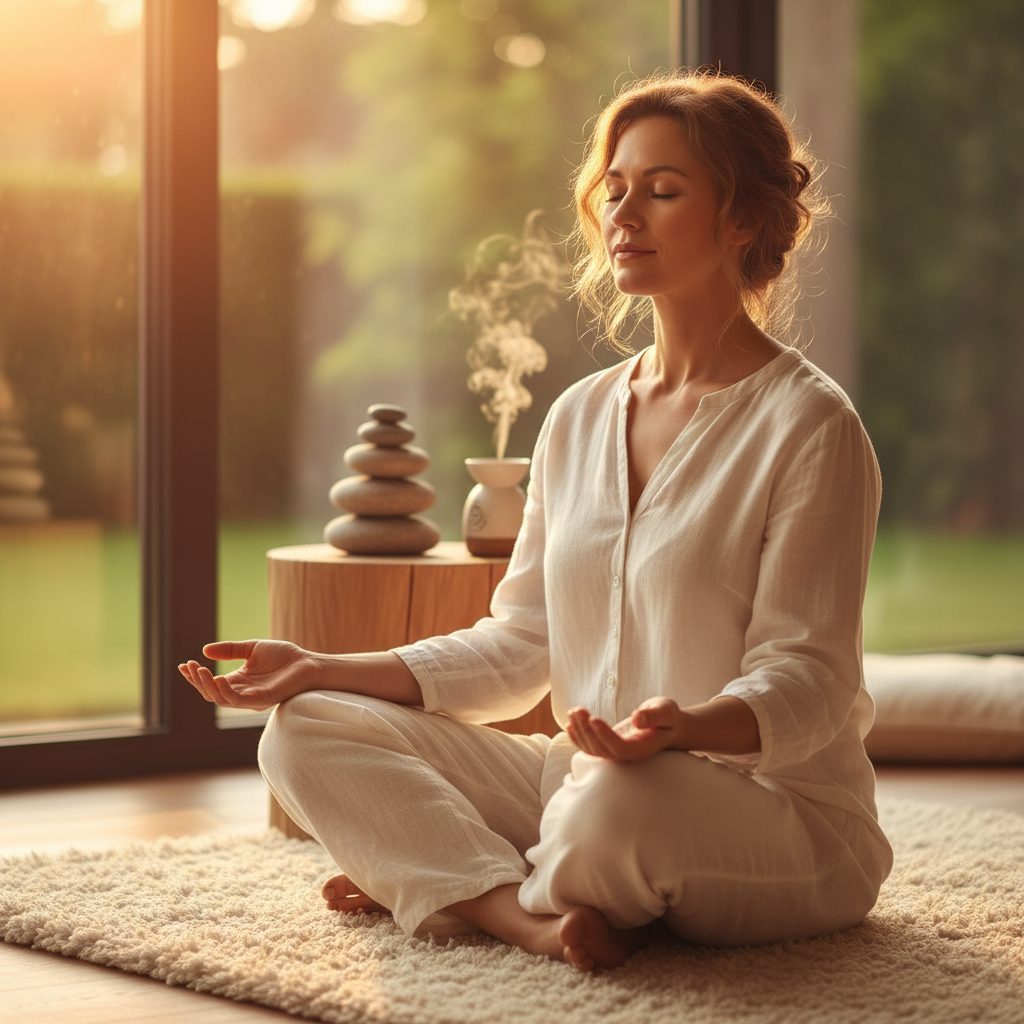
Anxiety often manifests as physical tension. A guided body scan can help you reconnect with your body and find God’s peace, releasing the stress held in your muscles.
The Biblical Foundation for Somatic Awareness and Stillness
A biblical grounding exercise is not about emptying the mind, but rather about filling it with an awareness of God’s presence in your physical body. The Apostle Paul reminds us that our bodies are temples of the Holy Spirit (1 Corinthians 6:19-20); therefore, caring for them is a form of worship. This perspective transforms a body scan from a secular mindfulness technique into a sacred act of stewardship. As noted by gotquestions.org, there is an inseparable connection between our spiritual, mental, and physical states. Consequently, by prayerfully attending to the physical sensations of anxiety, we honor God and invite His peace into our embodied experience.
Christian Body Scan Prayer for Calm Stillness
Scripture consistently calls us to a state of attentive stillness. For instance, in Psalm 46:10, God commands, “Be still, and know that I am God.” This stillness is not a vacant emptiness but a profound, listening posture that allows us to quiet the internal chaos and recognize His sovereignty. This practice of contemplative prayer can be adapted into a Christian body scan prayer, where each point of attention becomes an opportunity for gratitude and surrender, as suggested by sources like mindfulteachers.org. In other words, we are not just noticing tension; we are laying that burden down at the foot of the cross and acknowledging God’s power to bring release.
This intentional practice of uniting faith with physical awareness has profound effects. In fact, research shows that mindfulness practices are effective at reducing stress, bridging the gap between faith and scientific validation as explained by studies on pmc.ncbi.nlm.nih.gov. Theologically, this aligns with the wisdom of St. Augustine, who famously wrote, “Our heart is restless until it rests in you.” As highlighted by crossroadsinitiative.com, this innate spiritual longing often manifests as physical anxiety. By consciously turning our bodily awareness toward God, we allow our restless nervous systems to find their true Sabbath rest in communion with their Creator.
Preparing Your Heart and Space for the Guided Body Scan Meditation
To fully benefit from this guided body scan meditation, preparing your environment and your heart is an essential first step. Just as you would prepare a room for a special guest, creating a dedicated space helps signal to your body and soul that it is time to be still and receive peace. In other words, this small act of preparation honors the intention of the practice, which is to connect with God in the present moment and calm your parasympathetic nervous system. According to mayoclinic.org, finding a quiet location where you won’t be distracted is a key tip for beginners.
Prepare for Your Christian Body Scan Meditation
First, find a comfortable and quiet location where you are unlikely to be interrupted for about 15-20 minutes. You might choose to lie on your back on a mat or bed, or you can sit in a supportive chair with your feet flat on the floor. The key is to find a posture that allows your body to relax without falling asleep. This physical preparation is a form of stewardship, honoring your body as a sacred space for God’s presence, an idea explored by mindfulteachers.org in adapting mindfulness for Christians. Consequently, this intentional positioning helps release initial layers of physical tension before the script even begins.
Beyond the physical space, preparing your heart is paramount; this is more than a relaxation technique, it is a form of prayerful attention. Therefore, begin with a simple, silent prayer, inviting the Holy Spirit to be present with you, to guide your awareness, and to bring His peace that surpasses all understanding (Philippians 4:7). As research from gsas.harvard.edu suggests, such practices can alter the brain’s response to stress. Acknowledging the deep connection between our mental, spiritual, and physical states—a concept supported by sources like gotquestions.org—allows you to open your heart to a deeper level of healing and rest in God’s care.

A Complete Christian Meditation for Anxiety Body Scan Script
This guided body scan meditation offers a script to help you connect with God’s presence and release the physical tension that anxiety creates. Unlike secular mindfulness, a Christian approach is not about emptying the mind but about filling it with the truth of God’s peace and presence. As explained by resources like mindfulteachers.org, this practice becomes an act of contemplative prayer, acknowledging that our mental, physical, and spiritual states are deeply intertwined. This biblical grounding exercise helps you inhabit your body with gratitude, recognizing it as a gift from its Creator. Find a quiet space where you will not be disturbed for the next 10-15 minutes. You can lie down on your back or sit comfortably in a chair with your feet flat on the floor. Gently close your eyes and begin by taking a few slow, deep breaths.
Start by bringing your awareness to your feet. Notice the points of contact with the floor or the surface beneath you. In your heart, thank God for the ground that supports you, a physical reminder that He is your rock and your fortress (Psalm 18:2). As you inhale, imagine breathing in God’s peace. As you exhale, release any tension you feel in your toes, arches, and heels.
Slowly move your attention upward to your legs, acknowledging them as the limbs that carry you through your day. Offer any weariness or restlessness to God. Continue this gentle scan up through your torso, noticing your abdomen and chest. Instead of judging any anxious flutterings, simply observe them and surrender them in prayer, trusting that God holds you securely. This process of noticing physical sensations without judgment is a key part of how mindfulness can ease anxiety, a benefit recognized by medical institutions like mayoclinichealthsystem.org.
Guided Christian Body Scan Prayer for Anxiety
Now, bring your focus to your hands and arms. Unclench your fists and let your fingers rest gently. Release any tightness in your shoulders, letting them fall away from your ears as you give the burdens you are carrying to Christ. Move your awareness to your neck and face. Consciously soften the muscles in your jaw, around your eyes, and in your forehead. This somatic focus is powerfully restorative; in fact, scientific research highlighted by pmc.ncbi.nlm.nih.gov validates that meditation can significantly reduce the body’s stress response. Finally, rest for a moment in the quiet awareness of your entire body, offering it to God as a living sacrifice (Romans 12:1). When you feel ready, slowly wiggle your fingers and toes, and gently open your eyes, carrying this peace with you.
Integrating This Biblical Grounding Exercise Into Your Daily Routine
Transforming this meditation for anxiety body scan script from a one-time exercise into a consistent spiritual discipline is where its true power unfolds. To begin integrating this biblical grounding exercise, start by setting aside a small, manageable amount of time each day. Consistency is far more impactful than duration, especially when you are building a new habit. For instance, the regular practice of mindfulness is a key tool for managing the physical and emotional symptoms of anxiety, as noted by mayoclinichealthsystem.org. Therefore, committing to even five minutes daily can create a significant shift in your nervous system’s response to stress.
Integrating Body Scan Prayer Into Your Day
Consider when this practice might fit most naturally into your existing schedule. For many, starting the day with this exercise sets a tone of peace and divine connection. For others, practicing before bed helps release the day’s tensions and prepares the heart for restful sleep. You can frame this time as a form of contemplative prayer and an act of stewardship over the body God has given you. In fact, as explained by mindfulteachers.org, this practice aligns beautifully with Christian traditions of caring for our bodies as temples of the Holy Spirit (1 Corinthians 6:19-20). Ultimately, the best time is simply the time you will consistently keep.
Don’t be discouraged if your mind wanders or if you miss a day; simply return to the practice with grace. The benefits are cumulative, as consistent meditation can create tangible changes in the brain’s emotional regulation centers, according to research discussed by gsas.harvard.edu. This exercise is a powerful tool for spiritual and emotional health, one that supports our holistic well-being. In other words, it reinforces the deep biblical truth that our mental, physical, and spiritual states are interconnected, a concept explored at gotquestions.org. It is one of many ways God provides to find rest in Him.

Biblical grounding exercises fill the mind with an awareness of God’s presence. This form of Christian body scan prayer helps connect your body and spirit to find peace and stillness in Him.
When to Seek Professional Help Beyond a Faith-based Relaxation Script
While a faith-based relaxation script is an invaluable tool for managing moments of stress, it is essential to recognize when anxiety requires professional intervention. These scripts are designed to activate the parasympathetic nervous system and foster spiritual connection, yet they are not a substitute for clinical treatment. If you find that anxiety persistently disrupts your daily life, damages your relationships, or hinders your ability to work or worship, it may be a sign of an underlying anxiety disorder. For instance, according to the mayoclinic.org, persistent, excessive worry that’s difficult to control is a key symptom that warrants a professional evaluation.
When Professional Help Becomes Necessary
Consequently, seeking help from a therapist, counselor, or medical doctor is not a sign of spiritual failure; rather, it can be an act of wise stewardship over the body and mind God has given you. The Bible reminds us that our bodies are temples of the Holy Spirit (1 Corinthians 6:19-20), and caring for our mental health is part of honoring that truth. From a theological perspective, medicine and therapy can be seen as means of grace—tools that God uses to bring healing and restoration. As explained by gotquestions.org, utilizing medical interventions does not demonstrate a lack of faith but can be a prudent way to address the complex biological components of mental illness.
Therefore, consider consulting with a healthcare professional if your anxiety feels unmanageable or is accompanied by other symptoms like depression or panic attacks. Christian counseling and medical care are not mutually exclusive; in fact, they can work powerfully together. Integrating practices like a Christian body scan prayer with evidence-based treatments offers a holistic path toward healing. Ultimately, working with doctors to care for our physical and mental well-being is a responsible and faithful choice, as emphasized by resources like the biblicalcounselingcenter.org. Remember, you do not have to walk this journey alone.
Conclusion: Inhabiting Your Body with the Peace of Christ
Ultimately, this biblical grounding exercise offers more than a temporary reprieve from racing thoughts; it is a spiritual practice of returning home to your body as God’s temple. The restlessness so many of us feel, which often manifests as anxiety, echoes the timeless words of St. Augustine: “our heart is restless until it rests in you,” a profound insight explored by crossroadsinitiative.com. Consequently, this somatic meditation for stress becomes an act of worship, allowing you to experience the deep, abiding peace that only Christ can provide, grounding your spirit in the physical reality of His creation.
By integrating this faith-based relaxation script into your life, you are actively stewarding your whole being—mind, body, and spirit. This approach is not just theologically sound but also finds support in clinical research, with studies confirming that Christian-adapted mindfulness significantly reduces anxiety, as detailed by mdpi.com. As sources like mindfulteachers.org explain, framing the body scan as a form of contemplative prayer transforms it from a secular tool into a sacred dialogue with the Creator. In other words, you are practicing a discipline that nurtures both your spiritual and neurological health.
Therefore, let this practice be a consistent prayer, a way to consciously inhabit your body with the peace that surpasses all understanding (Philippians 4:7). As you continue, you will undoubtedly find that caring for your mental and physical health is a vital component of your spiritual walk, a concept theologically affirmed by sources such as gotquestions.org. May you continually surrender the tension in your body to God, allowing His presence to bring stillness to your mind and rest to your soul, transforming anxiety into a testimony of His faithfulness.