Bible on Anxiety and Fear: A Complete Guide to Peace
Estimated reading time: 11 minutes
Introduction: the Search for Peace in an Anxious World
In a world filled with uncertainty, the search for inner peace can feel overwhelming. Many are seeking a reliable biblical guide to peace, looking for solace in the face of constant stress and worry. Indeed, anxiety has become a major public health issue, impacting millions and often leading to more severe conditions if left unaddressed, as noted by nm.org. This feeling is not a new phenomenon, nor is it a sign of a failing faith. Consequently, this article will explore the timeless wisdom found in the Bible on anxiety and fear, offering a compassionate and practical Christian perspective on stress and the path toward a more serene life.
Biblical Understanding of Fear Vs. Anxiety
Understanding our biology is a crucial first step. God designed our bodies with a powerful, instantaneous fear response centered in a part of the brain called the amygdala, which Cleveland Clinic Amygdala describes as our fear processing hub. When we perceive a threat, our system is meant to react. However, there is a distinct difference between this acute sense of fear and the persistent, future-oriented worry that defines chronic anxiety. According to 5 Things About Fear, anxiety involves a more generalized state of apprehension and racing thoughts that can disrupt daily life. Recognizing this distinction helps us address the root of our distress with greater clarity and grace.
Therefore, this journey is not about eliminating fear entirely, but about finding unwavering hope and strength in the midst of it. Throughout scripture, we see that even spiritual giants like King David and the prophet Elijah cried out to God in moments of intense fear and despair. Their stories remind us that faith and fear can coexist. Ultimately, our goal is to show how engaging with the Bible—through prayer, reflection, and community—can provide profound comfort and foster a sense of calm, a benefit supported by sources like Therapy Changes Blog. By exploring the powerful intersection of Christian theology and human psychology, we can discover how to begin overcoming anxiety biblically and walk in His peace.
Understanding the Roots of Our Unrest: a Christian Perspective on Stress
To explore what the bible on anxiety and fear teaches, we must first understand the nature of our unease from a Christian perspective. Stress and worry are not necessarily signs of a weak faith; rather, they are deeply human responses to a world that is often overwhelming. Christian theology acknowledges that we live in a state of tension, equipped with minds and bodies designed for survival. However, there is a clear difference between a normal fear response and chronic anxiety, which is often a future-oriented state of persistent worry and racing thoughts, as described by NM Healthbeat. Consequently, understanding this distinction is the first step toward addressing our unrest.
The Biology of Fear and Worry
Our bodies are, in fact, hardwired with a powerful alarm system. When we perceive a threat, the brain’s fear center, the amygdala, springs into action. According to Cleveland Clinic, this small part of the brain is responsible for processing fear and triggering the body’s defensive responses. This process unleashes stress hormones like adrenaline and cortisol, causing physical reactions such as a racing heart and rapid breathing. This “fight-or-flight” mechanism is a gift designed for our protection, but in a state of chronic stress, this system can become overactive, contributing to a persistent feeling of anxiety.

In the search for peace in an anxious world, many find solace and strength within the scriptures. God’s word provides a firm foundation when feelings of worry and fear arise.
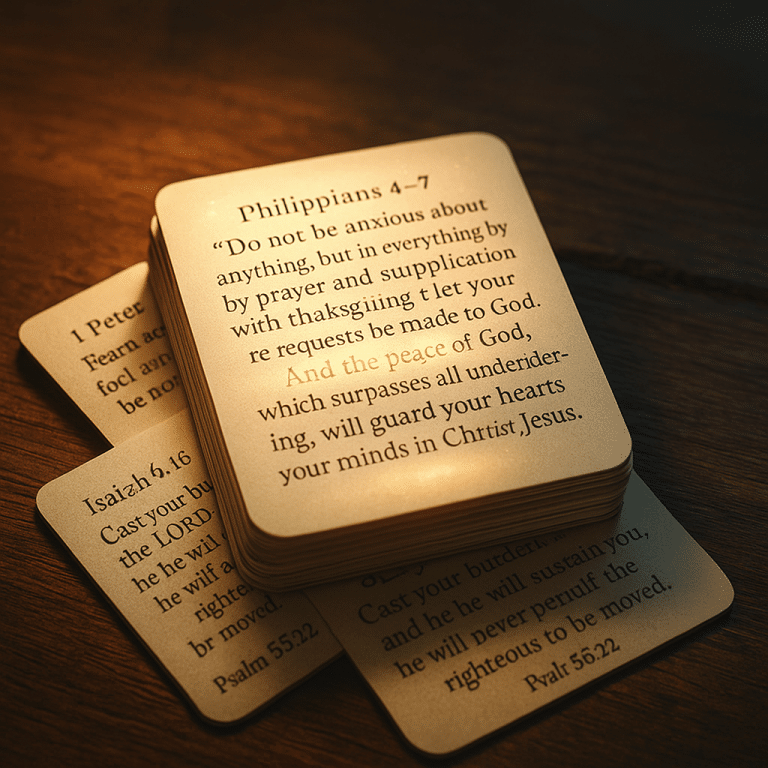
Therefore, a biblical guide to peace doesn’t ask us to deny our physiology but to bring it under the care of a loving God. The scriptures on worry consistently invite us to a relationship of trust that can soothe our overactive nervous systems. For instance, the Apostle Paul encourages believers not to be anxious but to present their requests to God with thanksgiving. He promises that “the peace of God, which transcends all understanding, will guard your hearts and your minds in Christ Jesus” (Philippians 4:6-7). In other words, faith gives us a secure anchor, allowing our minds and bodies to find rest even amidst life’s storms.
What the Bible on Anxiety and Fear Actually Says
When exploring what the bible on anxiety and fear communicates, it becomes clear that while ancient texts do not use modern psychological terms, they are profoundly resonant with these timeless human struggles. Instead of offering a clinical diagnosis, Scripture addresses the heart’s condition through concepts like worry, fear, and tribulation. The overarching message is not one of condemnation for feeling anxious, but rather a consistent, compassionate call to shift our focus. Ultimately, it is an invitation to move from self-reliance to a deep and abiding trust in God’s sovereignty and care, fundamentally reframing our perspective on what we perceive as threats.
Overcoming Anxiety Biblically Through Prayer
The Bible repeatedly commands believers not to fear, not as a dismissive platitude, but as a directive rooted in God’s promise of His presence. For instance, the Apostle Paul offers a powerful, practical alternative to the cycle of worry. He encourages believers, “Do not be anxious about anything, but in every situation, by prayer and petition, with thanksgiving, present your requests to God,” as detailed in Philippians 4:6-7 NIV. Similarly, the Apostle Peter instructs believers to “Cast all your anxiety on him because he cares for you” (1 Peter 5:7 (NIV)). Consequently, this spiritual practice of entrusting our fears to God is presented as a foundational step toward finding inner peace.
This biblical guide to peace is grounded in the character of God, not merely in human effort. Jesus himself addresses the root of common worries, such as provision for daily needs, by teaching that “your heavenly Father knows that you need them” (Bible Gateway). This perspective directly counters the body’s innate fear response, which, as NM HealthBeat explains, is an automatic reaction to perceived danger. Therefore, trusting God with worry involves a conscious decision to place faith in His provision over the powerful, often overwhelming, feelings that anxiety produces.
Practical Steps for Overcoming Anxiety Biblically
Overcoming anxiety biblically involves more than just wishful thinking; in other words, it requires engaging in practices that align our hearts, minds, and bodies with God’s truth. For instance, the Apostle Paul urges believers in Philippians 4:6-7 to “not be anxious about anything, but in every situation, by prayer and petition, with thanksgiving, present your requests to God.” This is not merely a spiritual platitude; scientific findings suggest that practices like prayer can foster a sense of calm and well-being, as noted by The Benefits of Prayer. Consequently, by intentionally turning our worries into prayers, we actively participate in receiving the peace that God promises.

Understanding the roots of our unrest often begins by turning to scripture. The Bible provides a foundational perspective on the spiritual nature of stress and worry, offering timeless wisdom.
Another powerful step is to consciously renew our minds, a concept central to Christian theology and echoed in modern therapeutic approaches like Cognitive Behavioral Therapy (CBT). When anxious thoughts arise, we can challenge their validity against the truth of scripture, as research from Psychiatry Online affirms the effectiveness of identifying and reframing negative thought patterns. Instead of dwelling on a catastrophic fear, we can replace it with a faith-filled truth from passages like 1 Peter 5:7, which reminds us to cast all our anxiety on Him because He cares for us, a directive available on 1 Peter 5:7. This mental discipline transforms our thinking from a cycle of fear into a posture of trust.
Furthermore, stewarding our physical bodies is an essential component of managing anxiety from a Christian perspective on stress. Engaging in regular physical activity is not only good for the body but also profoundly impacts mental well-being. In fact, studies highlighted by Anxiety & Exercise Management show that exercise can be a highly effective strategy for reducing the symptoms of anxiety. By embracing these practical steps—prayer, renewing the mind, and caring for our bodies—we build a holistic, faith-based framework for finding lasting peace.
Key Scripture on Worry to Memorize and Meditate on
The Bible offers a powerful resource for overcoming anxiety biblically, providing specific scripture on worry to calm a troubled heart. Instead of letting anxious thoughts run unchecked, we can actively replace them with God’s promises. For instance, memorizing key verses acts as a spiritual defense mechanism. One of the most powerful passages is Philippians 4:6-7, which instructs, “Do not be anxious about anything, but in every situation, by prayer and petition, with thanksgiving, present your requests to God. And the peace of God, which transcends all understanding, will guard your hearts and your minds in Christ Jesus.” This verse provides a clear, actionable model for finding peace.
Another foundational verse for building faith over fear is 1 Peter 5:7, which encourages believers to “Cast all your anxiety on him because he cares for you.” The word “cast” implies a decisive, intentional act of entrusting our burdens to a capable and loving Father. Consequently, this practice shifts the weight from our shoulders to His. Meditating on this truth helps internalize the reality of God’s personal care, which directly counters the isolation that often accompanies fear and worry. Indeed, this simple command is a profound invitation to experience divine support.
Jesus himself spoke directly about the futility of worry, particularly concerning future needs. In Bible Gateway, He teaches, “Therefore do not worry about tomorrow, for tomorrow will worry about itself. Each day has enough trouble of its own.” This scripture isn’t a call for inaction but for focused, present-moment trust. In other words, it redirects our mental energy from future “what-ifs” to today’s responsibilities, trusting God for daily provision. Committing these verses to memory provides an immediate, hope-filled response when anxiety rises, fostering what some researchers call a “sense of calm” as noted by Therapychanges.
The Role of Prayer and Community in Finding Calm

Engaging with the scriptures provides a powerful foundation for peace. Understanding what the bible on anxiety and fear communicates helps replace worry with faith and divine assurance.
In the journey of overcoming anxiety biblically, prayer is presented not as a mere ritual but as a direct and transformative dialogue with God. It serves as the primary method for surrendering our deepest worries. For instance, the Apostle Paul offers a clear prescription in his letter to the Philippians, urging believers, “Do not be anxious about anything, but in every situation, by prayer and petition, with thanksgiving, present your requests to God” (Philippians 4:6-7 NIV), a powerful scripture on worry available on Philippians 4:6-7 (NIV). Consequently, this act of entrusting our fears to a sovereign God actively shifts our focus from the overwhelming chaos of our circumstances to the profound peace of His presence. This spiritual practice is not about ignoring problems but rather about facing them with divine support.
Prayer for Biblical Calm & Anxiety Relief
Beyond the spiritual solace, this practice offers tangible psychological and physiological benefits. Engaging in prayer can create a profound “sense of calm,” as noted by mental health professionals at The Benefits of Prayer, by quieting the mind and regulating the nervous system’s fight-or-flight response. In addition to these effects, research highlights that spiritual practices can instill a “positive sense of meaning, hope,” according to an article in the National Center for Biotechnology Information. Therefore, by regularly communicating with God, we are not only obeying a biblical command but also engaging in an activity that actively rewires our response to stress, promoting tranquility from the inside out.
Furthermore, the Christian faith champions the role of community as a vital support system. We were not designed to navigate life’s struggles in isolation. Sharing our burdens with trusted friends, pastors, or a small group provides encouragement and accountability, reminding us that we are not alone in our struggles. This fellowship embodies the biblical instruction to “Cast all your anxiety on him because he cares for you” (1 Peter 5:7 NIV), an exhortation found at 1 Peter 5:7. Indeed, vocalizing fears to a compassionate listener can dissipate their power, while receiving prayer from others strengthens our own faith over fear. In other words, authentic community becomes a tangible expression of God’s care for us.
When Faith Meets Science: Trusting God While Seeking Professional Help
While the Bible offers a foundational guide to peace, it is important to recognize that faith and science are not enemies. In fact, embracing a Christian perspective on stress can involve both trusting God and seeking professional help. Many find that modern therapy and medicine are gifts from God—practical, evidence-based tools for navigating the complexities of mental health. Overcoming anxiety biblically does not mean rejecting the wisdom God has allowed humanity to discover. Therefore, prayerfully considering professional guidance can be a profound act of faith, utilizing all the resources God has provided for healing and wholeness.
Anxiety is not solely a spiritual battle; it often has deep physiological roots that affect the whole person. For instance, the brain’s fear center, the amygdala, plays a central role in how we process threats, as detailed by Cleveland Clinic Amygdala. Chronic stress can create a hypersensitive “fear circuit,” making the body feel constantly on alert, a state that research from PMC NCBI explores. Just as we would see a doctor for a persistent physical ailment, it is wise and responsible to seek medical and therapeutic care for the intricate workings of our minds and nervous systems.
Furthermore, proven therapeutic methods like Cognitive Behavioral Therapy (CBT) align remarkably well with biblical principles. At its core, CBT helps individuals identify, challenge, and reframe distorted thought patterns, a process that mirrors the scriptural call to be transformed by the renewing of the mind (Romans 12:2). According to TherapistAid CBT Guide, this approach is highly effective for treating anxiety. Consequently, seeking help from a qualified therapist is not a failure of faith but rather a courageous step toward stewarding your mental health wisely, using God-given tools to cultivate the peace He promises.
Conclusion: Walking Forward in Faith Over Fear
The journey to overcoming anxiety biblically is not about finding a single, magical verse but about weaving together the profound truths of scripture with practical, God-given wisdom. Throughout this guide, we have explored how the Bible on anxiety and fear provides a foundational framework for peace. This peace, as described in Philippians 4:6-7, transcends understanding and is cultivated through prayer and thanksgiving. Ultimately, integrating spiritual practices like prayer, which has psychological benefits like fostering calm according to Therapychanges, with evidence-based strategies empowers you to build a resilient faith over fear.
Walking forward, remember that this path is a marathon, not a sprint. There will be moments of struggle, but you are not alone in this; anxiety is a widespread public health concern, as noted by Northern Nevada Health. Therefore, continue to lean on your community, seek professional counsel when necessary, and consistently immerse yourself in scripture. Hold fast to the promise of 1 Peter 5:7, casting all your anxiety on Him because He cares for you. By confronting anxiety with both the shield of faith and the tools of wisdom, you can reclaim your peace and live a life marked not by fear, but by the steadfast love of God.